Sanghyeok Lee on ARC, Emptiness, and the Spaces Between
- Name
- Sanghyeok Lee
- Images
- Clemens Poloczek
- Words
- Rosie Flanagan
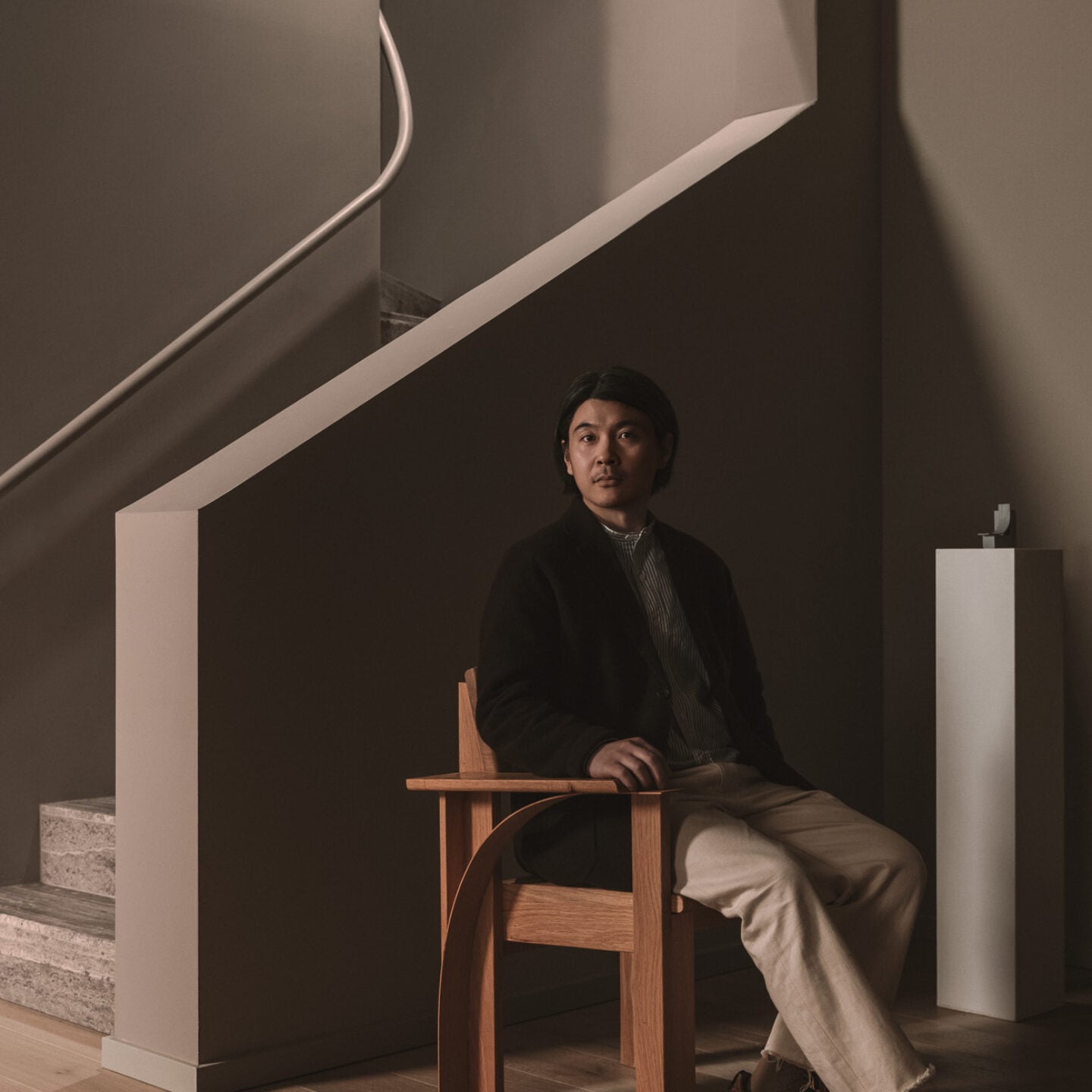
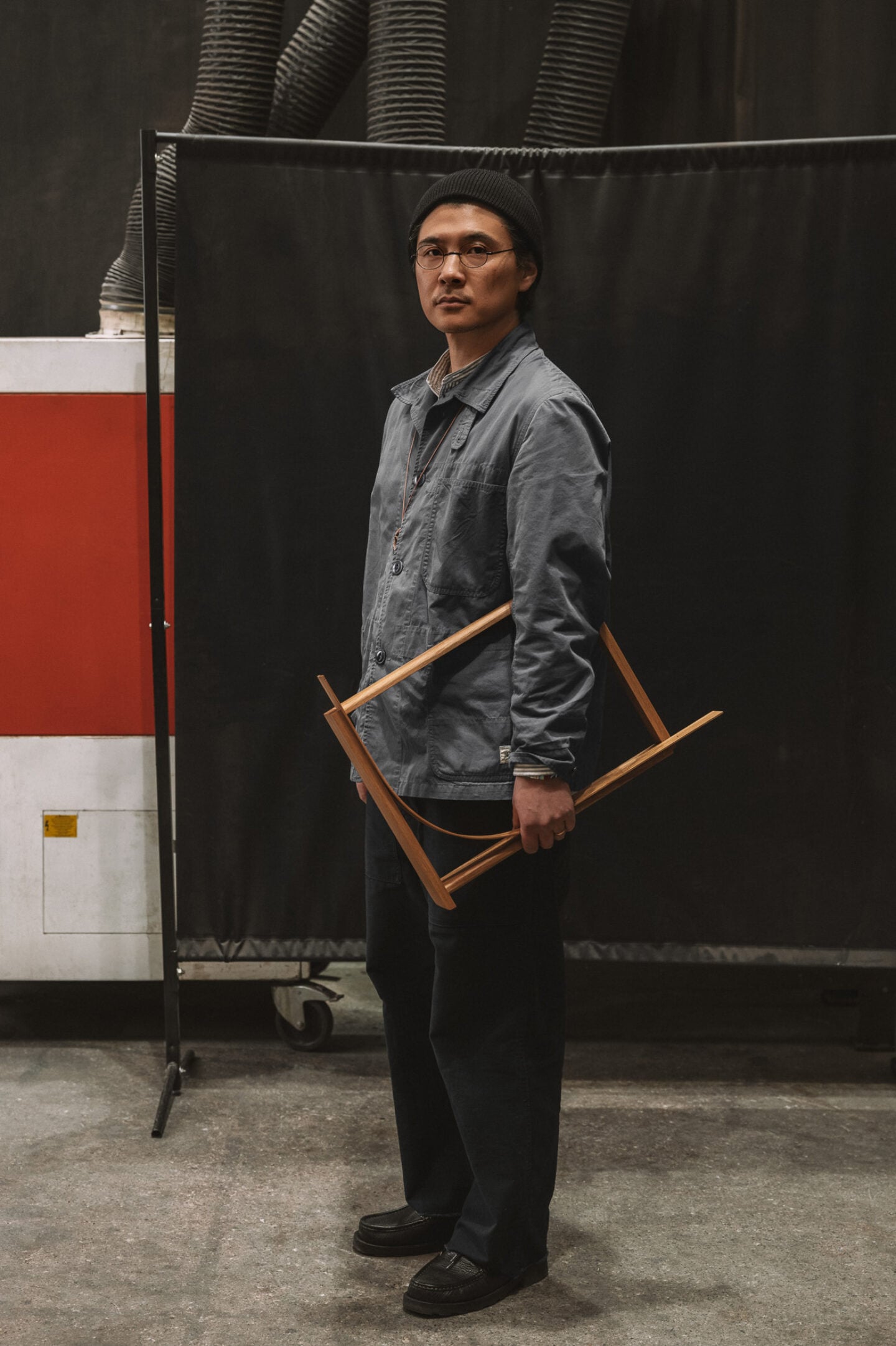
Sanghyeok Lee’s work is nothing if not balanced. It is restrained and minimal. Playful and intellectually rigorous.
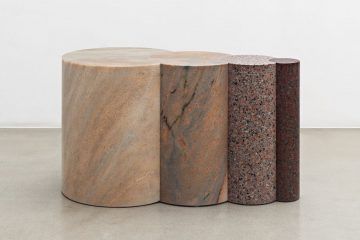
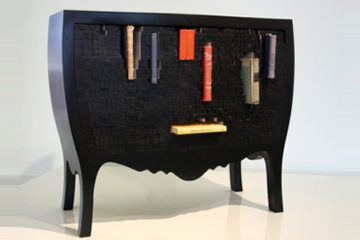
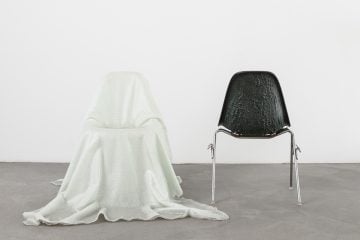
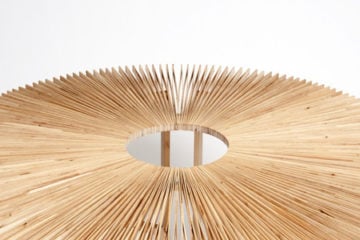
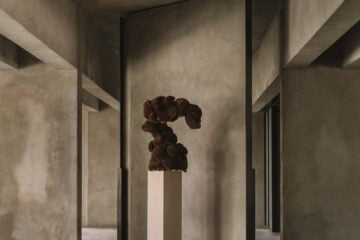
Prior to this interview, he forwarded me a series of images, among them a still of Ólafur Eliasson. Its caption reads: “The gap between the two chairs is more interesting than the two chairs.” It’s an idea that unspools as we speak, capturing something elemental to Lee’s practice, which uses design to explore the relationship between object, actor, and space. This approach is particularly evident in ARC, his latest series of work, currently on view at MAJ VAN DER LINDEN in Berlin.
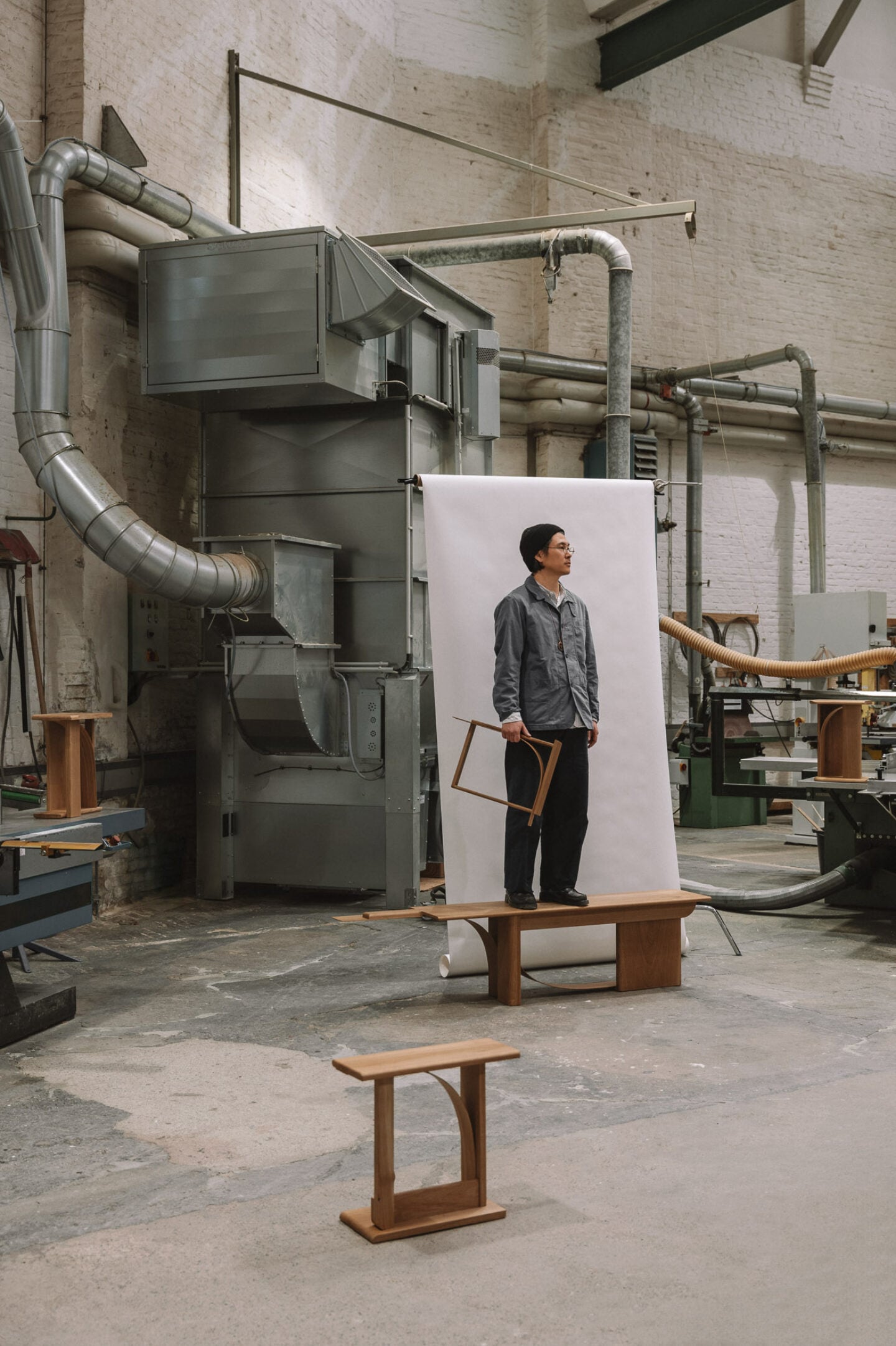
Lee was born in South Korea beside a strawberry field—”almost like Liverpool,” he laughs in reference to the Beatles song—and began his education in design in the capital Seoul. While there, the Design Academy Eindhoven caught his attention, and his path shifted to Europe. It was the early 2000s and the Dutch design scene was becoming known for output that was as influential as it was intellectual and fun. Lee was excited to experience this creative space firsthand. His time studying at DAE was formative, imbuing his practice with an understanding of handling and materiality that he describes as “the foundation” of his work.
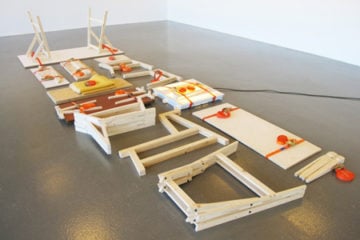
Following his graduation, Lee made his way to Berlin, where a new way of creating would slowly emerge. But life in the German capital was not easy. He faced the complexities of learning a new language, finding housing and employment, organizing visas and insurance. “At that time, I even had to tick the box labeled ‘Arbeitsloser (jobless)’ on official documents,” he says. This experience inspired Arbeitsloser (2012), a furniture series that reimagines the fragile and peripatetic forms of scaffolding in wood and brass.
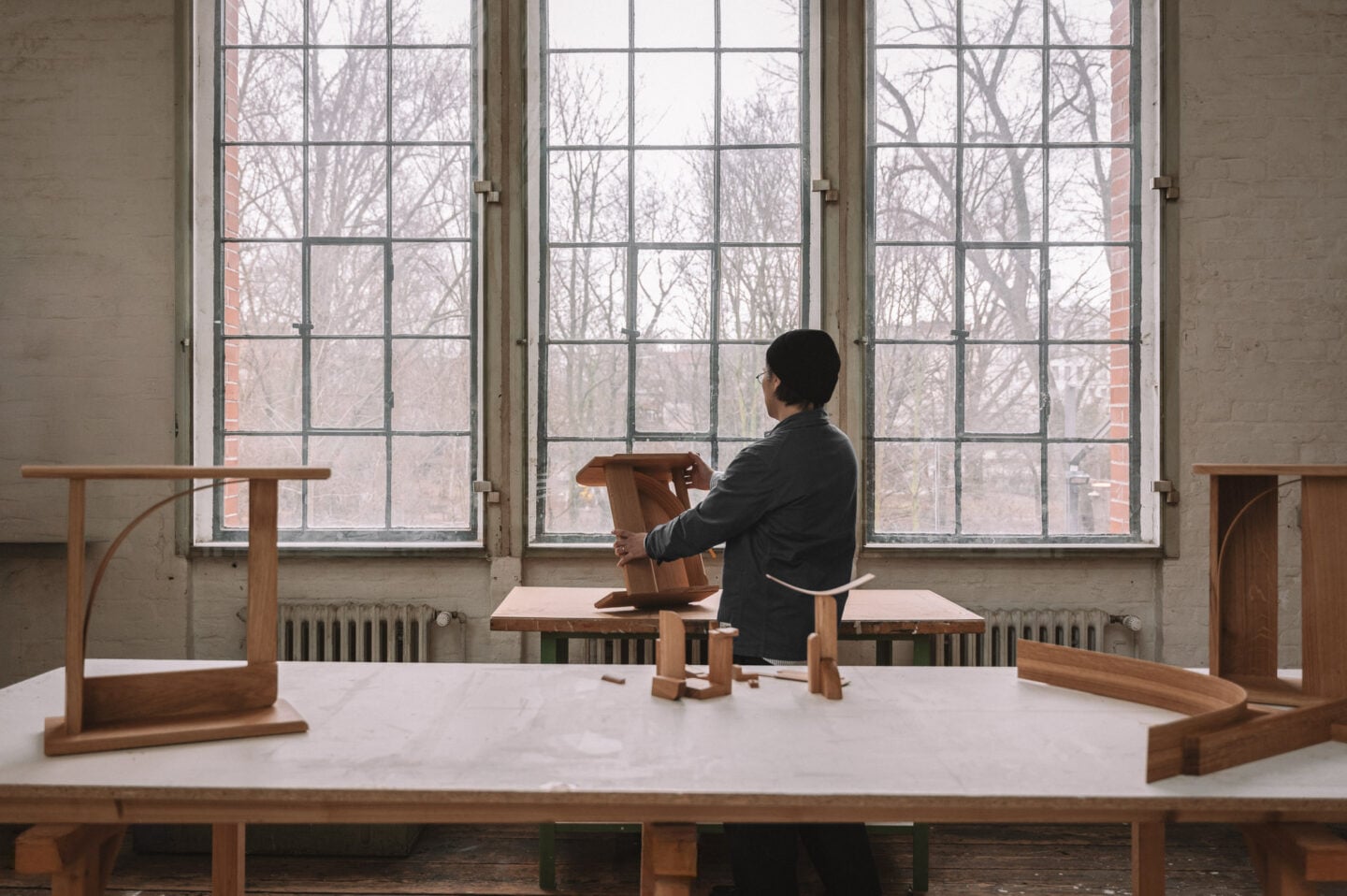
"I am interested in our movement in space and in relation to the things around us, be that walls or objects, pillars or rooms."
As he settled into the city, his name grew and his work expanded from collectible design pieces to include sculptures and public art. In 2020, as the pandemic shattered and reconstituted our world, he began his master’s at the Universität der Künste. “It was a strange period that really shifted something in my work,” Lee continues, “I started to think not just about the object, but about the behaviour of the object and our behaviour around the object.”
For Lee, an object is never isolated. Rather, it exists in a system of interactions. “I am interested in our movement in space and in relation to the things around us, be that walls or objects, pillars or rooms,” Lee remarks. “I appreciate the emptiness, and maybe this relates to the things I create. When I see an empty space, I think about what would happen if I made an object and placed it there, how that might change the way people think.”
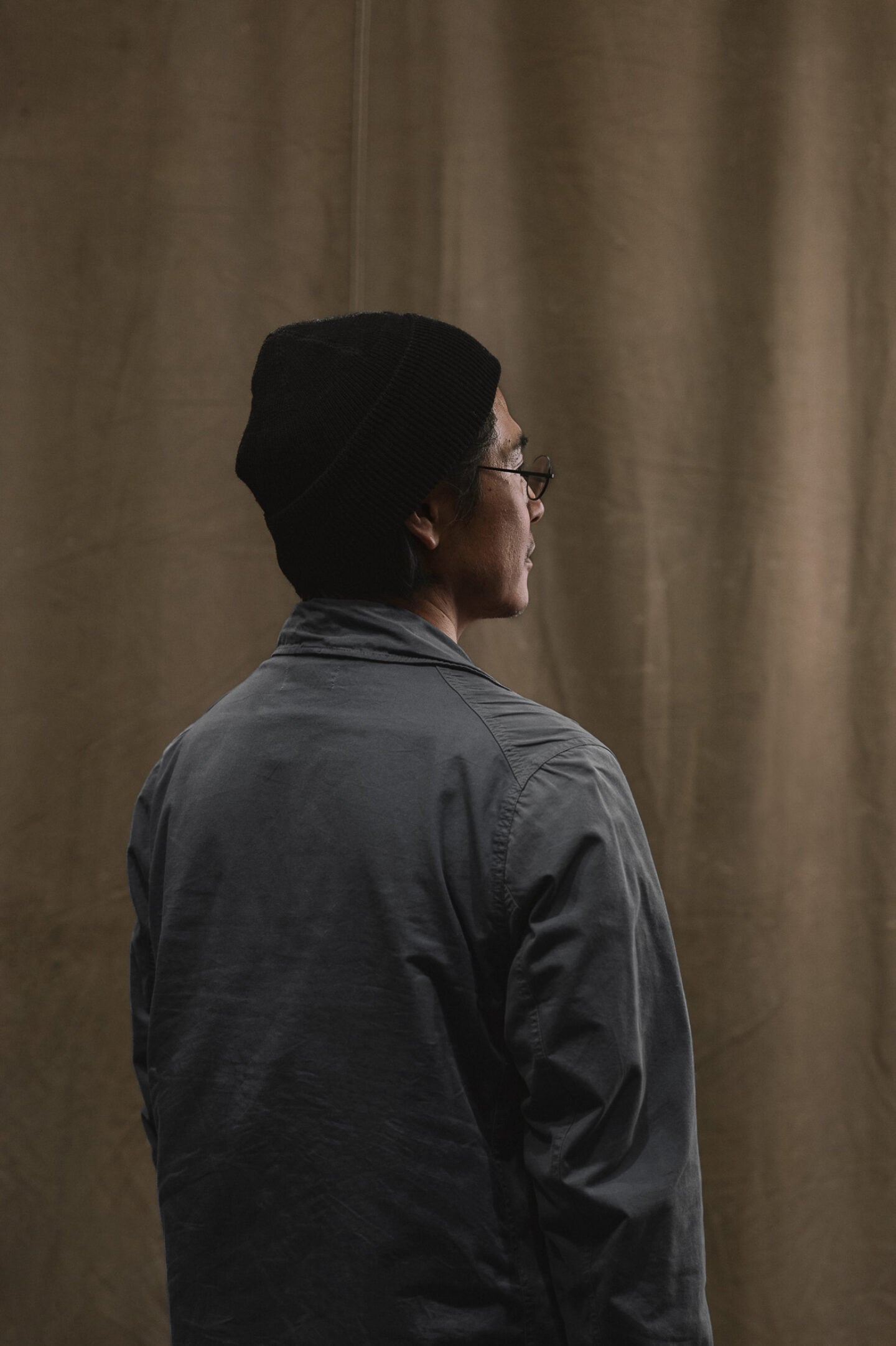
This understanding of emptiness comes from Korean philosophy. In art, design, and architecture, the concept of yeo-baek refers to the use of empty or negative space as part of a larger composition. It is a space that holds resonance—an artist leaving room for reflections and associations. It is considered as expressive and significant as the physical form itself. As the quote from Eliasson suggests, sometimes the space between objects reveals more than the objects themselves.
"I examine not only the overall atmosphere but also the details of each individual element that makes up a space."
“Spatial experiences play a central role in my creative process,” Lee observes. “I examine not only the overall atmosphere but also the details of each individual element that makes up a space. In any space, I envision the absurd stories that might unfold within it.” Part of Lee’s practice involves connecting different elements in a room or structure with invisible lines. For example: A line connects the floor to the wall, the wall to the ceiling, the ceiling to the wall. Together, these lines might suggest a new form or way of occupying space.
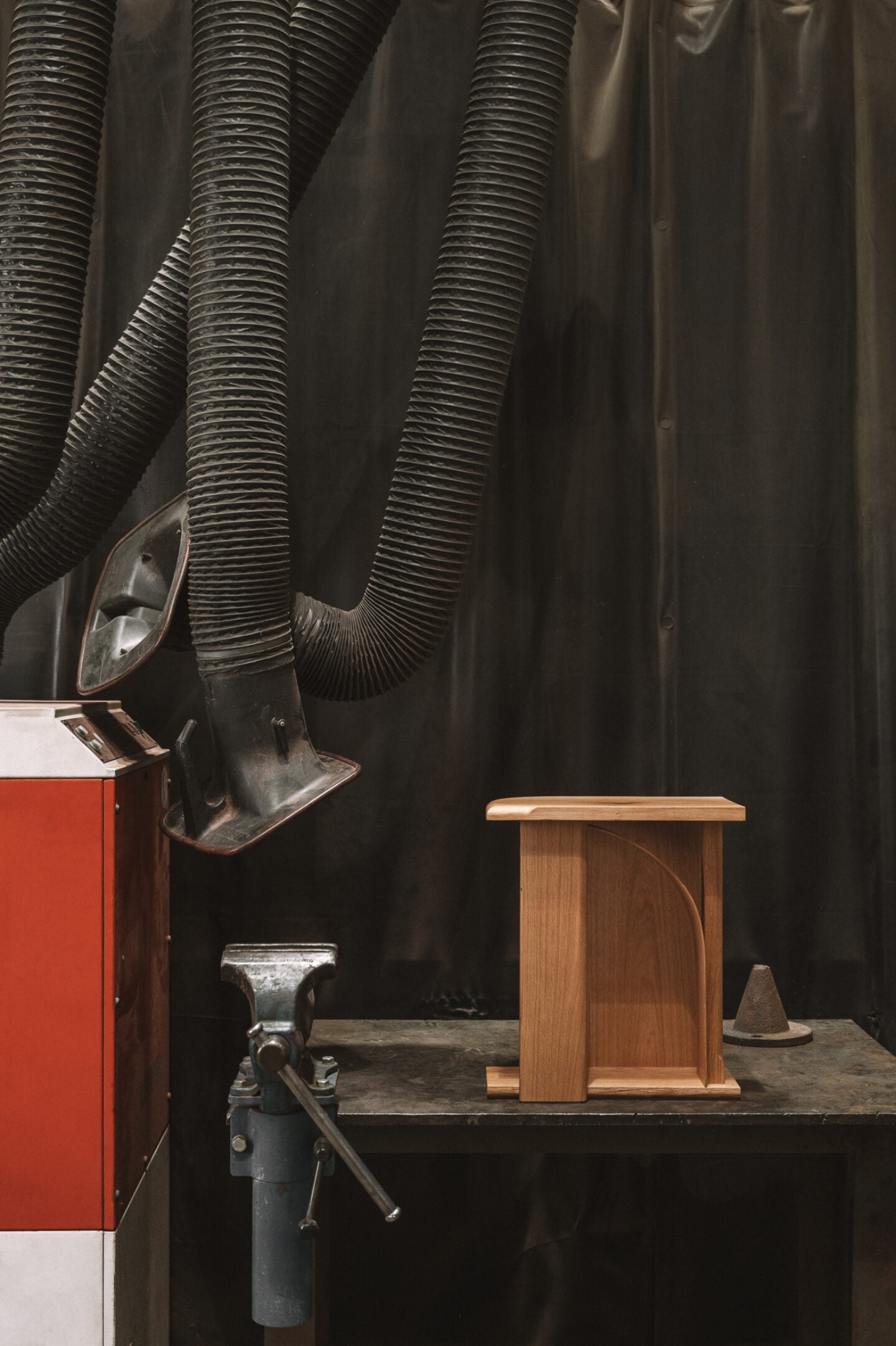
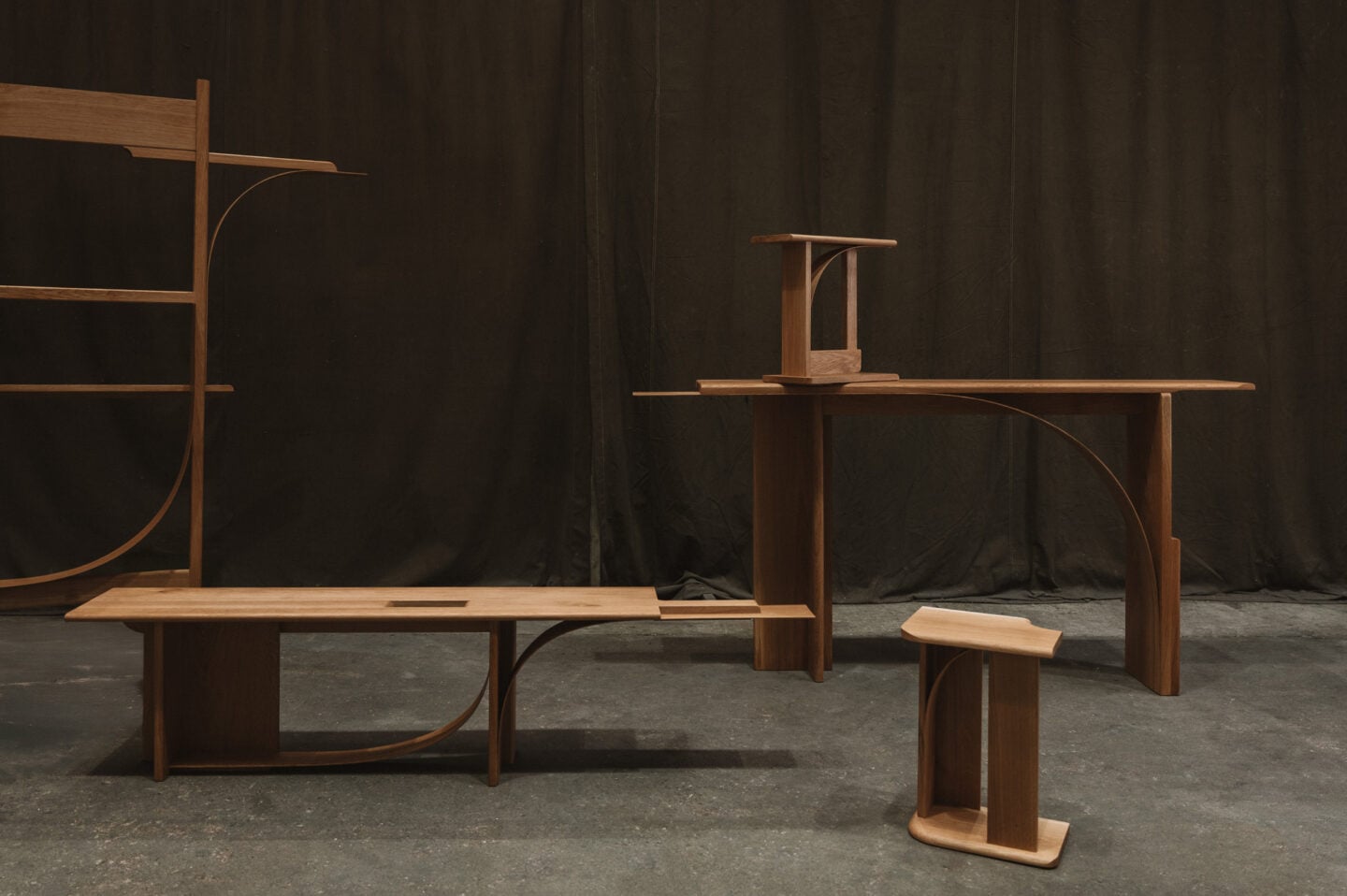
This approach is evident in ARC, Lee’s new collection, which comprises lamps, chairs, consoles, and shelves. As he explains, these pieces emerged from an exploratory process inspired by the inductive logic of Enlightenment projects such as Denis Diderot and Jean le Rond d’Alembert’s Encyclopédie, in which knowledge developed through observation and accumulation rather than from a fixed theory. “I found that beginning with imagination, rather than following the process I was accustomed to, opened up unexpected possibilities within the design process,” Lee says.
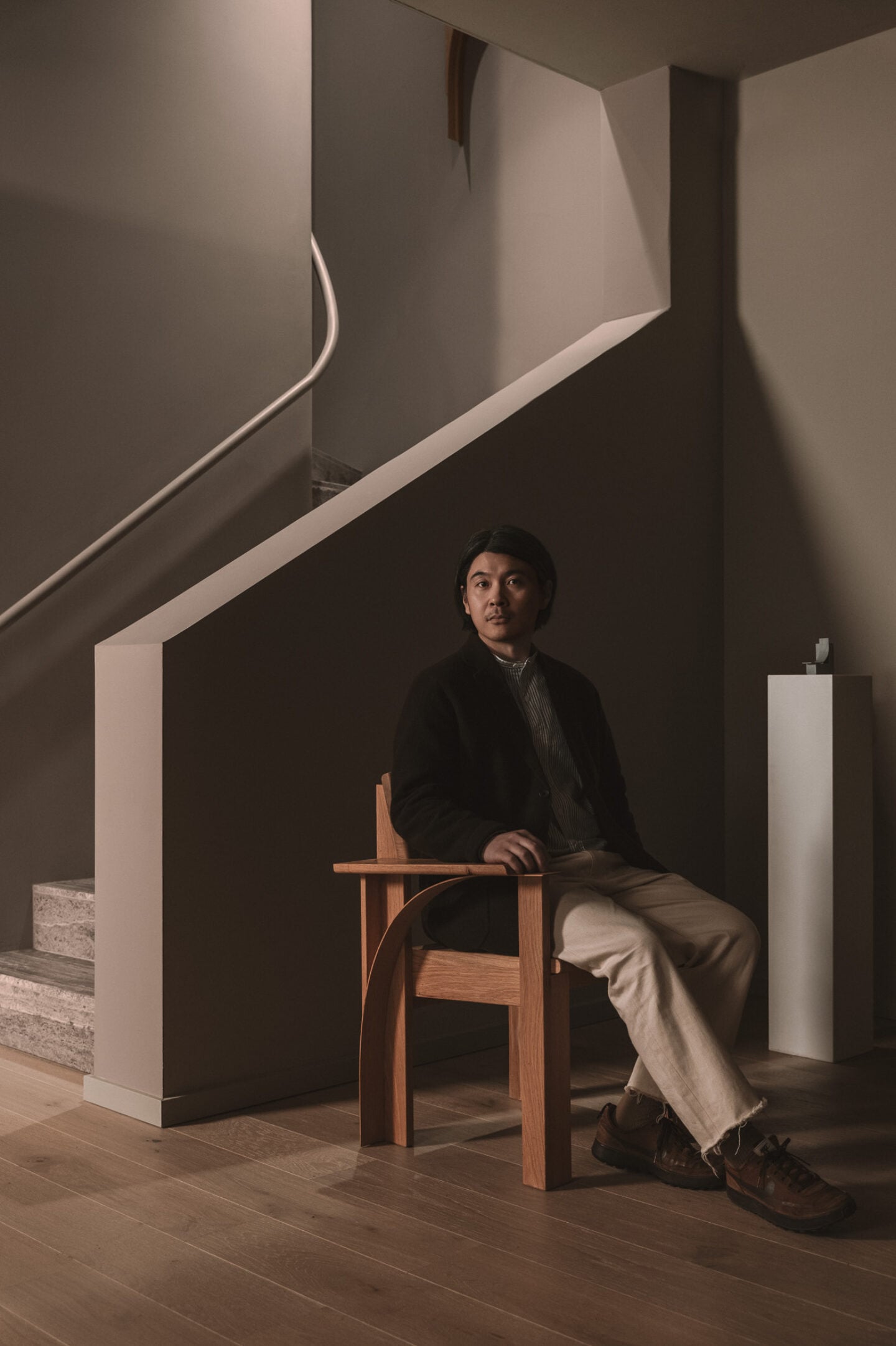
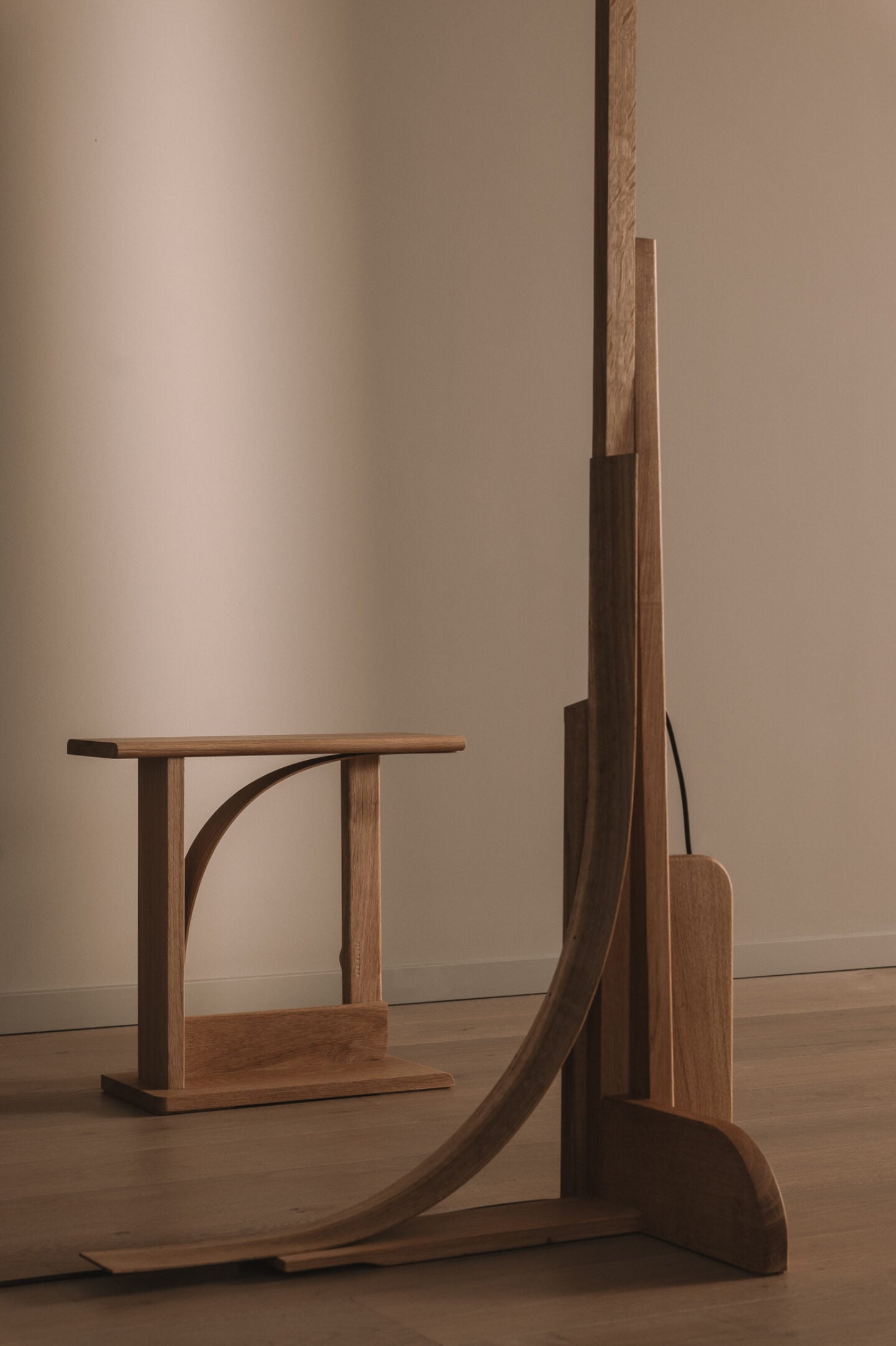
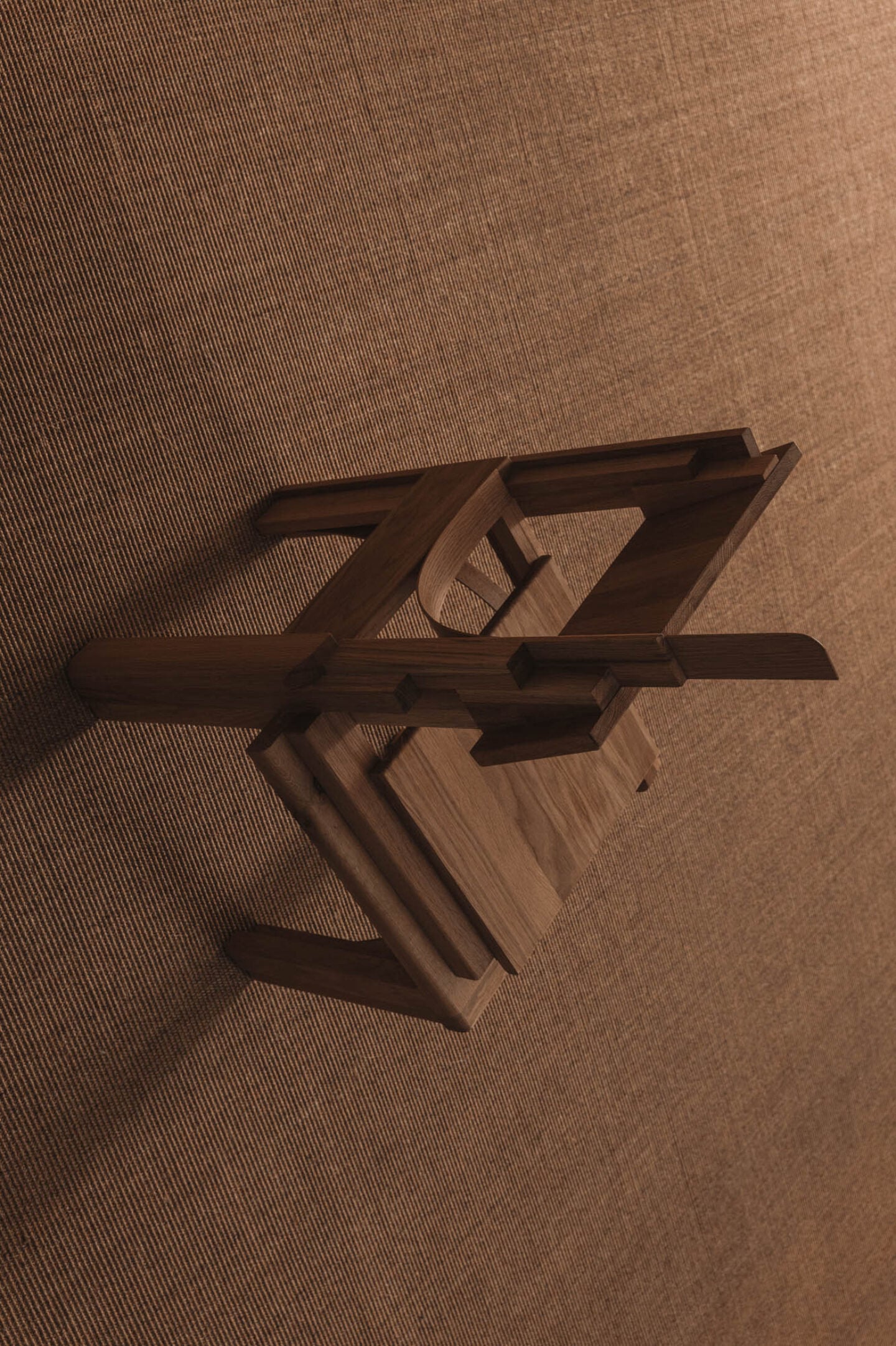
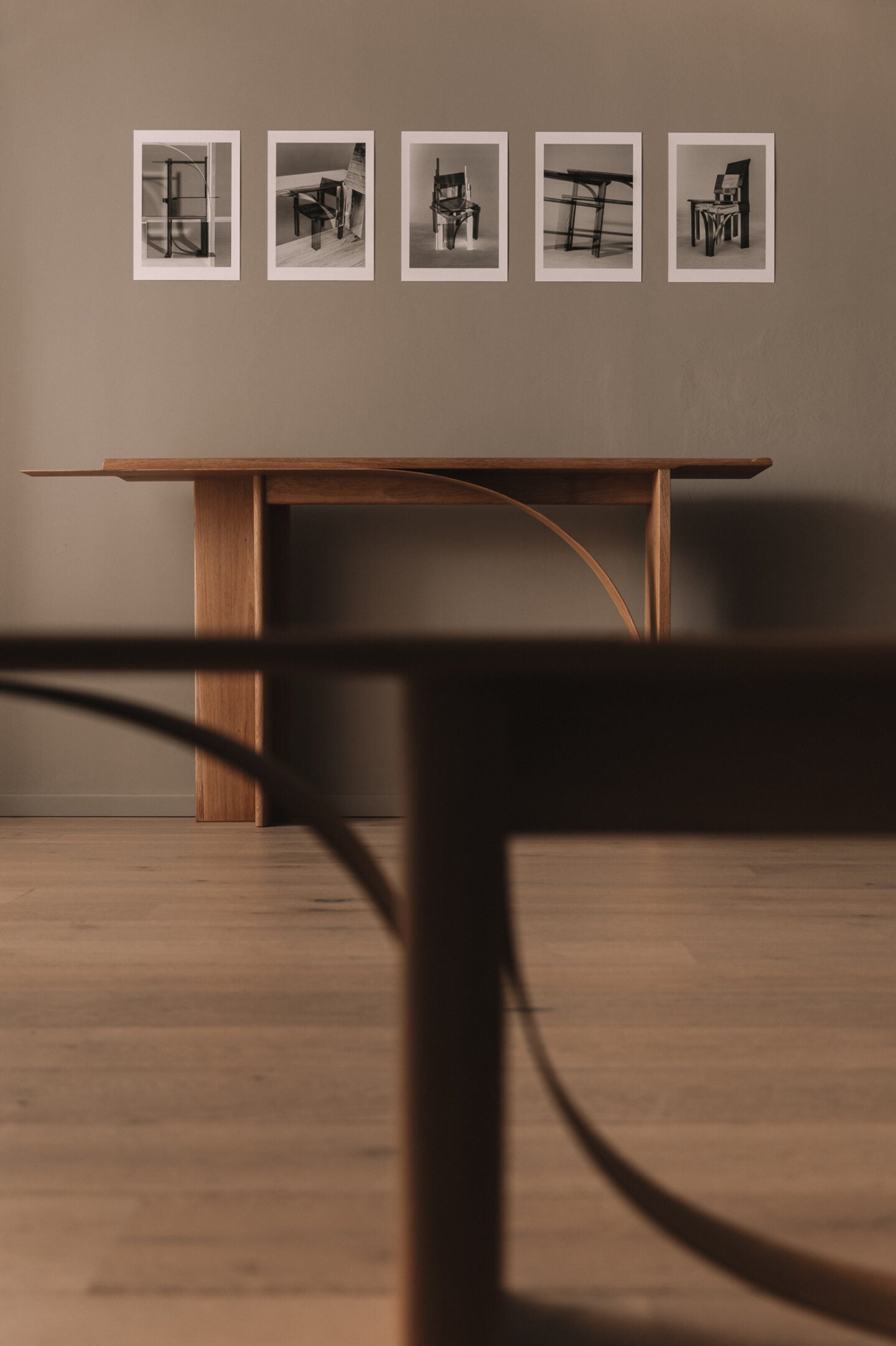
"I spent a lot of time placing different elements together, focusing on the details, looking at each object, and considering whether all the pieces were in the right place.”
Forms evolved organically through association and invention. “I started by collecting images of things that interested me,” he explains. These are the images he shared ahead of the interview. Among them: undulating vaulted ceilings, a still of avant-garde Austrian artist Valie Export overlaid with the text “Art can help to sharpen our perception,” condensation trails of white arching across a blue sky. As his catalogue of images grew, patterns began to emerge—layers and connections through space, a curve that seemed to lead somewhere.
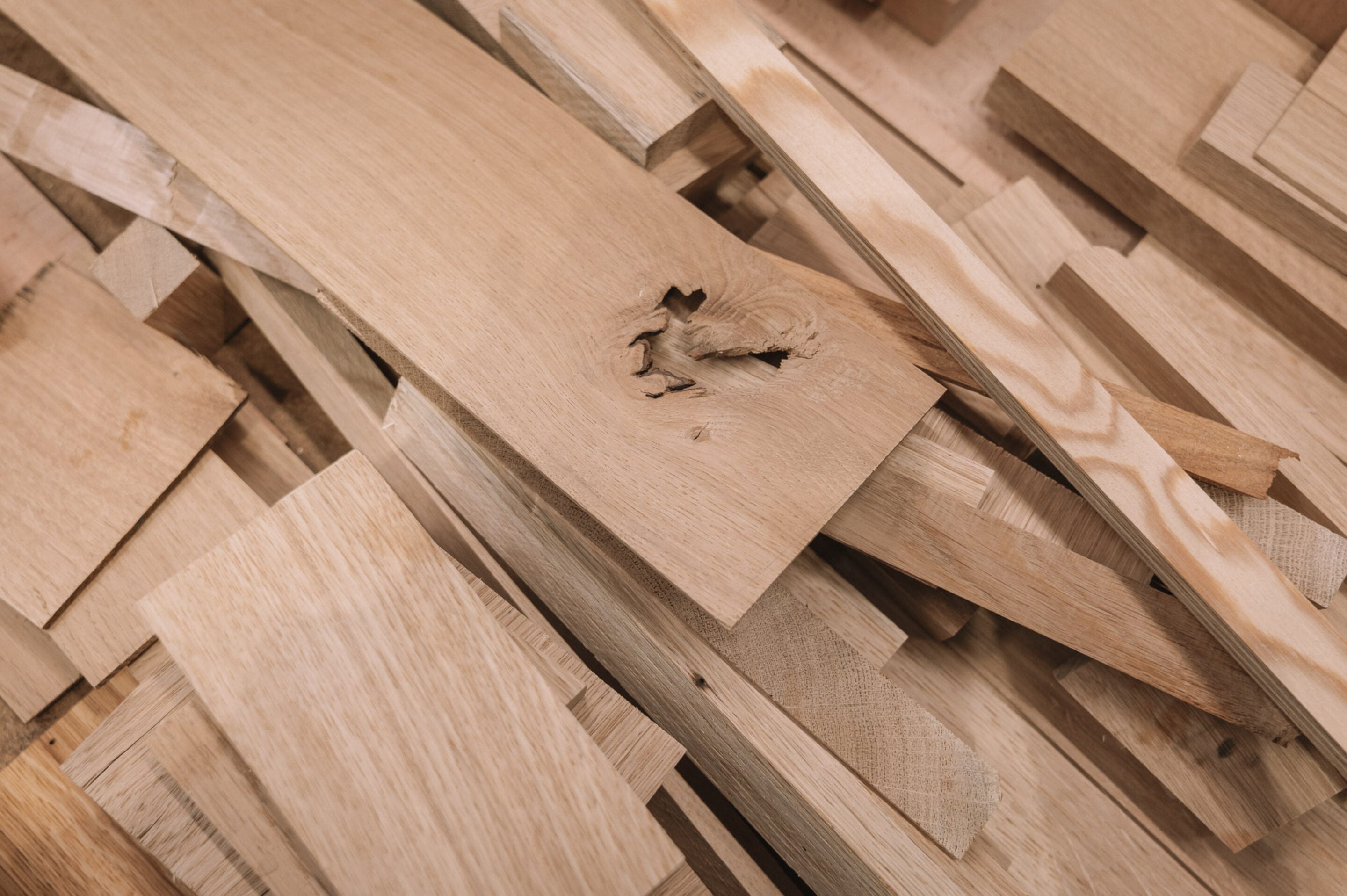
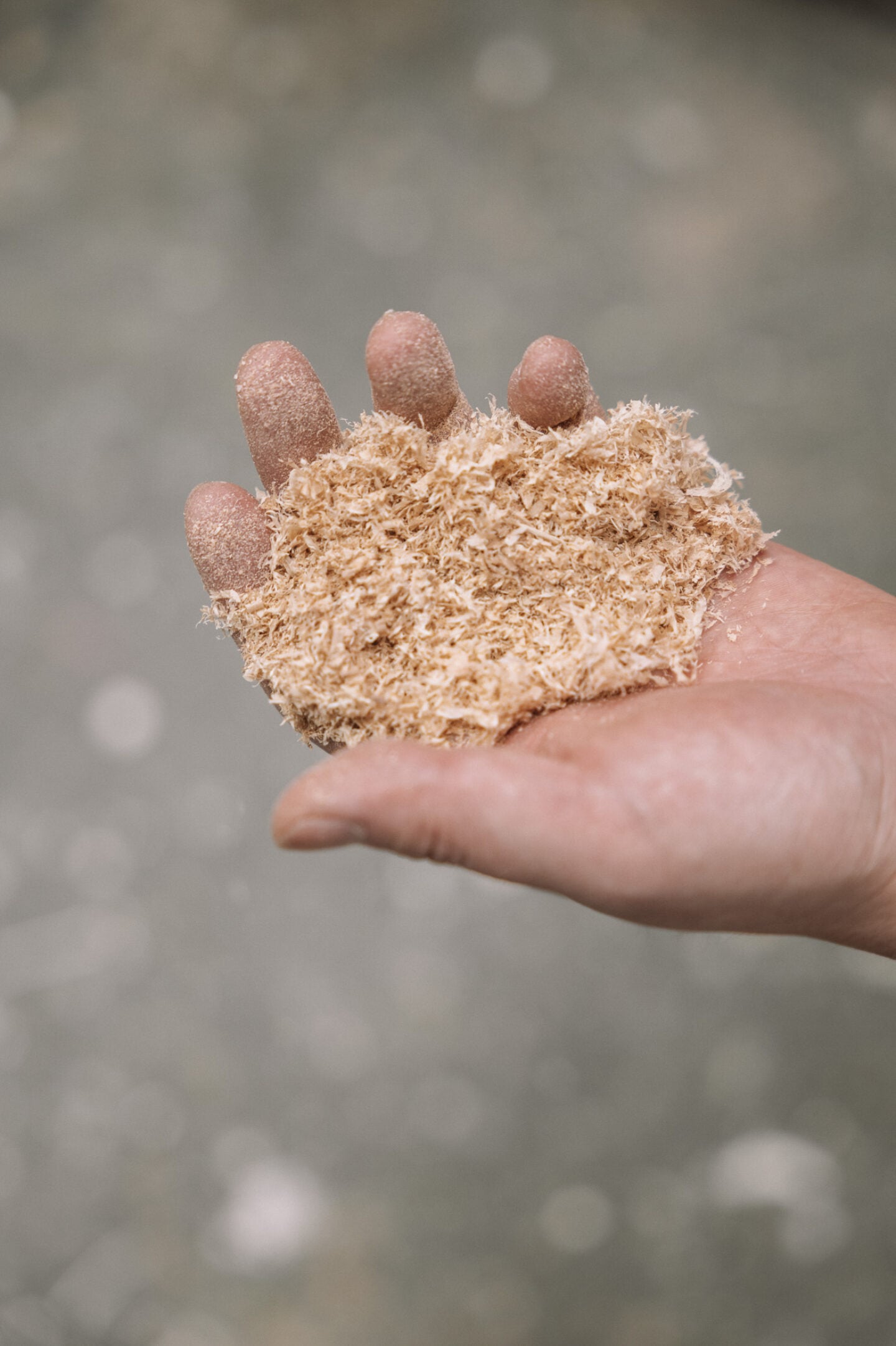
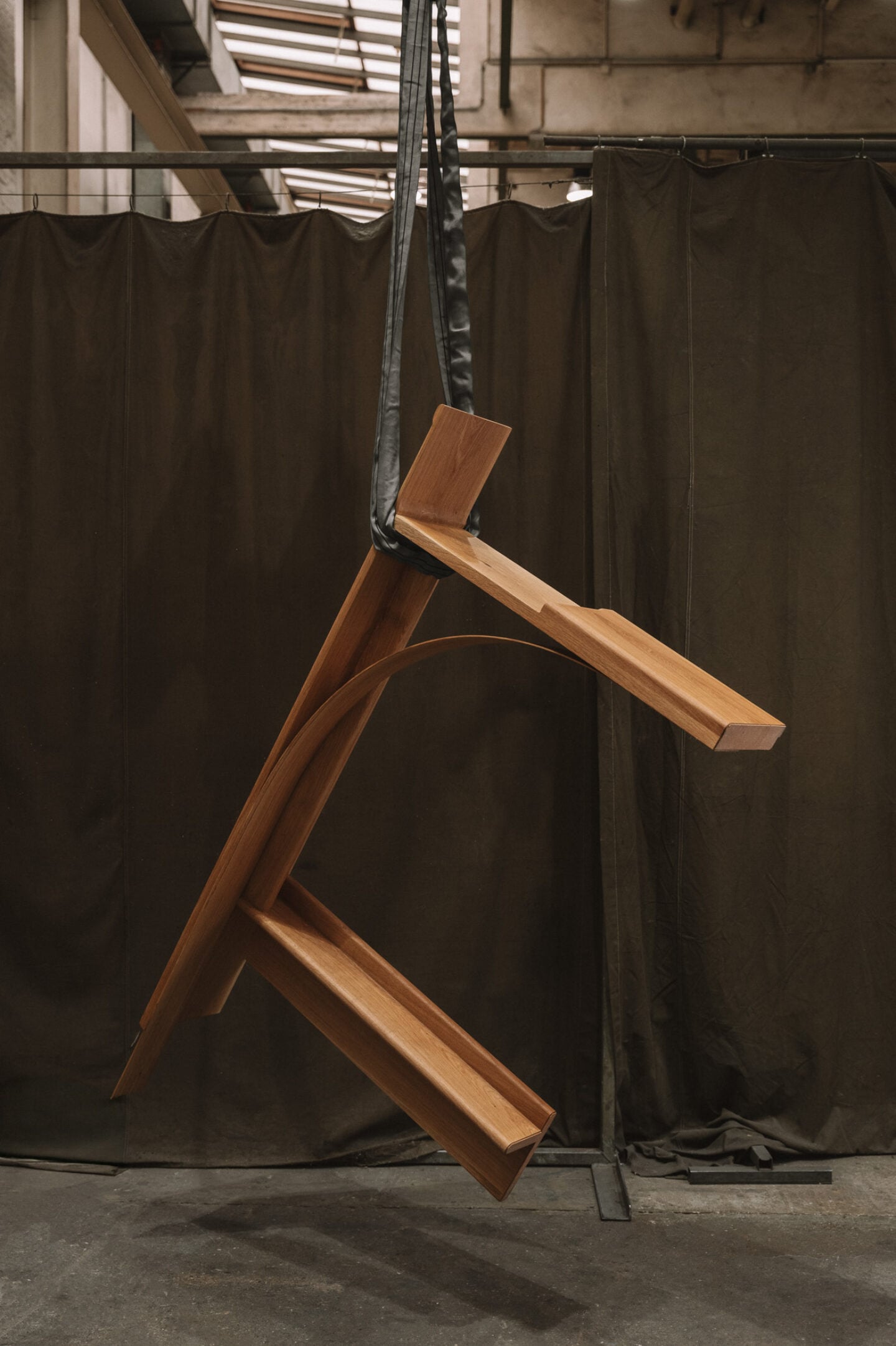
“I had some beautiful oak that had been gifted to me by friends who left Berlin, so I thought I would begin with the materials and see how I went,” he recalls. “I didn’t plan anything; the work came intuitively.” In traditional Korean thought, wood has a life force that continues even after it has been cut. Understanding this ongoing transformation, Lee engaged with the material in a meditative and collaborative way—allowing it to help guide and shape the process.
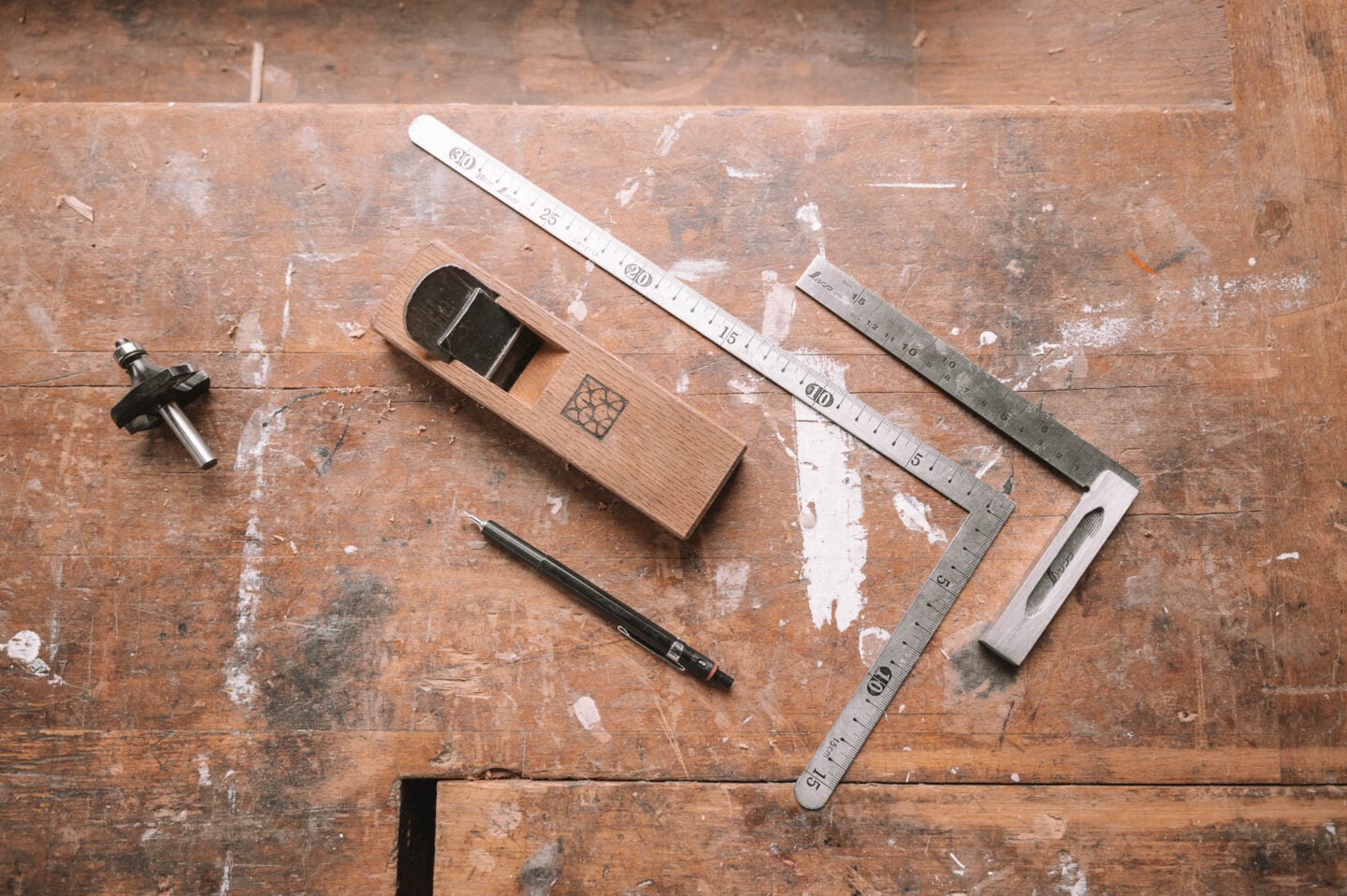
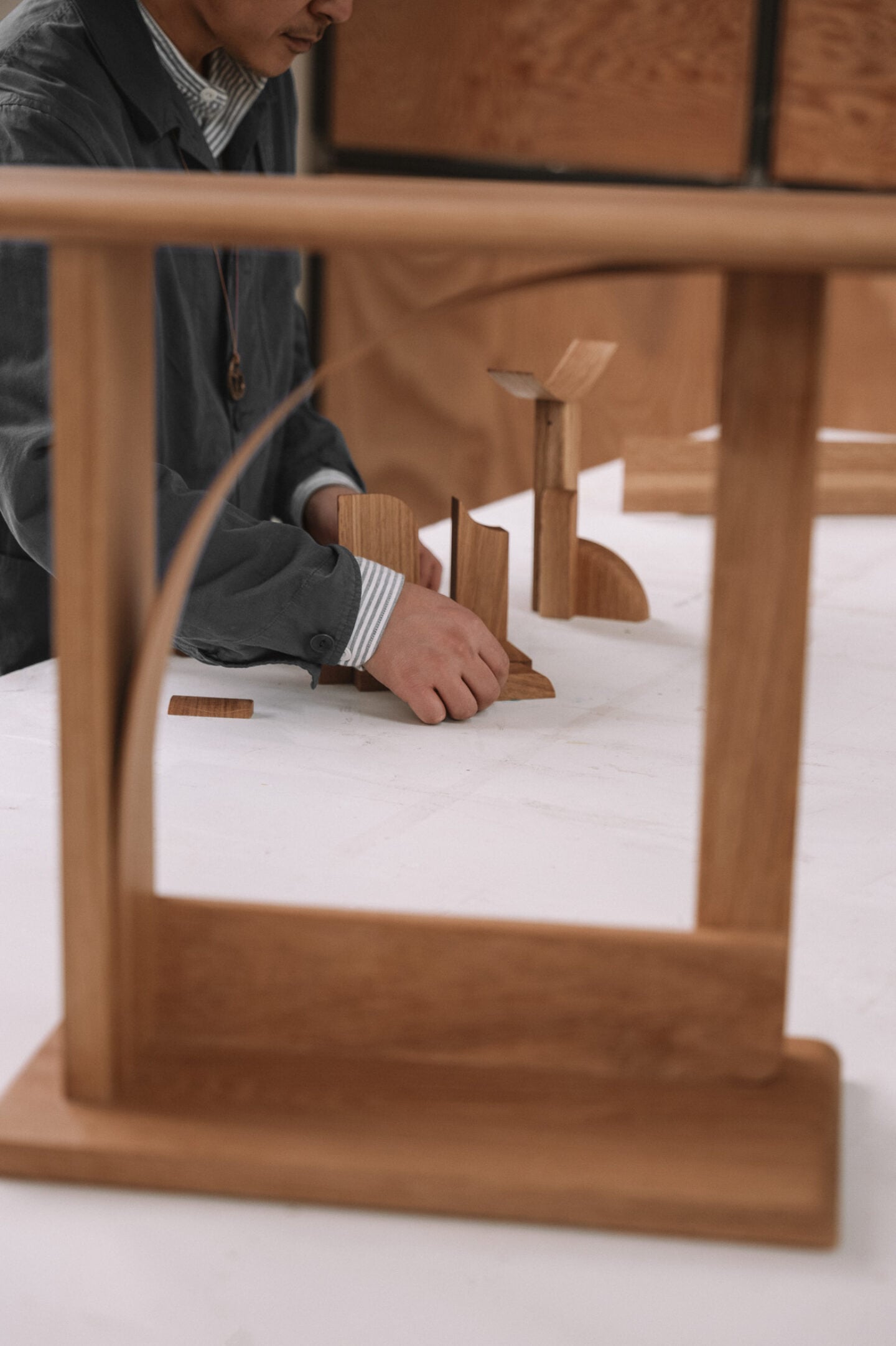
As a result, each design emerged layer by layer. “It was opposite to the way I had been working,” Lee notes. “A far more sculptural approach to production. I spent a lot of time placing different elements together, focusing on the details, looking at each object, and considering whether all the pieces were in the right place.” The results are a new kind of heirloom: elegant and playful, with recurring arches that guide the eye.
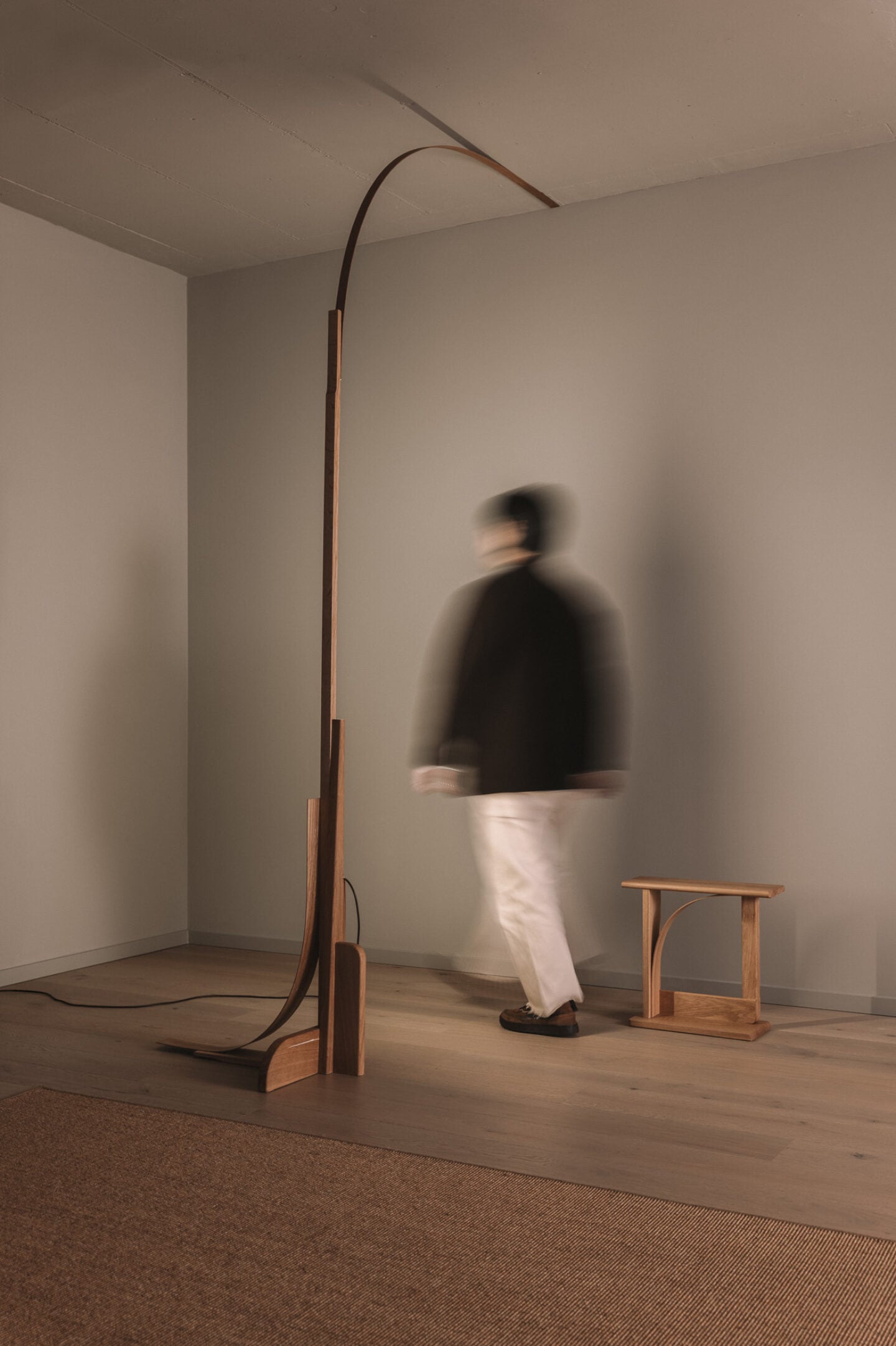
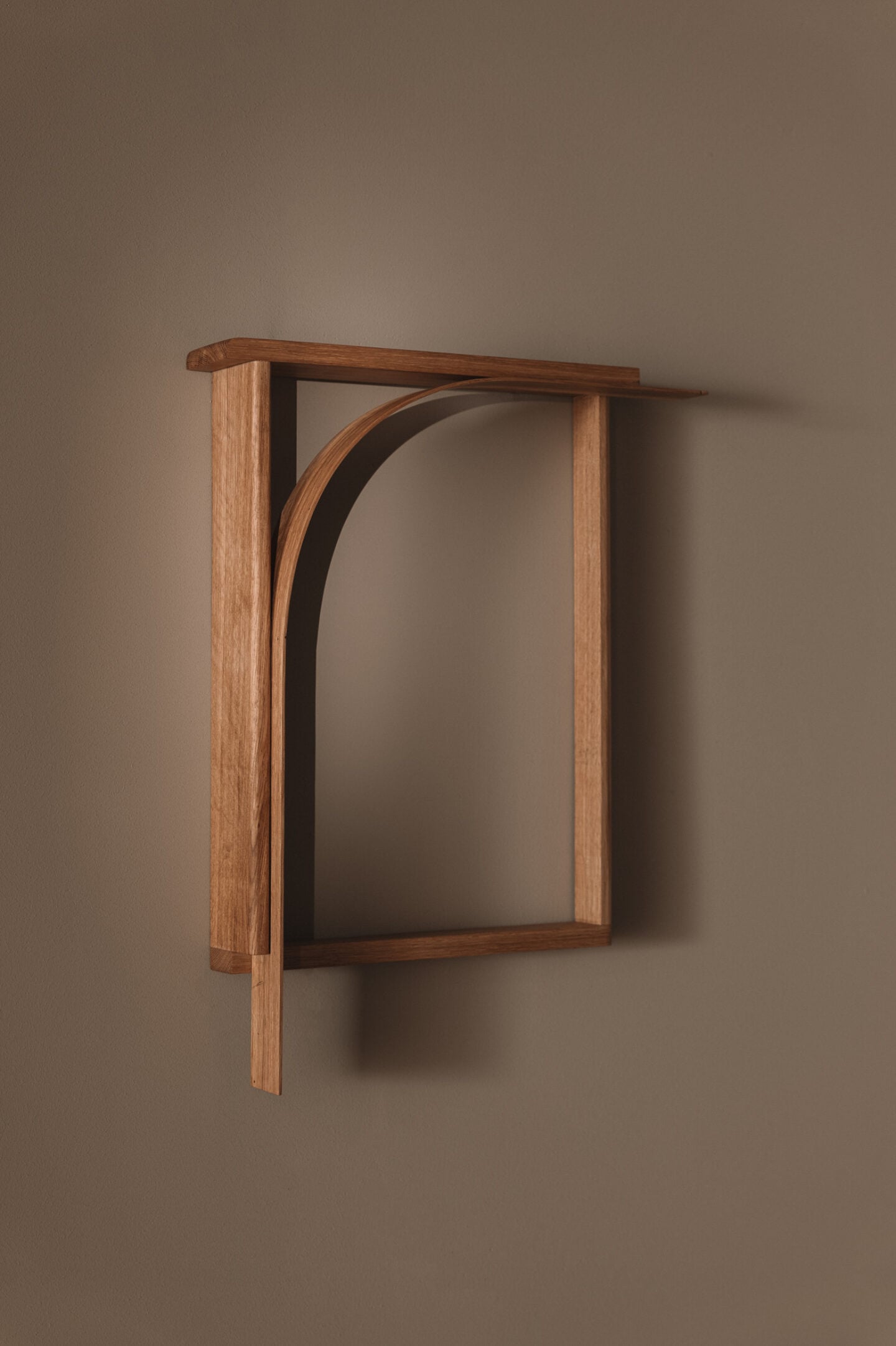
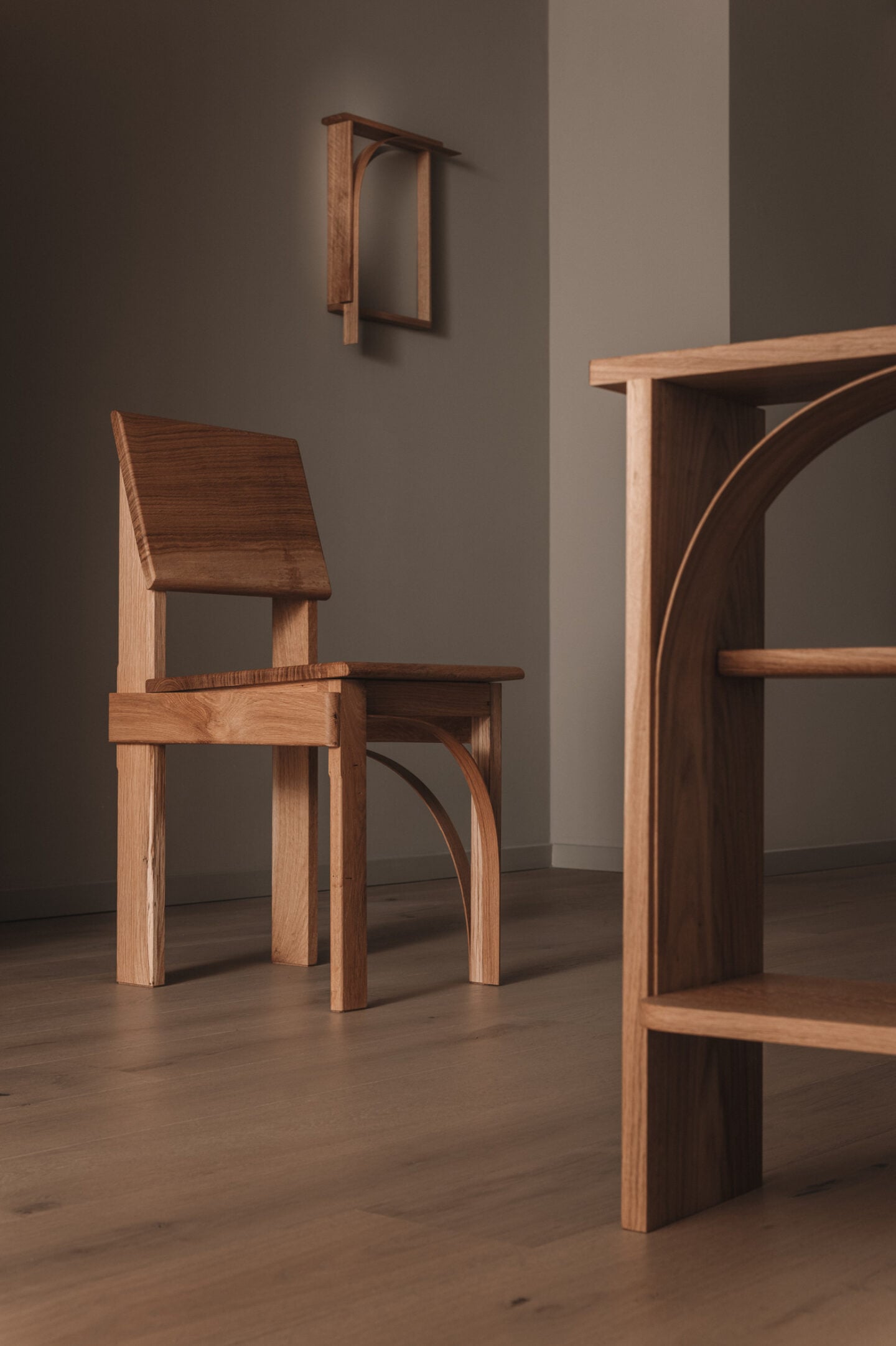
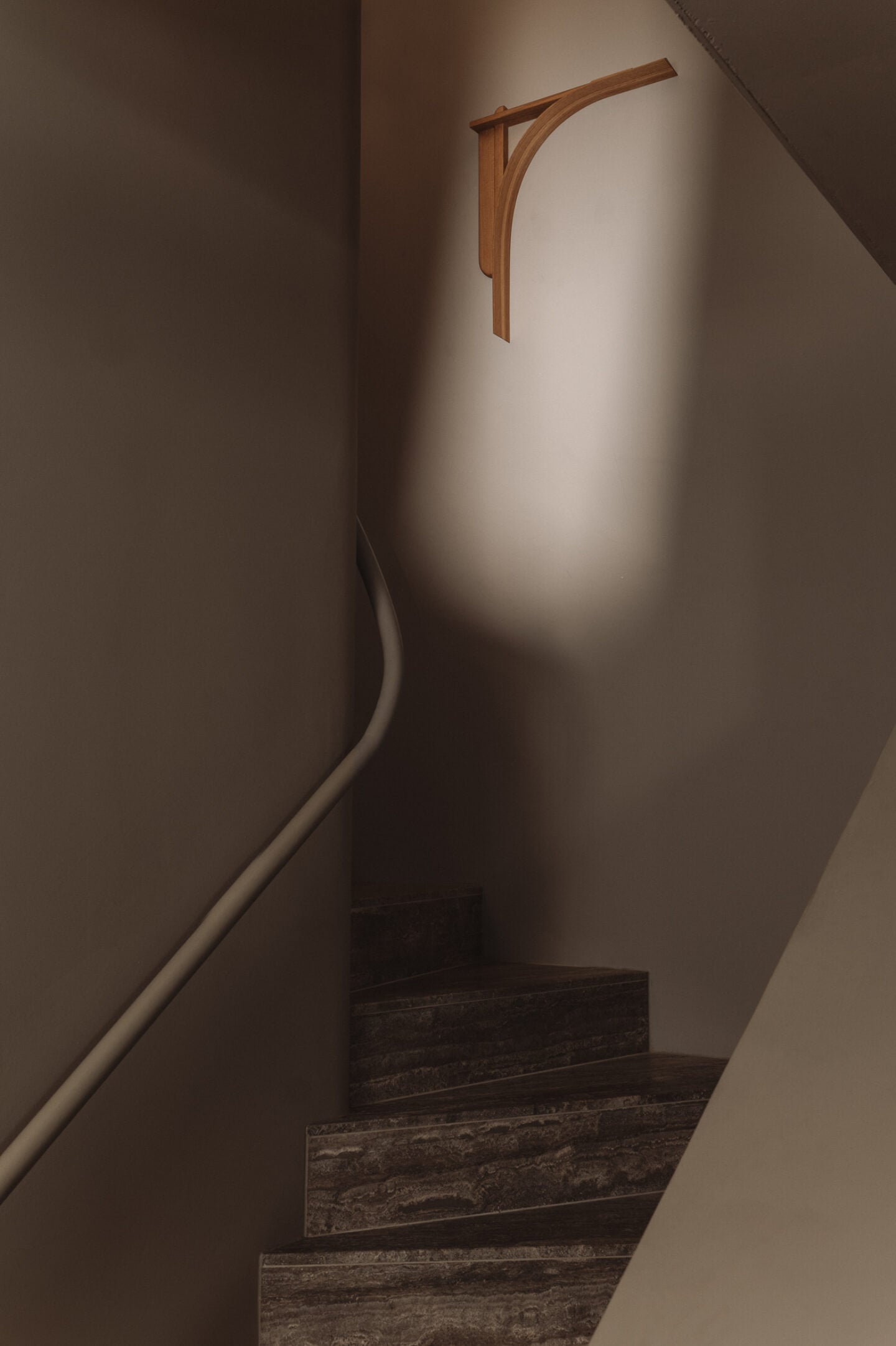
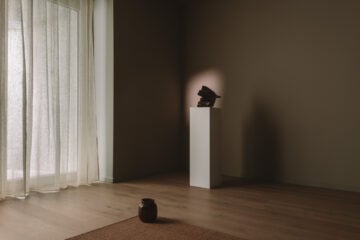
MAJ VAN DER LINDEN provides a unique setting to view the collection. In place of white walls and pedestals, visitors will find the collectible pieces on show in a warm-toned room—a considered location for domestic architecture. When you enter the exhibition, the arrangement of the works sculpts the space while creating a circular flow. “Following the lines of ARC reveals hidden connections that invite personal interpretations of space,” reflects Lee. “It creates new spatial experiences, offering another dimension that expands through objects.”
ARC is on view until March 27 at MAJ VAN DER LINDEN – Townhouse 068 im Stadtquartier AM TACHELES – Johannisstraße 14 – 10117 Berlin
Images © Clemens Poloczek | Text: Rosie Flanagan