Marbledworks: The Nature of Making
- Name
- Marbledworks
- Images
- Clemens Poloczek
- Words
- Anna Dorothea Ker
In stone, time turns tactile—a record of sediment, heat, and movement pressed into matter. At Marbledworks, that long geological story continues in contemporary form.
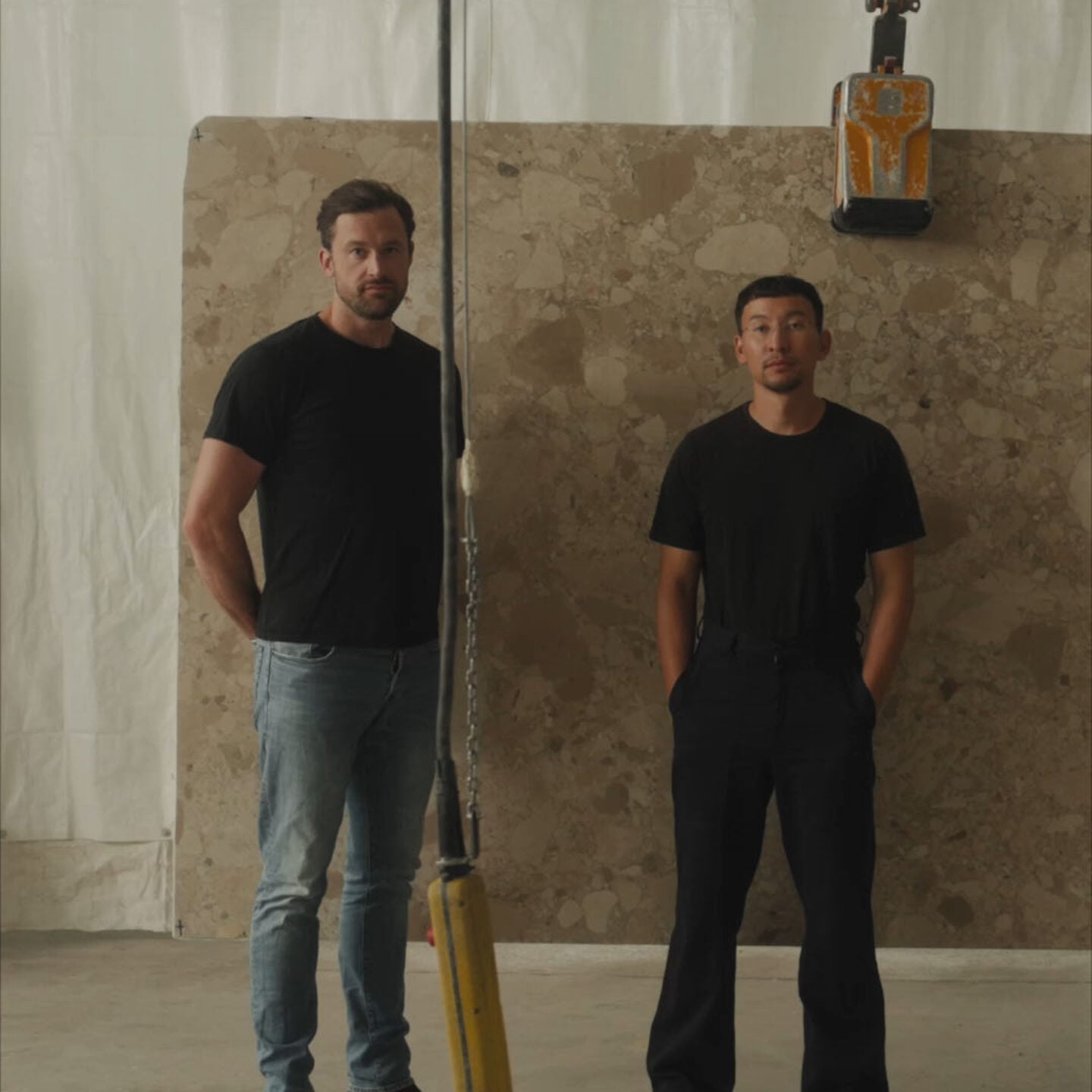
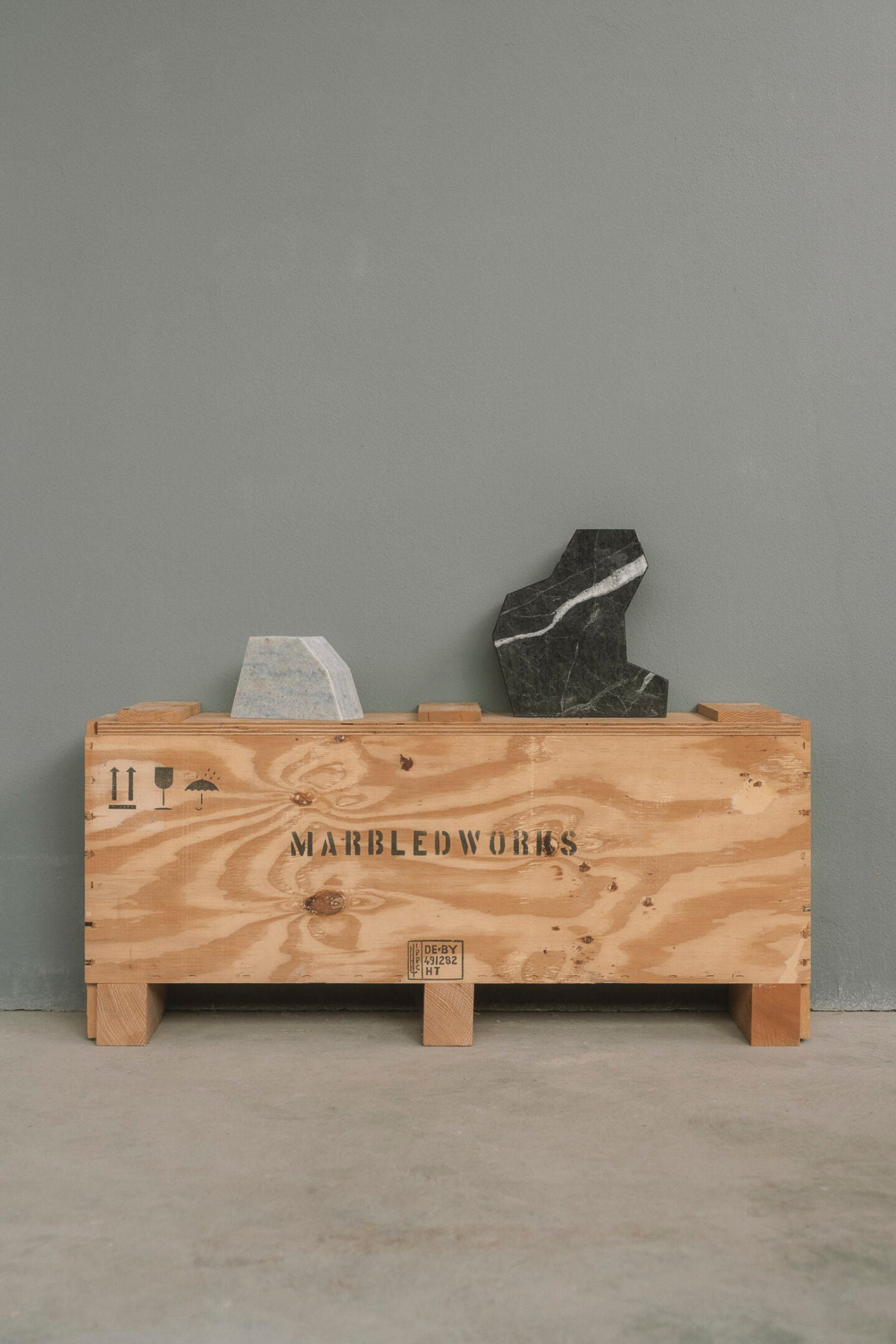
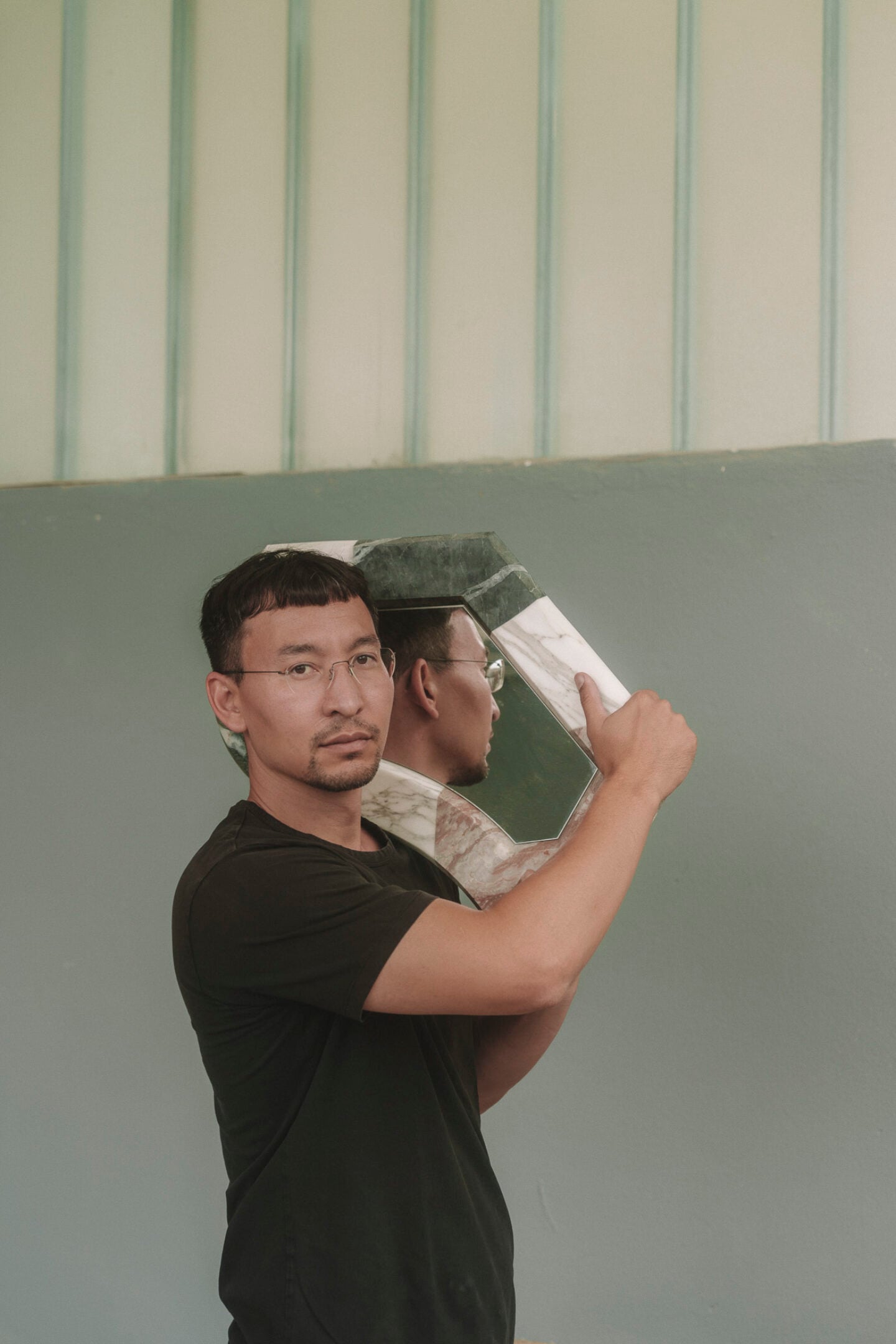
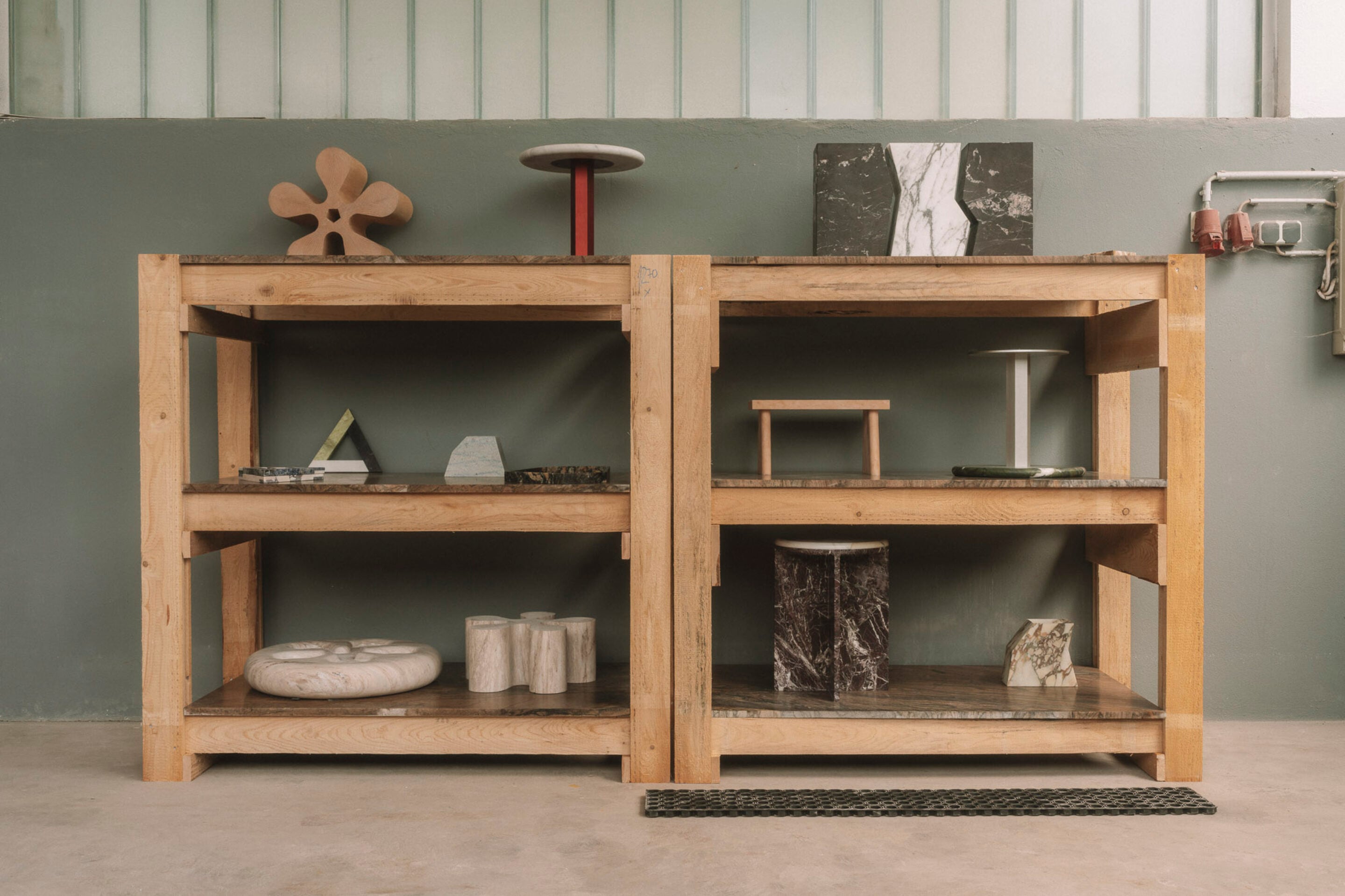
Founded in 2022 by Maximilian Huber and Dominic Kim, the design studio and manufacturer oversees the full chain of creation—sourcing, design, and production—from its base northeast of Munich, where workshop and office share one roof. Their pieces explore tension between weight and lightness: the structural logic of the Hex Table System, the liquid contours of the Jelly side table, the assembled fragments of the Triptychon vases. Collaborations with architects and artists expand this dialogue, transforming stone and other elemental materials from static substance into living practice. In conversation with Ignant, they reflect on an evolving body of work—a slow translation through which matter becomes form.
Beginnings in Dialogue
Huber and Kim’s connection began long before the company existed. “Dominic was in architecture, I was in finance, and through friends and family our paths kept crossing,” Huber recalls. What began as a casual exchange of ideas soon crystallized into a shared vision. “Dominic reached out with thoughts on furniture and interiors,” recalls Huber, whose family has worked with stone for four generations. “Since I knew the stone world, it turned into a longer conversation. Within months, we decided to build something together. We each left our roles, and that was the start of Marbledworks.”
Their partnership draws on complementary disciplines. “It’s not just about making objects,” Kim adds. “It’s about how they sit within space, how they speak to their environment. As an architect, that’s always my entry point.” The studio’s name, chosen playfully, reflects that sense of intersection—a nod both to marbling in stone and to the act of working material.
Stone and its Possibilities
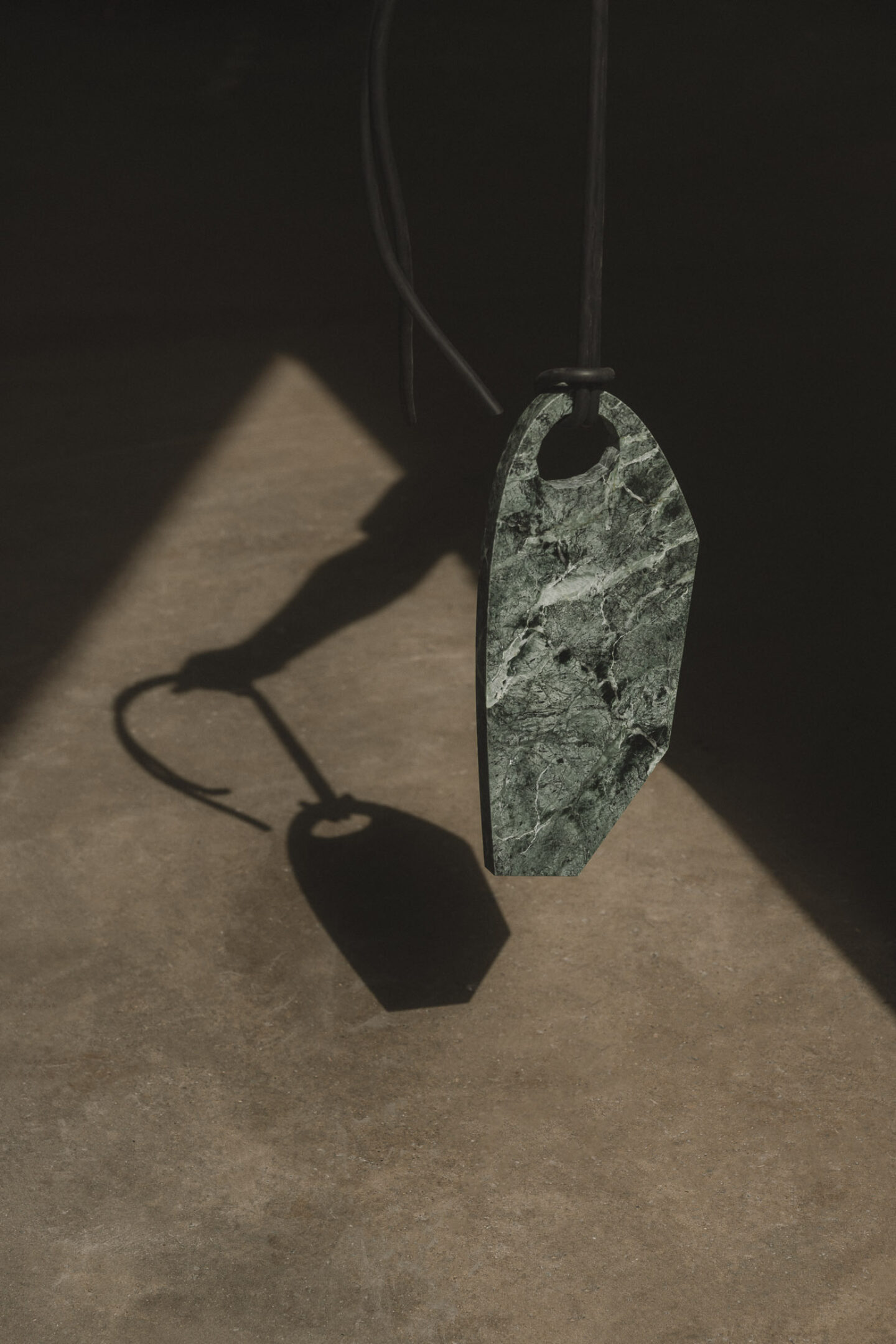
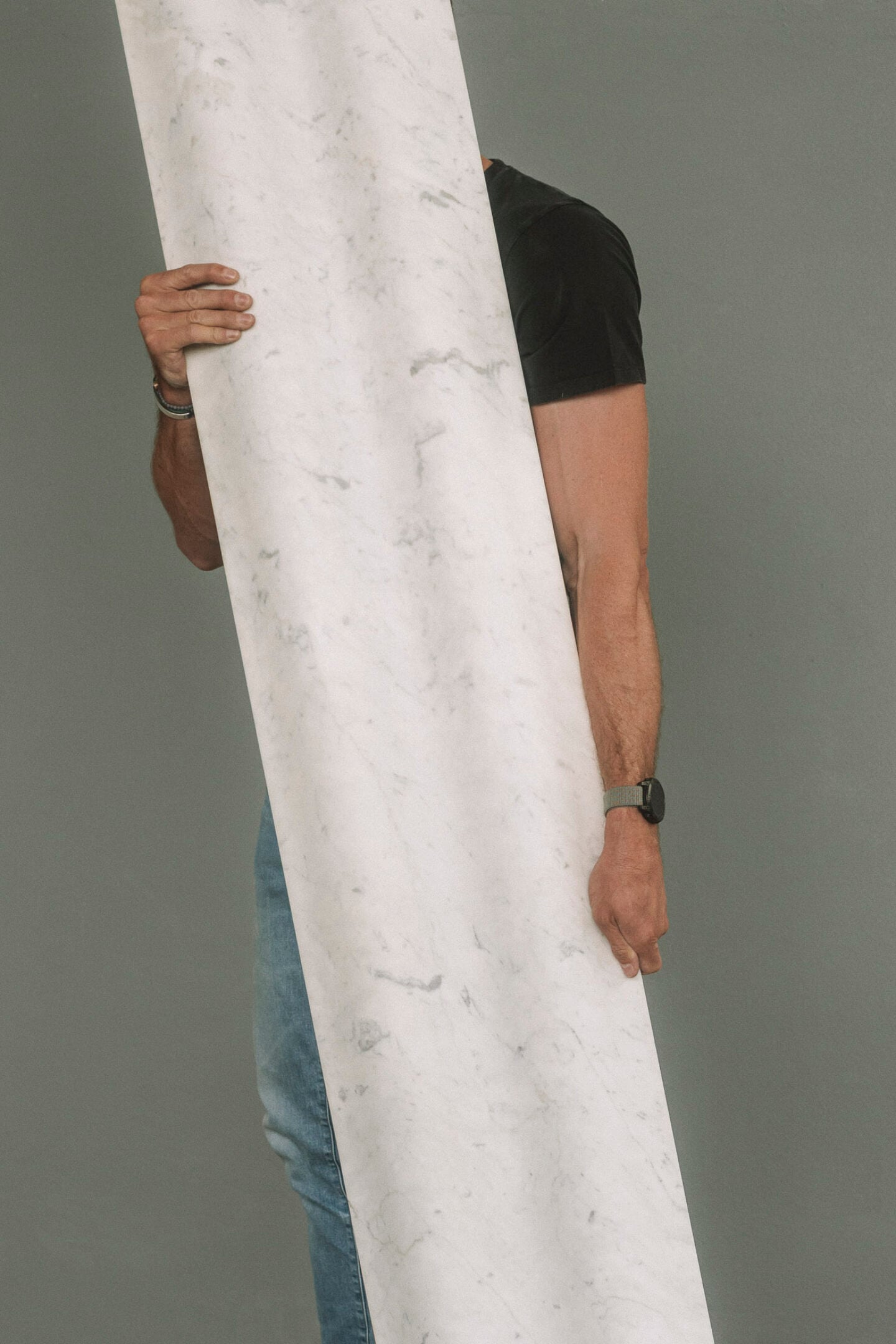
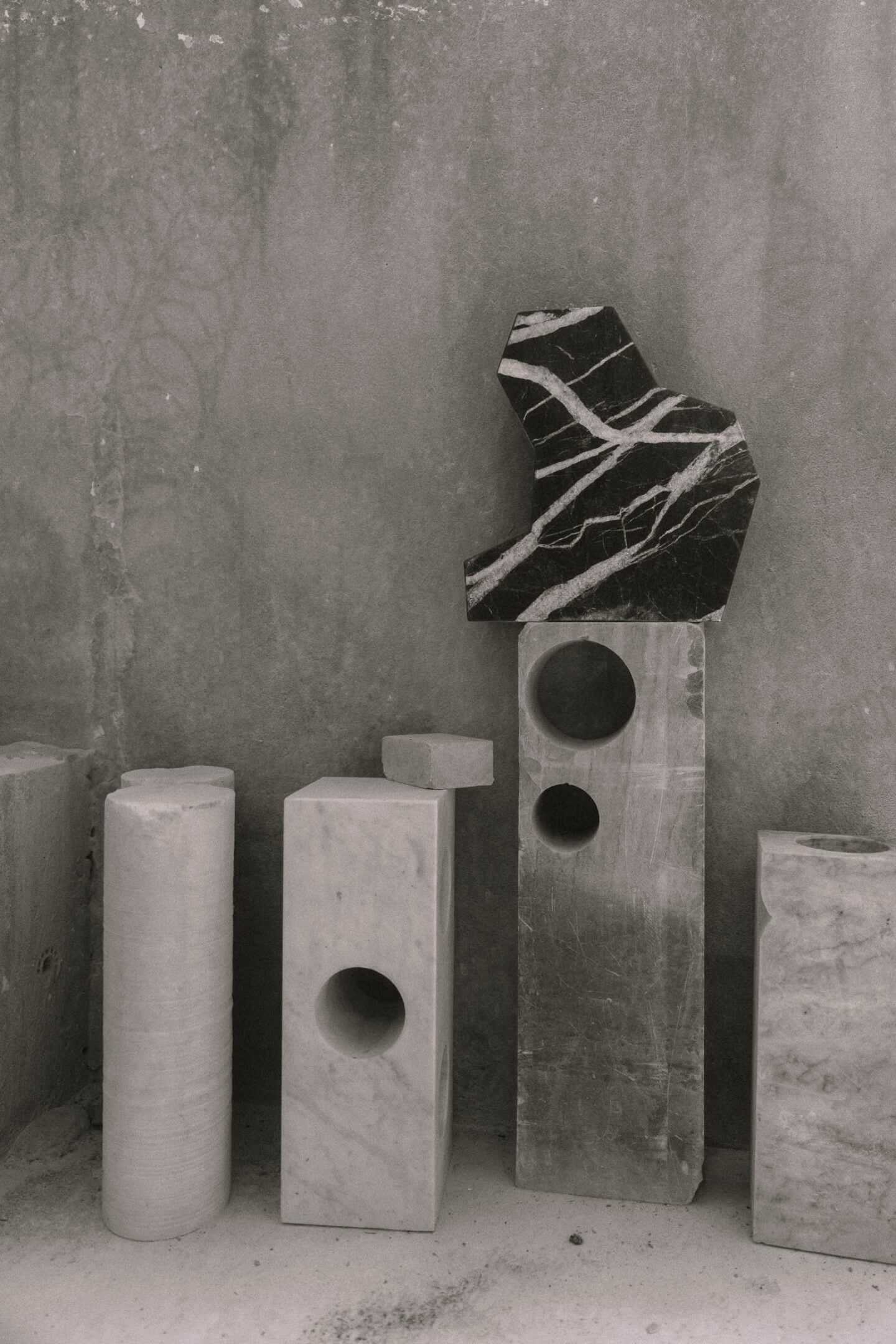
For Huber, stone was an instinctive starting point. “It’s a material that holds time—every block tells a story that began millions of years ago,” he says. “The colors, the grains, the imperfections—they all carry their own logic.” This lineage offered both knowledge and infrastructure. “We already had the cranes, the machinery, the space to lift and cut,” he says. “If Dominic had come from woodworking, we might have begun with wood, but stone was what we had at hand. It felt natural to start there.”
Together they travelled to Italy, visiting quarries and factories to understand extraction and refinement at scale. “Seeing how industrial systems generate their own by-products was eye-opening,” Kim says. “An offcut from one process could become a starting point for another. We began to look at stone not as a static block, but as something open to transformation.”
That early research shaped their approach to combining materials. “We spent months talking to glassblowers and metalworkers, studying how stone could interact with other elements,” Kim recalls. “That’s still central to how we work—each material informs the next.”
Process and Production
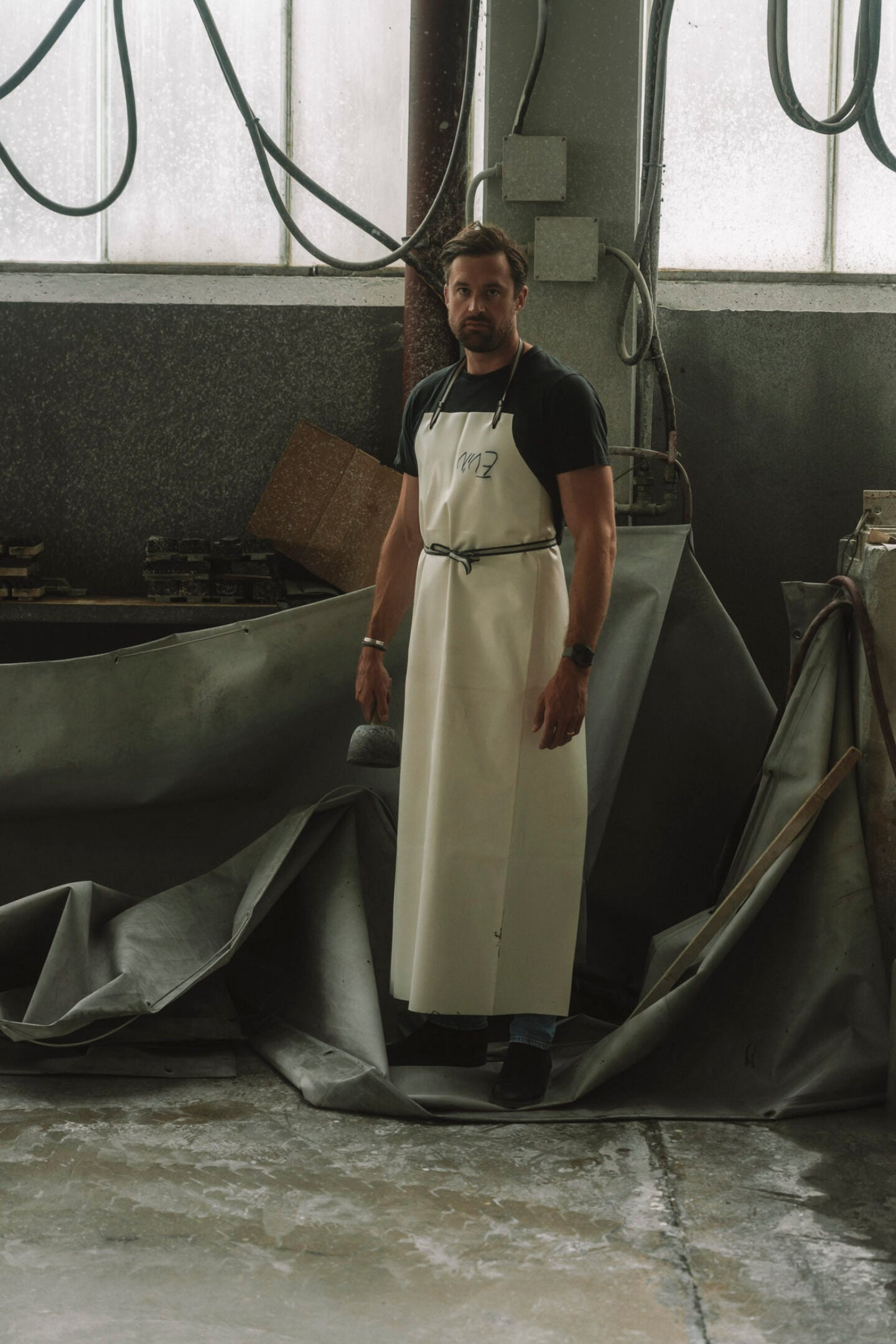
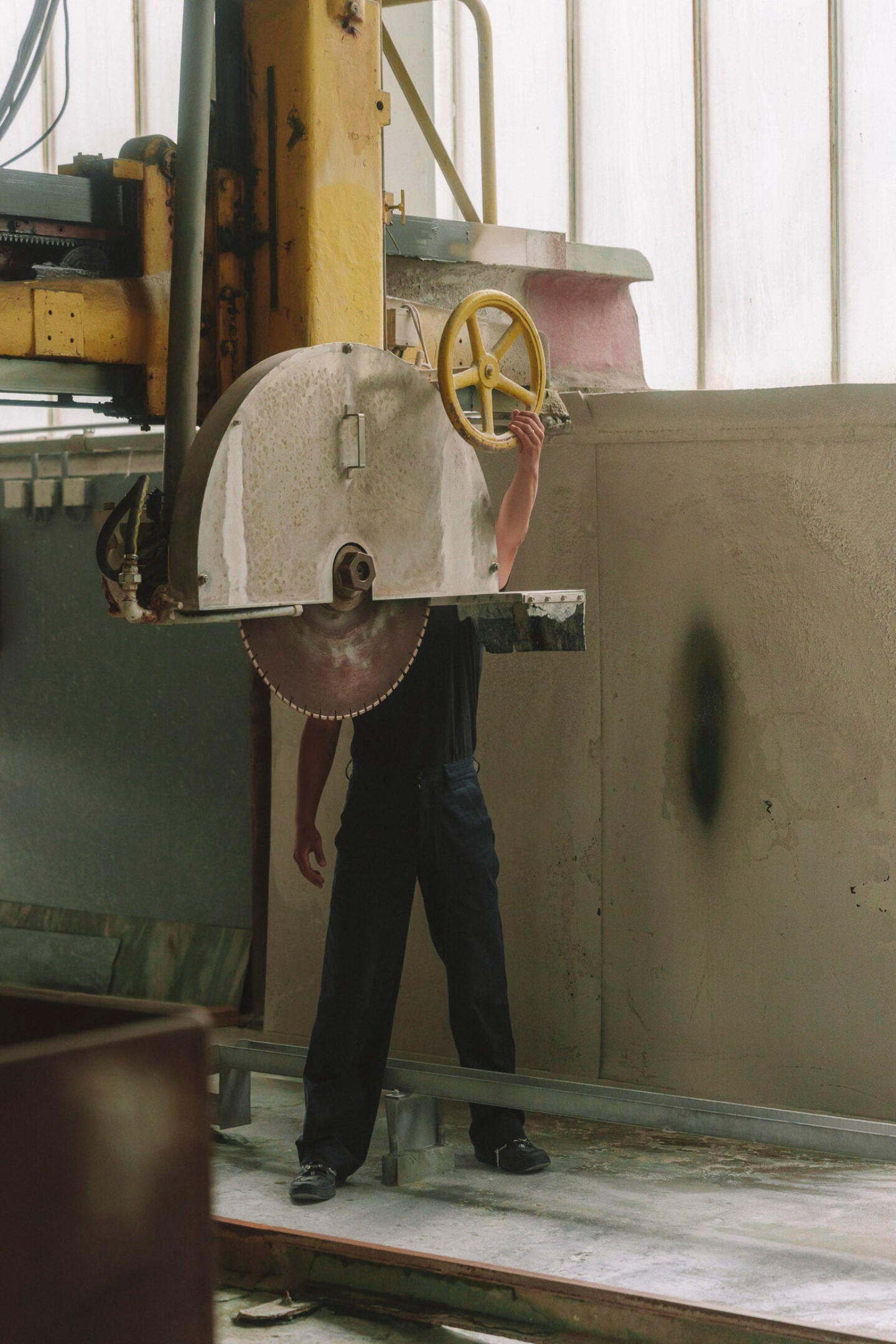
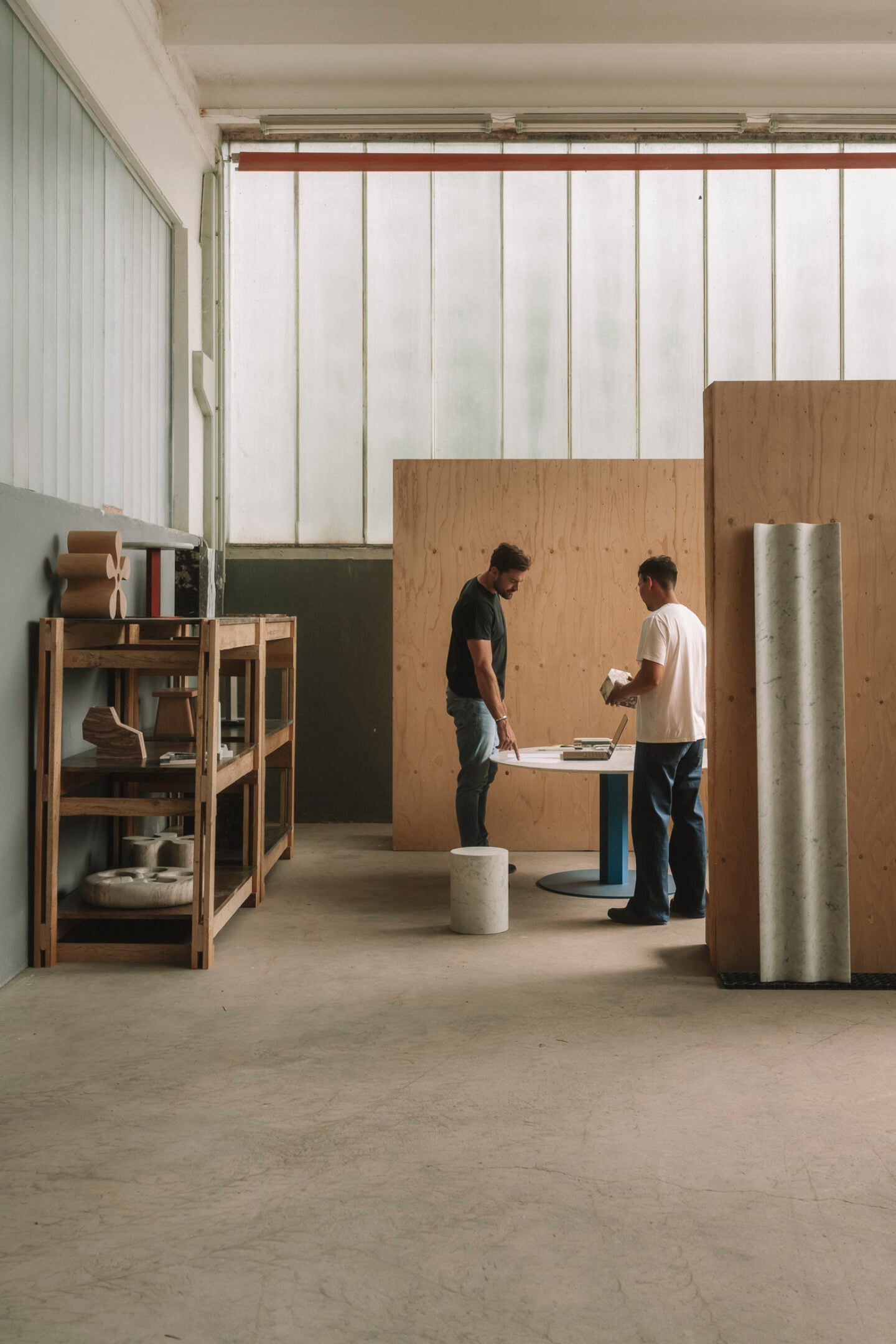
In their base near Munich, design and manufacturing take place under the same roof. “Our studio sits directly above the production hall,” Kim says. “You can hear the saws, the polishing machines, the cranes. We walk downstairs to test things in real time.” Every piece is made in Germany, with raw stone sourced from Italy, Turkey, or Brazil, and local carpenters working within a thirty-kilometer radius. “Everything is refined, assembled, and handled here,” Huber notes.
The process combines digital precision and handwork. “Machines help with accuracy, but the hand gives character,” Kim explains. “We call it machine-assisted craftsmanship. Each surface is finished manually. That’s what sets our work apart from industrial production.” Each piece bears traces of its making – edges, joins, and surfaces that show how it came into being. Custom commissions follow the same approach.
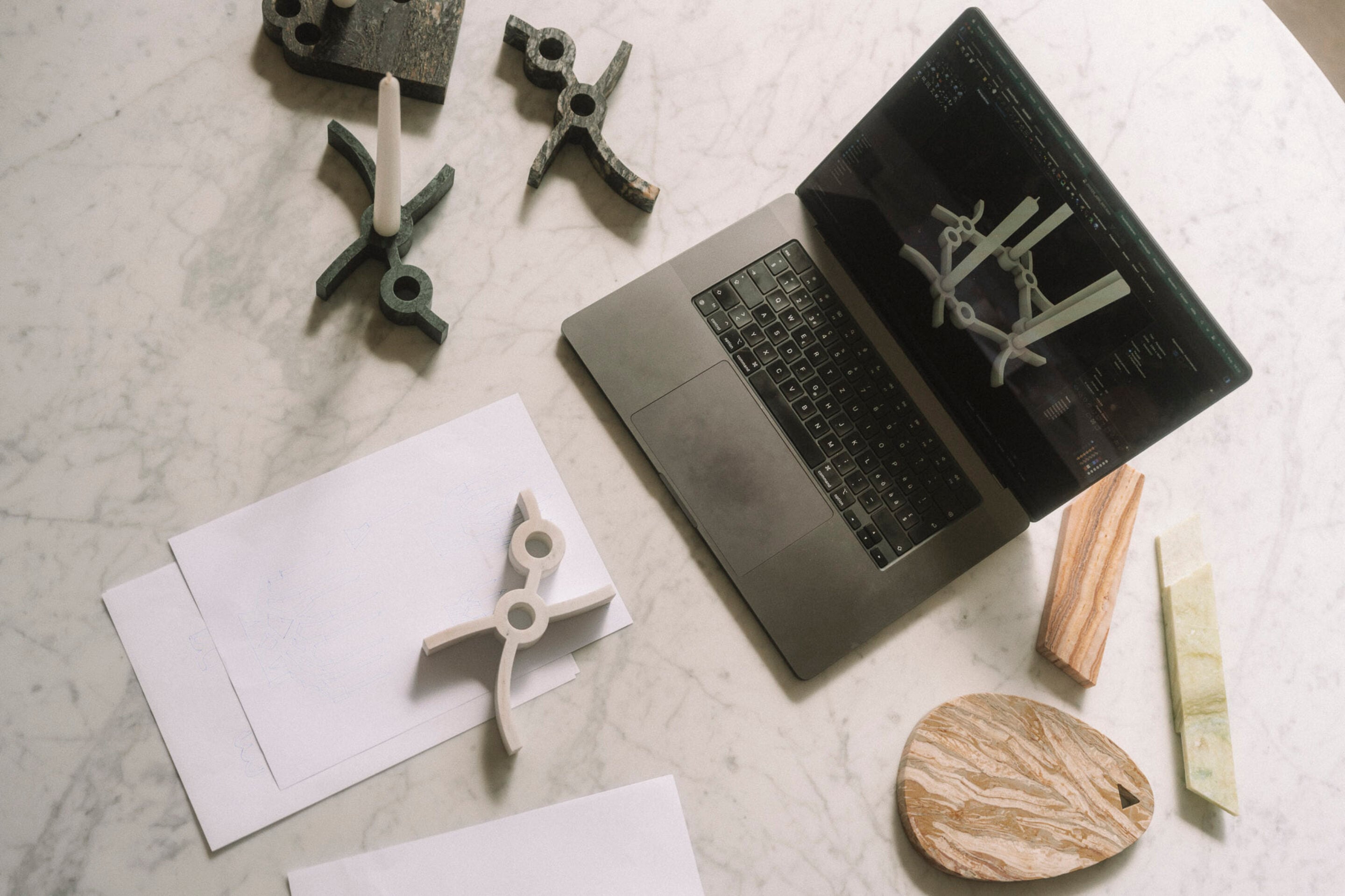
“Once a design brief is agreed, we sketch and visualize options,” he continues. “We show material tests alongside 3D models to convey proportion and texture. Each project goes through feedback and optimization—we think about how it can be produced, shipped, and reassembled. The goal is to find an elegant solution within practical constraints.”
Works and Collaborations
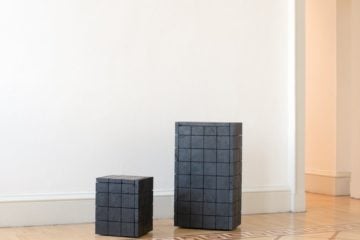
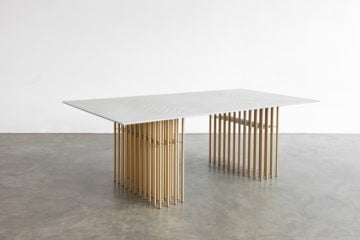
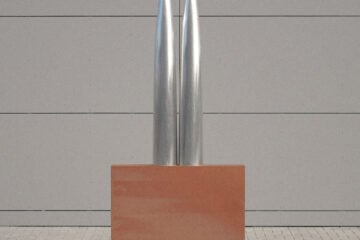
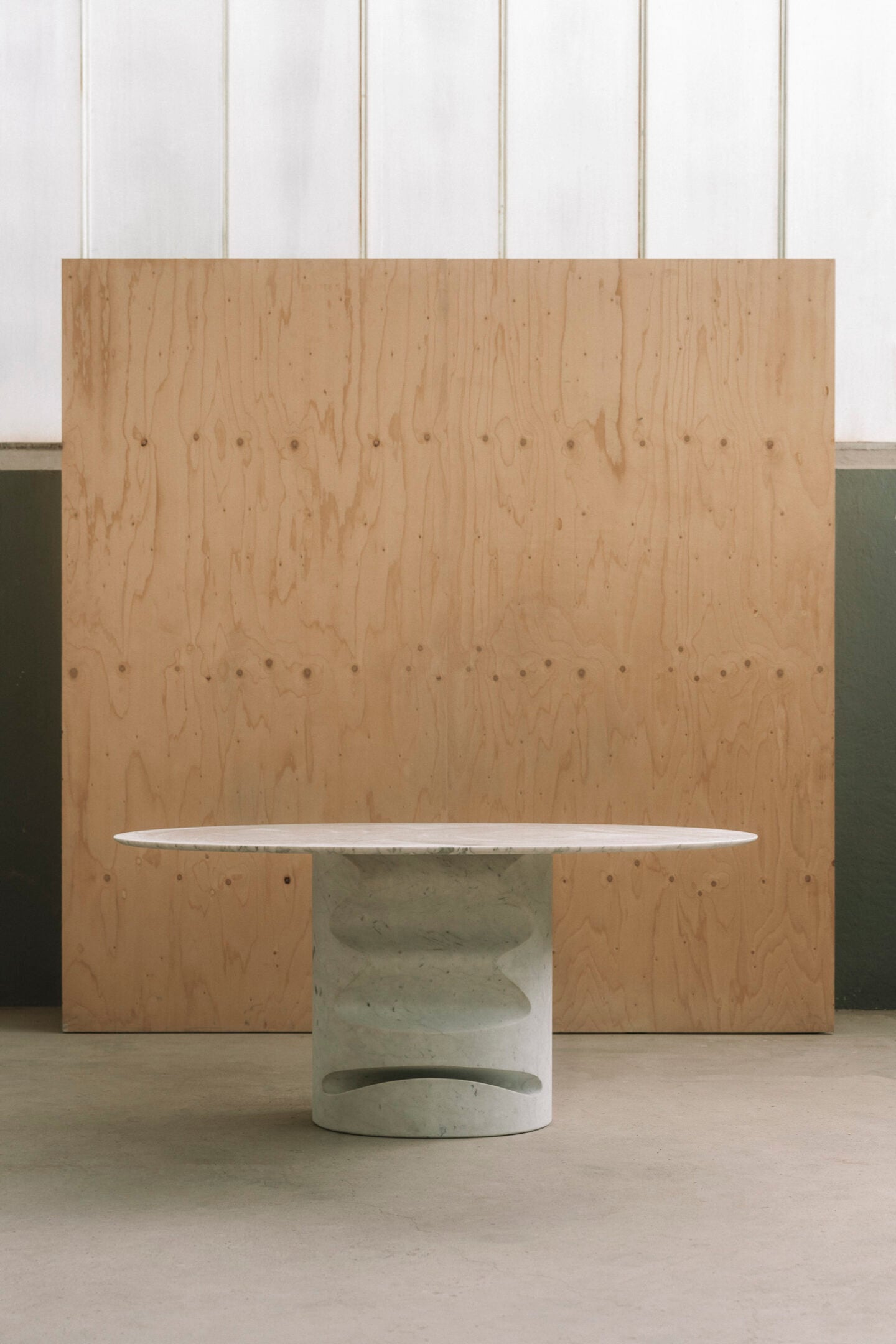
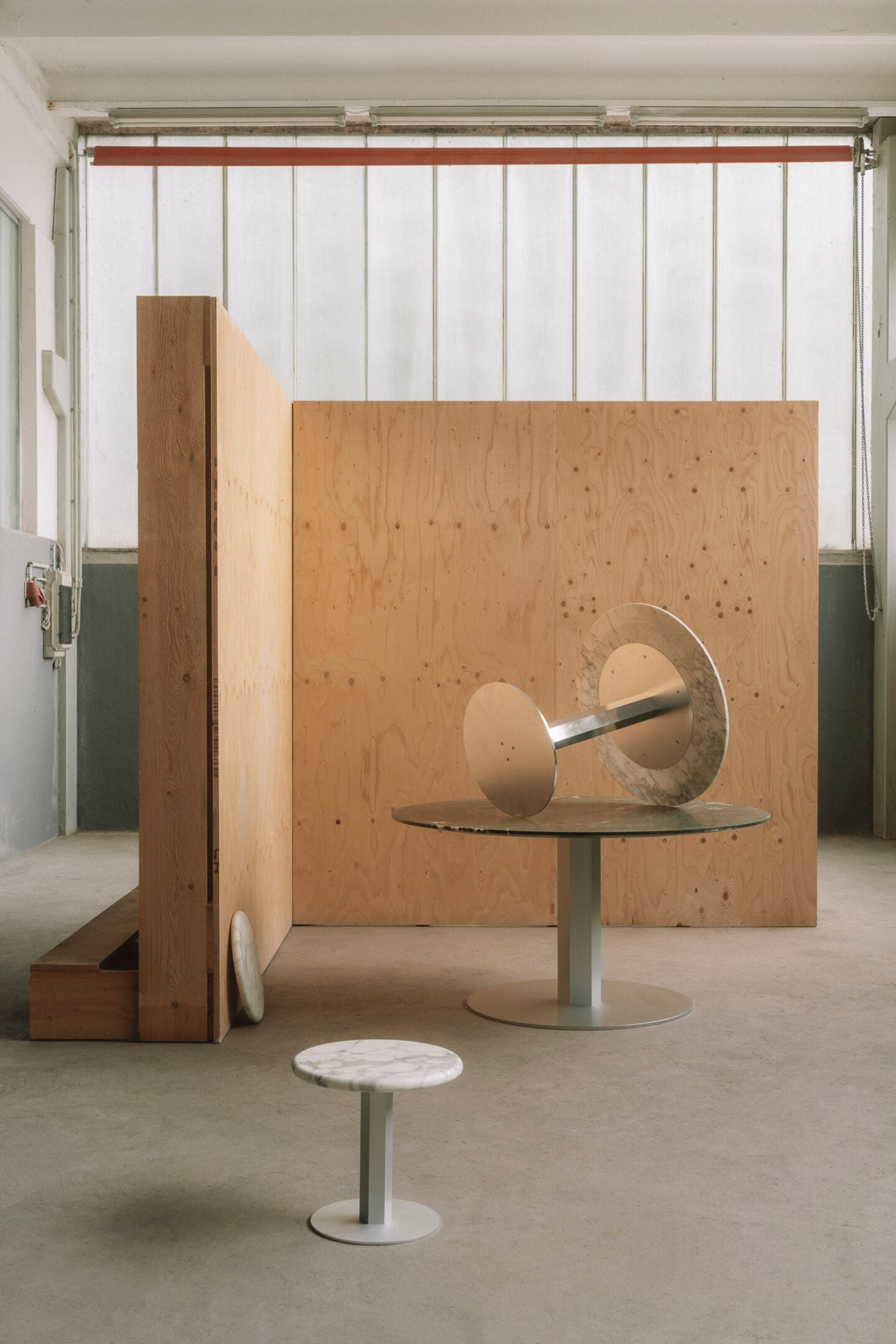
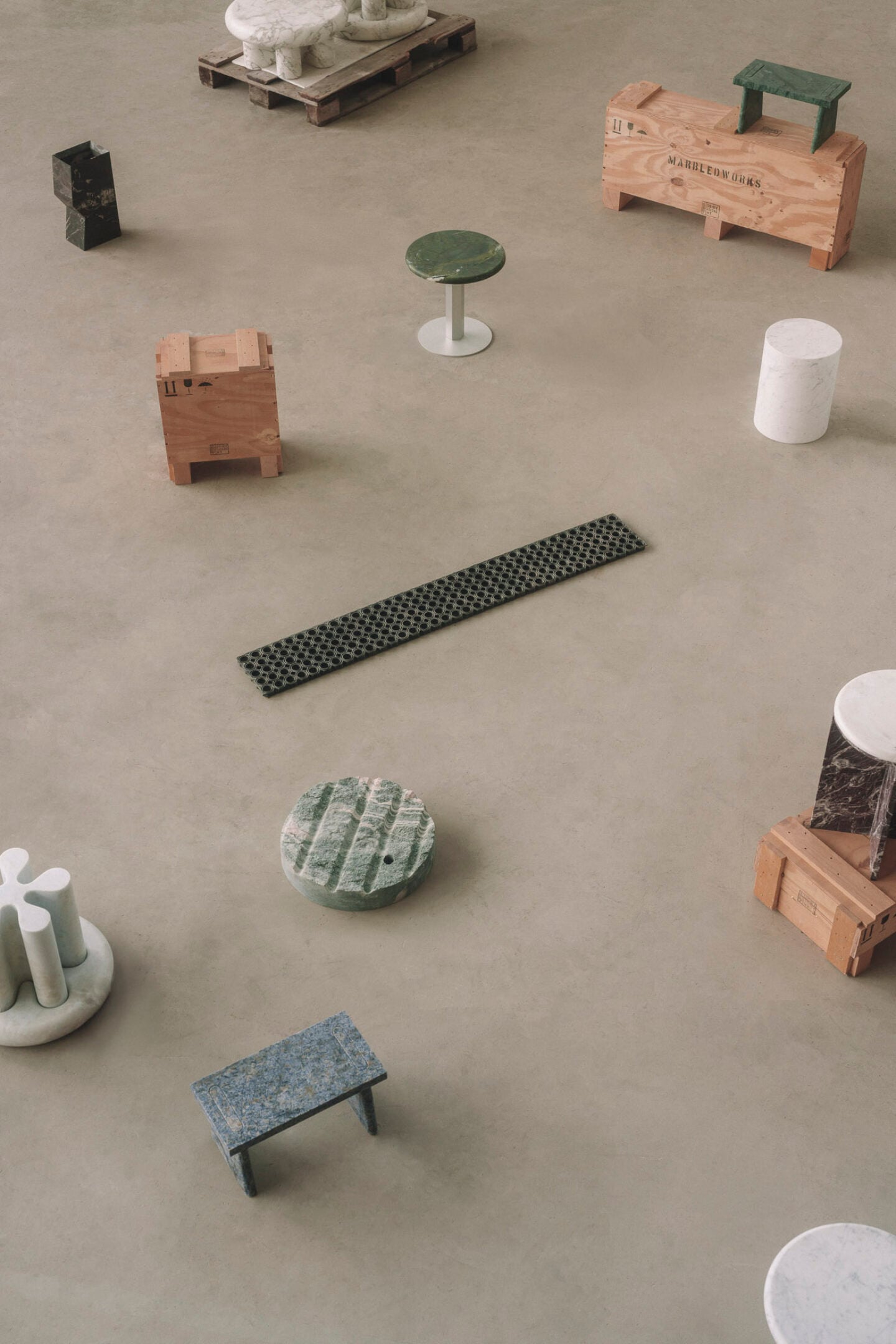
Marbledworks operates across three core fields: its own collections, custom pieces, and collaborations. The ‘Hex’ Table System, one of the studio’s best-known series, explores modularity through contrast. Hexagonal aluminum profiles meet stone tops of varied colours and finishes. “It’s inspired by fundamental table typologies,” Huber explains. “But we wanted to restore the qualities often lost in streamlined manufacturing—proper joinery, attention to the underside.” Every component is screwed rather than glued, allowing for easy assembly and replacement. The structure is industrially crafted yet tactile, with vibrant anodized tones offsetting the weight of stone.
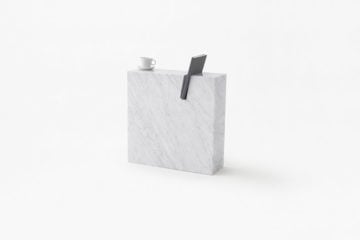
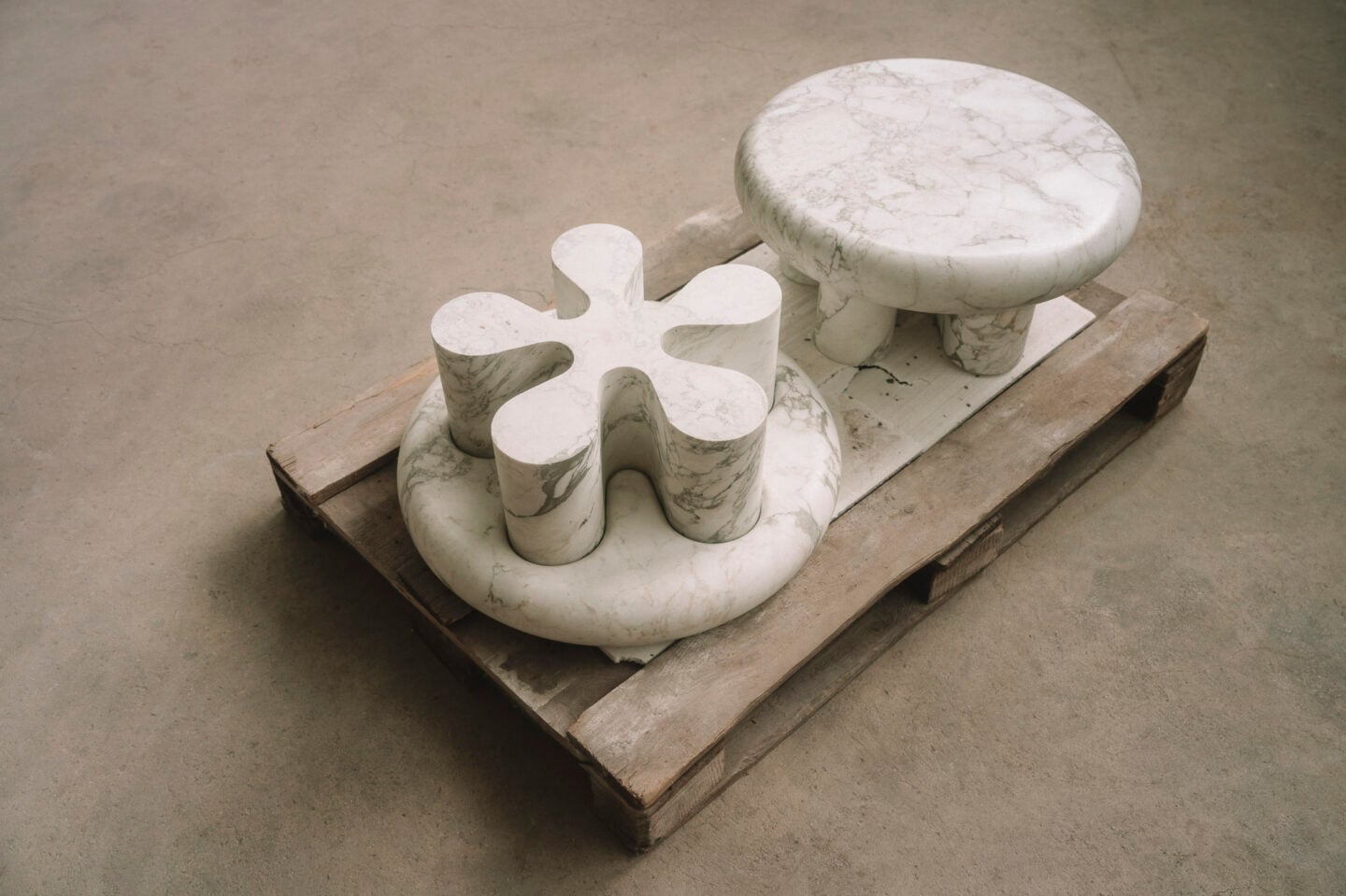
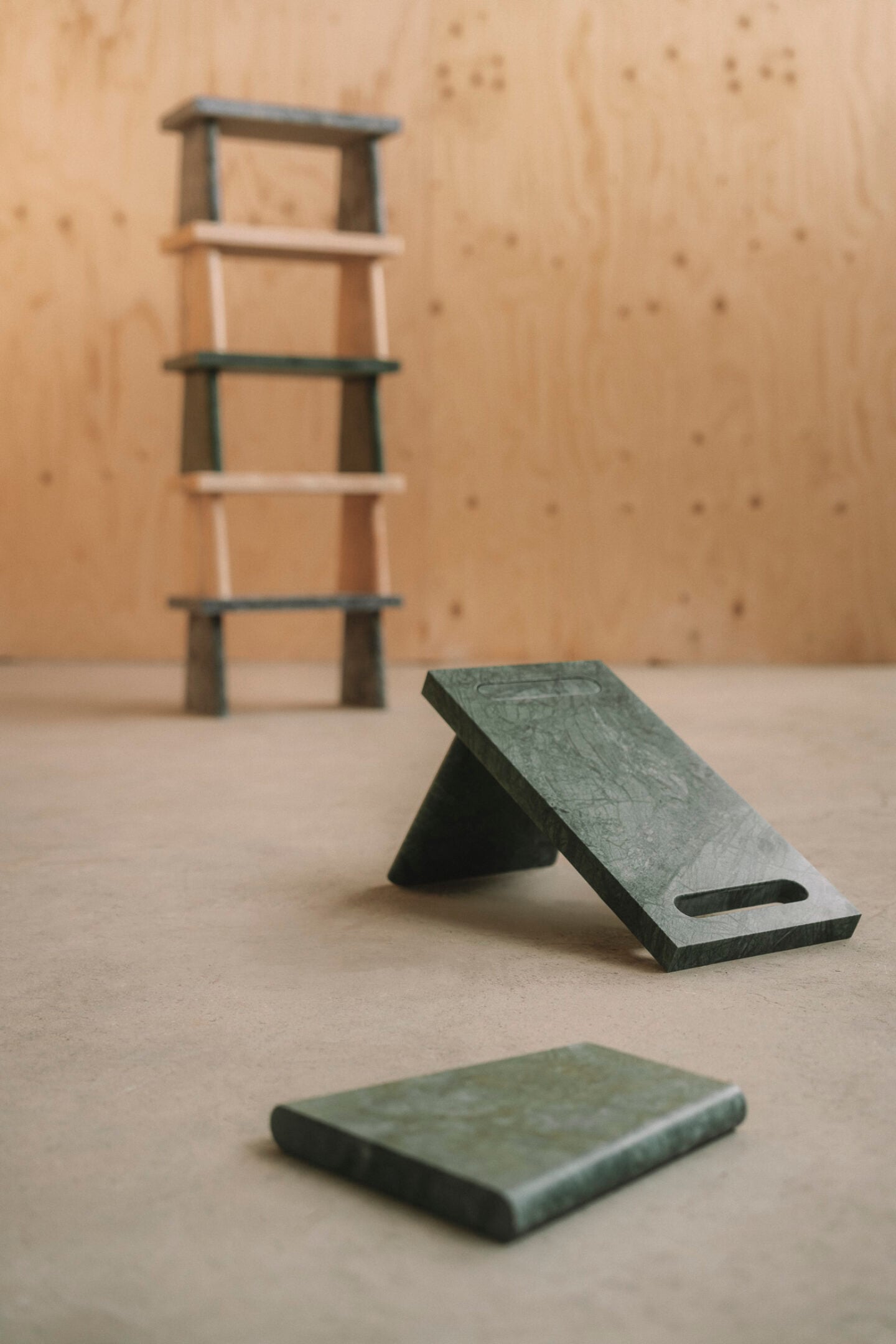
If Hex demonstrates the studio’s precision, ‘Jelly’ shows its sensuality. With its soft contours and rounded edges, the side table recalls natural erosion. “The form is drawn from nature—like a jellyfish floating,” Kim says. “You can feel the grooves and patterns under your fingers. It’s meant to invite touch.” Each piece is one of a kind, its veining determined by the stone’s origin.
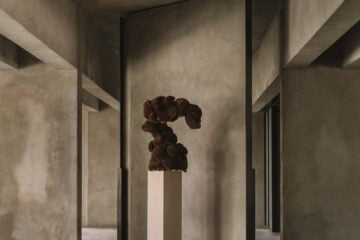
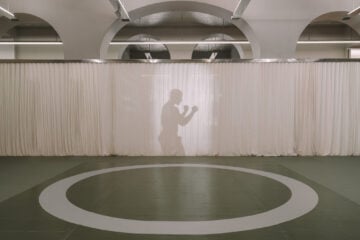
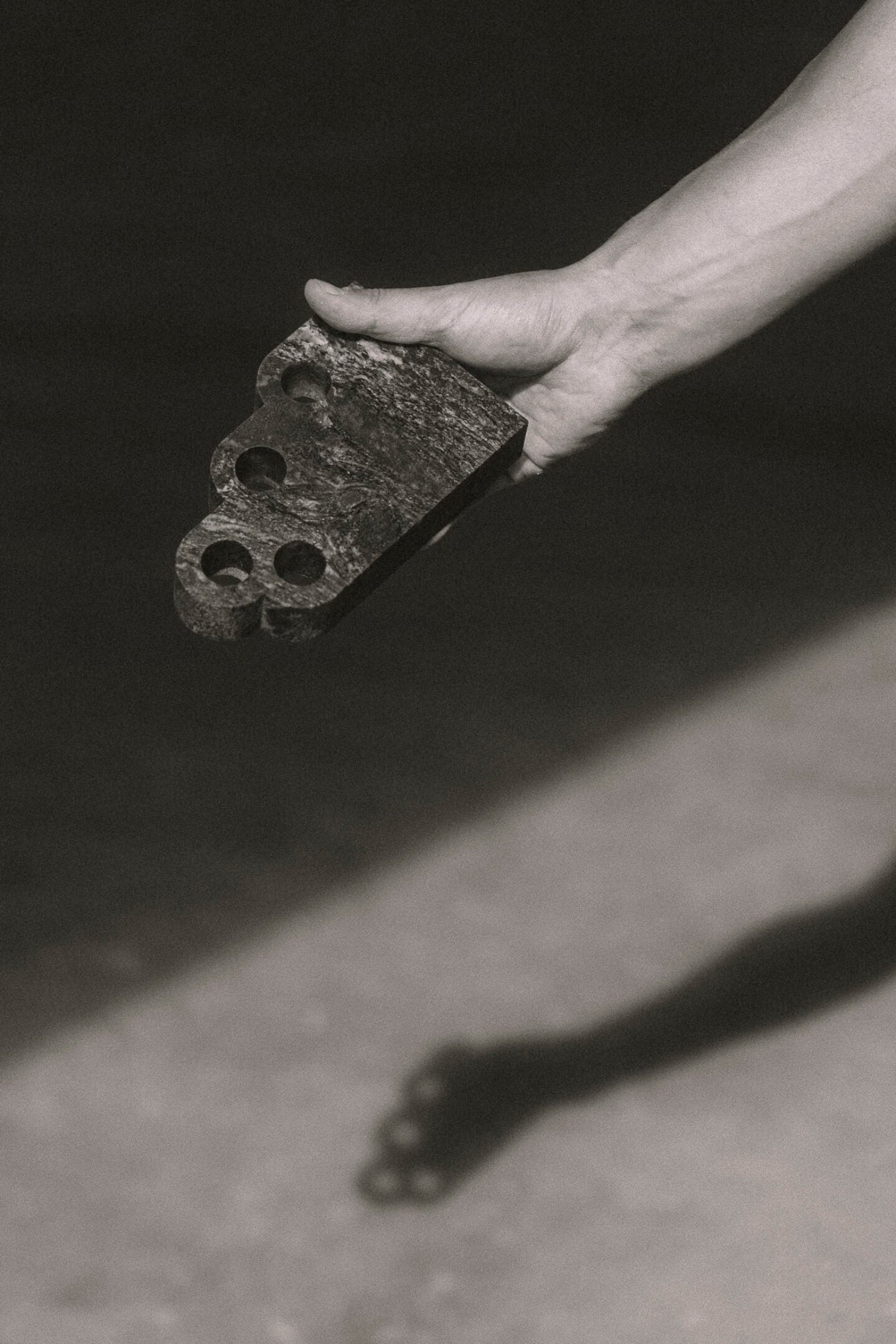
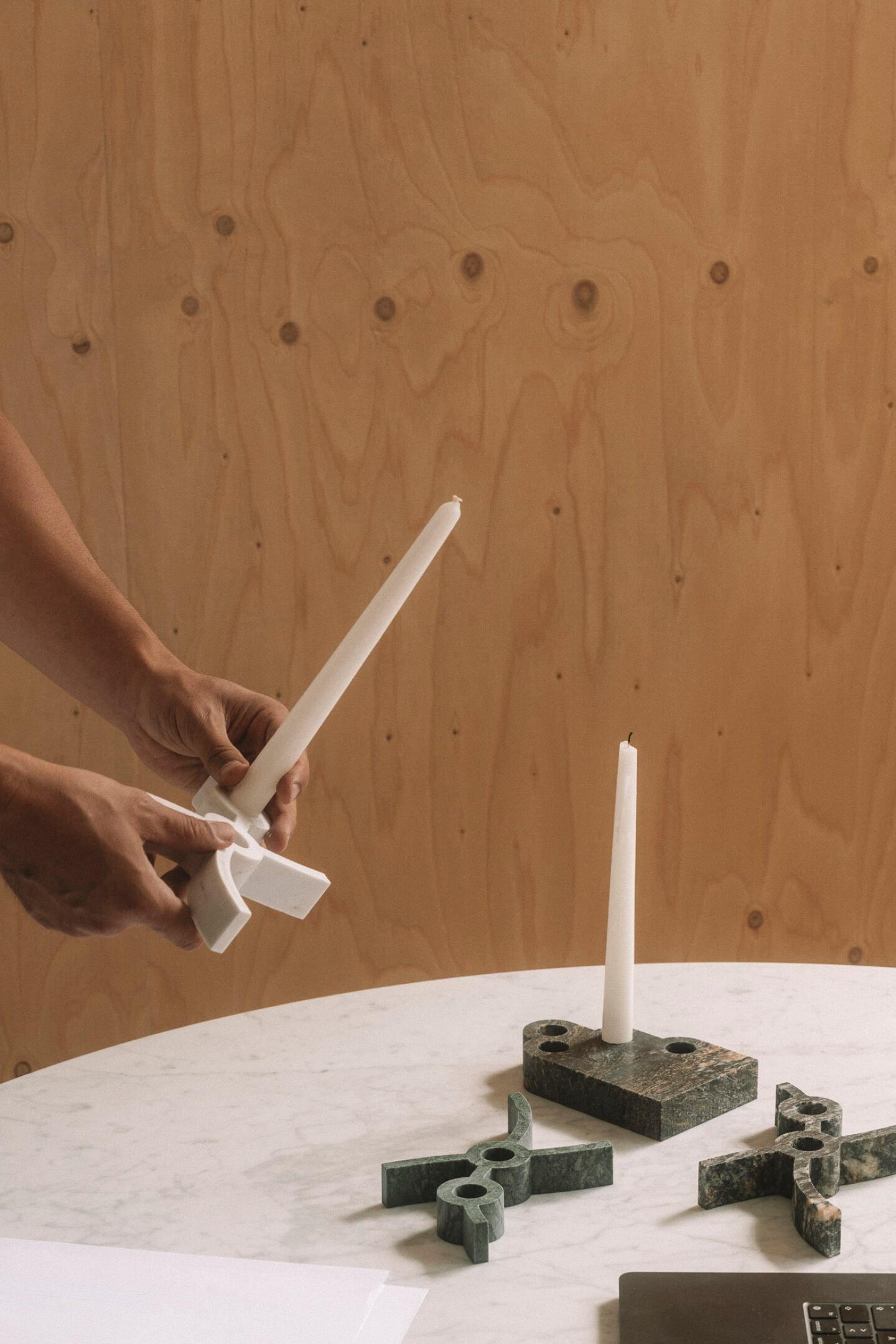
Other works, such as the ‘Triptychon’ vases made from offcuts too irregular for larger projects, reveal a material-conscious mindset. “They’re assembled like puzzles from fragments,” Huber explains. “It’s not only about sustainability but about rediscovering beauty in what’s left behind.” Collaborations extend this curiosity outward. During Berlin Art Week 2025, Marbledworks worked with Berlin-based architects Gonzalez Haase AAS on a joint project that paired architectural concept with material experimentation. “They came with a clear idea,” Kim says, “and we translated it through stone and process. That kind of exchange keeps the work alive.”
Permanence in Practice
Working locally gives their practice a particular economy of scale—one that runs counter to the uninhibited speed of global production. “People see a marble bowl for fifteen euros at a chain store and assume stone is cheap,” Huber says. “But that price doesn’t reflect labor or origin. Stone is finite. It takes time and skill to handle. People often misunderstand that.”
This awareness runs through every decision, from sourcing to assembly. The studio creates on a long timescale, demanding adaptability and care so that each piece can endure for generations. A table must not only endure but move with its owner. “People change cities, countries,” Kim notes. “So we think about how pieces can be dismantled and reassembled without losing integrity.” In working with a finite material, permanence becomes a responsibility—each design made to justify the stone it consumes. That sense of responsibility extends beyond production to the lifespan of every object: how it is used, moved, repaired, and eventually passed on. In this respect, their work aligns with their primary material’s own timeline; unhurried and enduring.
Images & Videos © Clemens Poloczek | Text: Anna Dorothea Ker