Finding Space for Stillness: Atelier ST Designs Mühle’s Flagship Store in Berlin
- Name
- Atelier ST
- Project
- Mühle Store Berlin
- Images
- Clemens Poloczek
- Words
- Rosie Flanagan
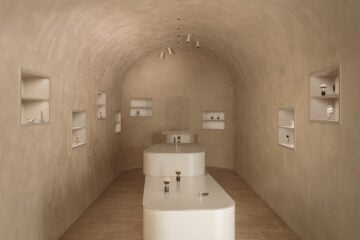
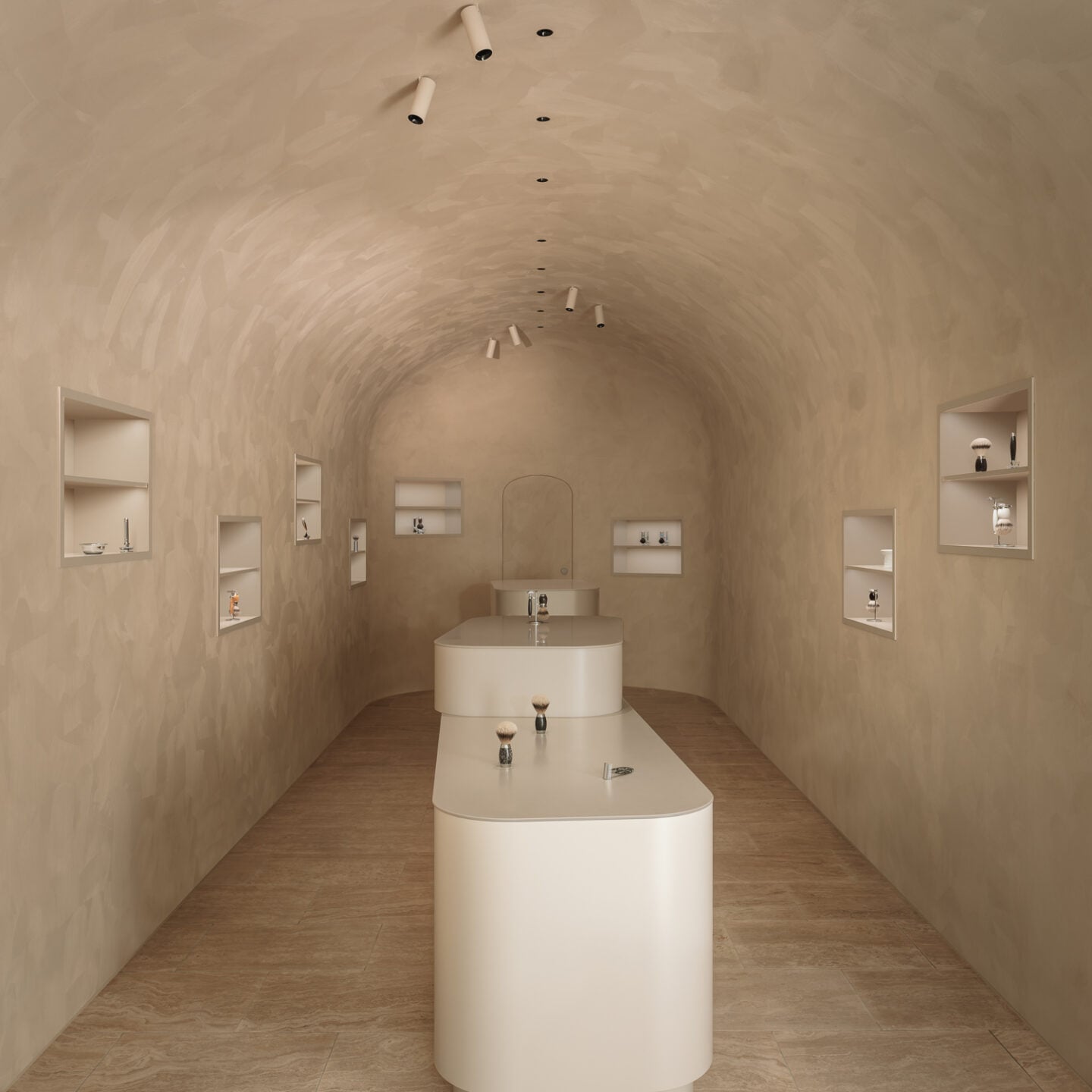
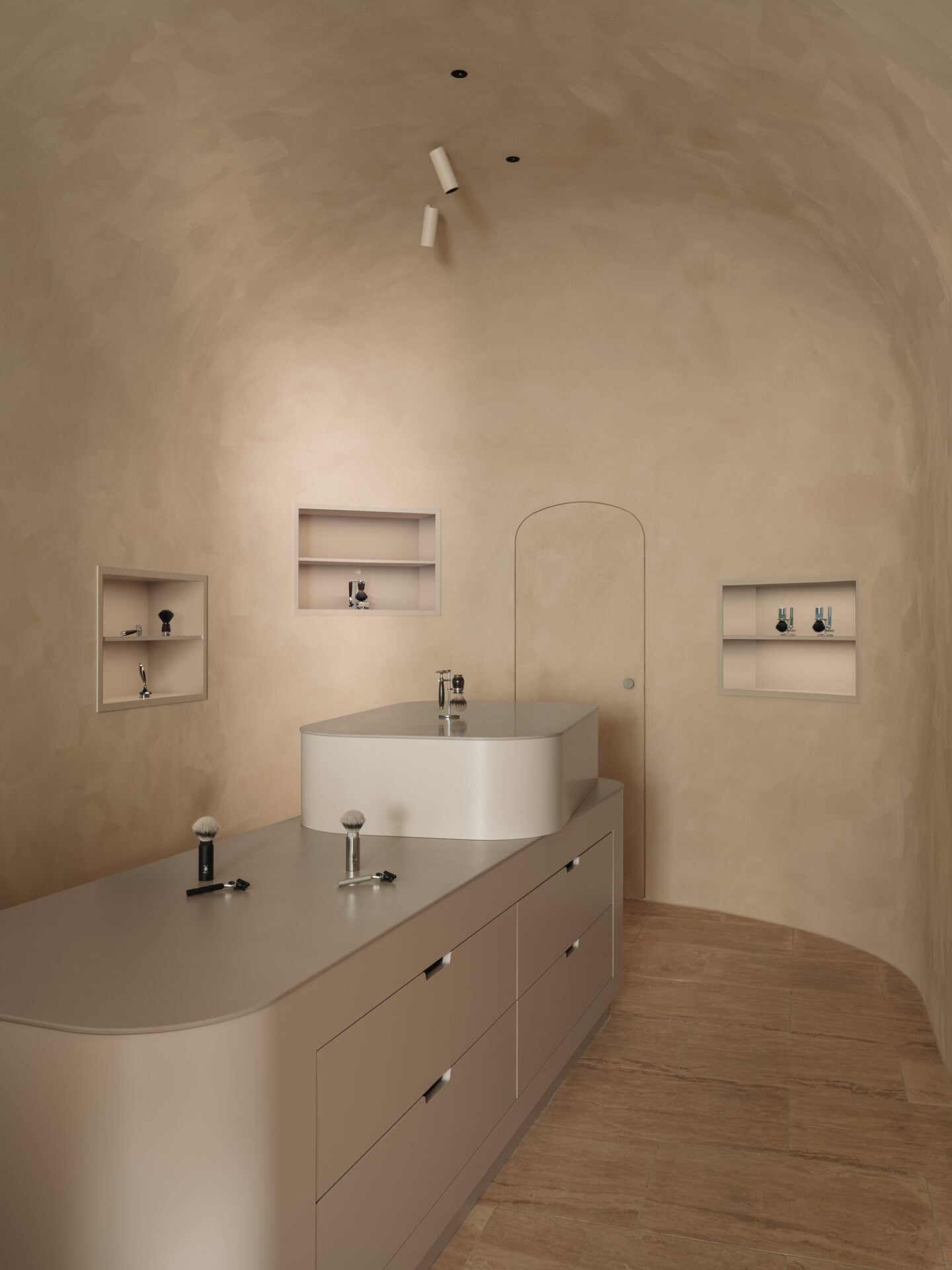
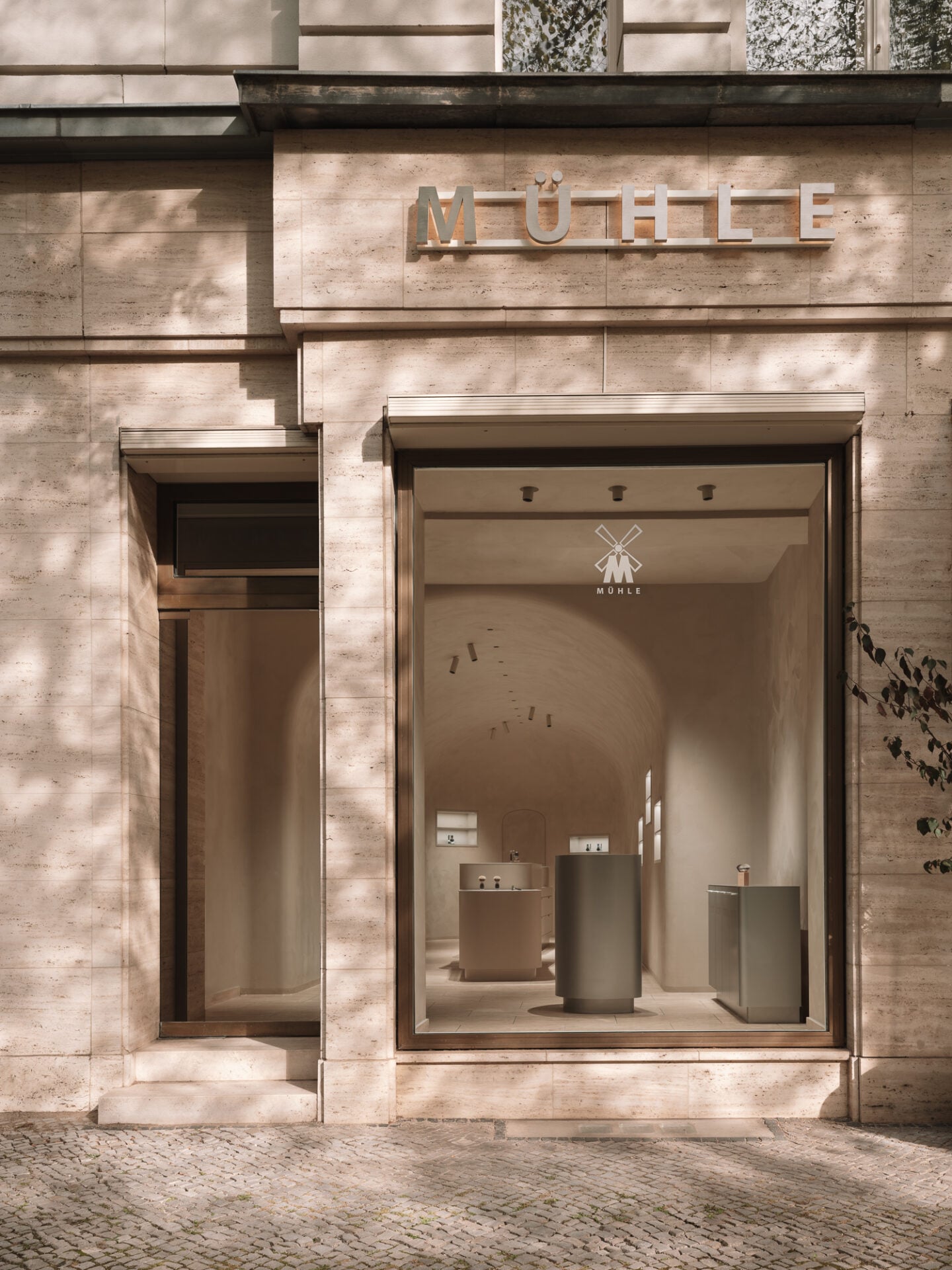
A window spills warm light onto the cool grey pavement of Berlin’s luxury high street, Kurfürstendamm. Beyond this glass threshold, you’ll find Mühle‘s flagship store—an artisanal grooming company founded in Germany’s wild Ore Mountains over 80 years ago. The interior of the store marks it as different from its neighbours. Its sculptural, clay-finished form recalls a sacred space carved from the earth, or an ancient riverbed winding its way out to sea.
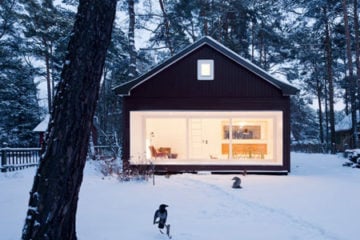
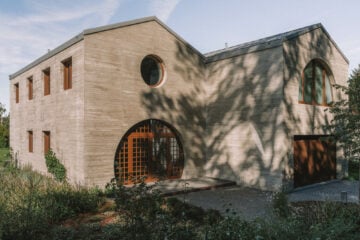
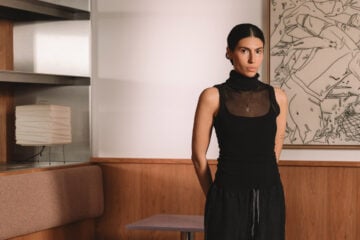
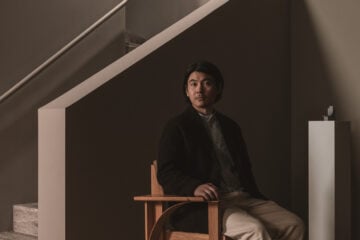
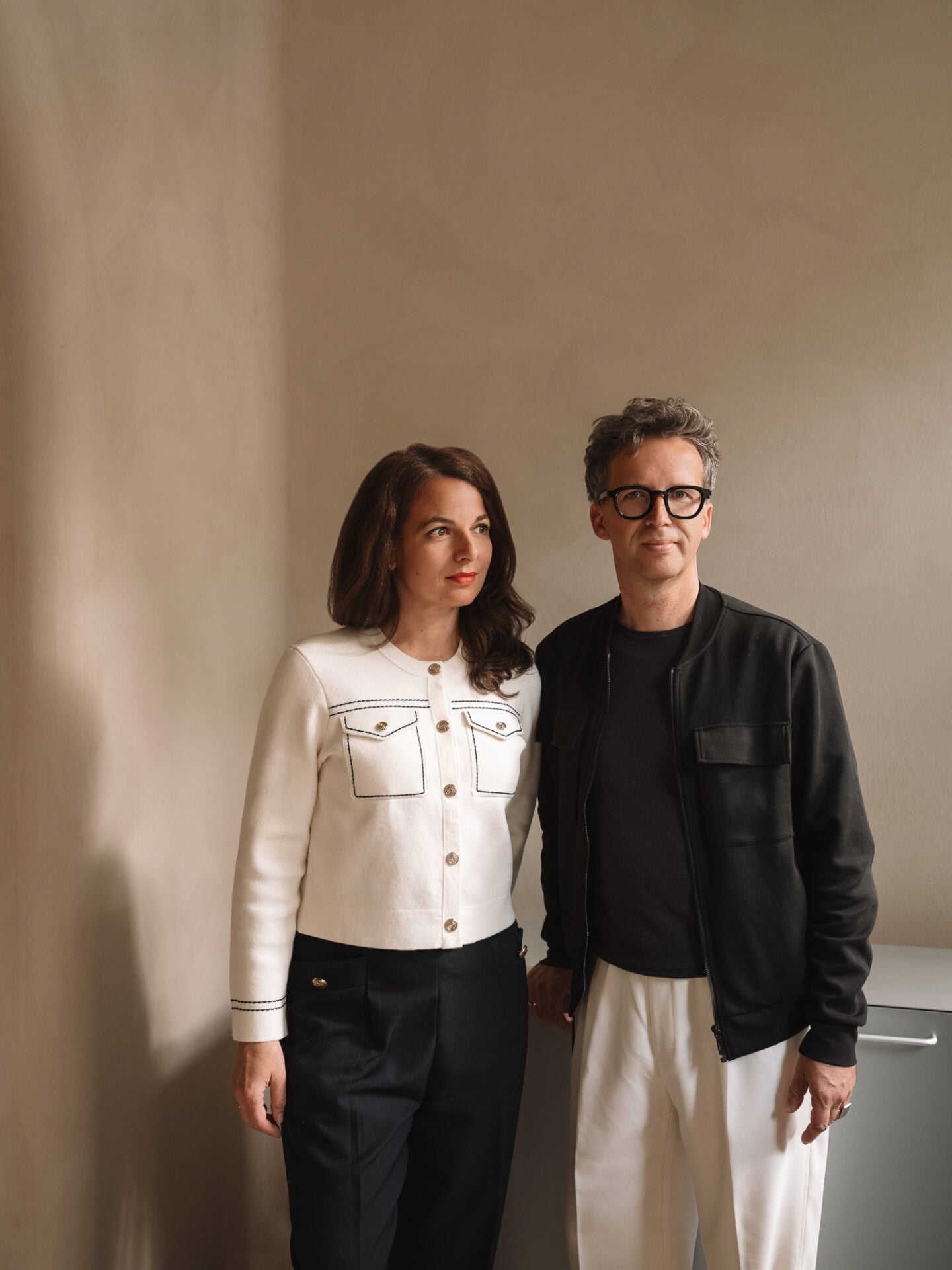
The store was designed by Atelier ST, a Leipzig-based office founded in 2005 by Sebastian Thaut and Silvia Schellenberg-Thaut. Over the last twenty years, the partners in life and love have developed an intuitive architectural approach in which feeling guides form. Their work spans contemplative hospitality ventures, elegant private residences—a timber summer house reimagined with elegant proportions, a boardmarked concrete ‘duplex’ of geometric delight—and a range of buildings for art and culture. While varied in typology, their projects are united by a focus on the experience of space. “For us, good architecture is the creation of a truly unique atmosphere,” says Sebastian. “Something you can feel in that one place, and nowhere else.”
In place of sketching and iteration, Atelier ST begins projects with conversation and contemplation. “We start by layering our thoughts,” Sebastian explains. “Silvia and I take long walks through the forest and discuss the design—the heritage, the wishes of the client, the location’s requirements—and as we layer these discussions, an idea forms at the centre. We develop this idea, and when we both arrive at the same image, we start sketching. One of our rules is that we never try to convince the other that an idea works. If I have an idea that I think is wonderful, but Silvia doesn’t understand it or feel it, then we start again from zero. It’s hard for the one who had the idea, but it’s always the best for the project.”
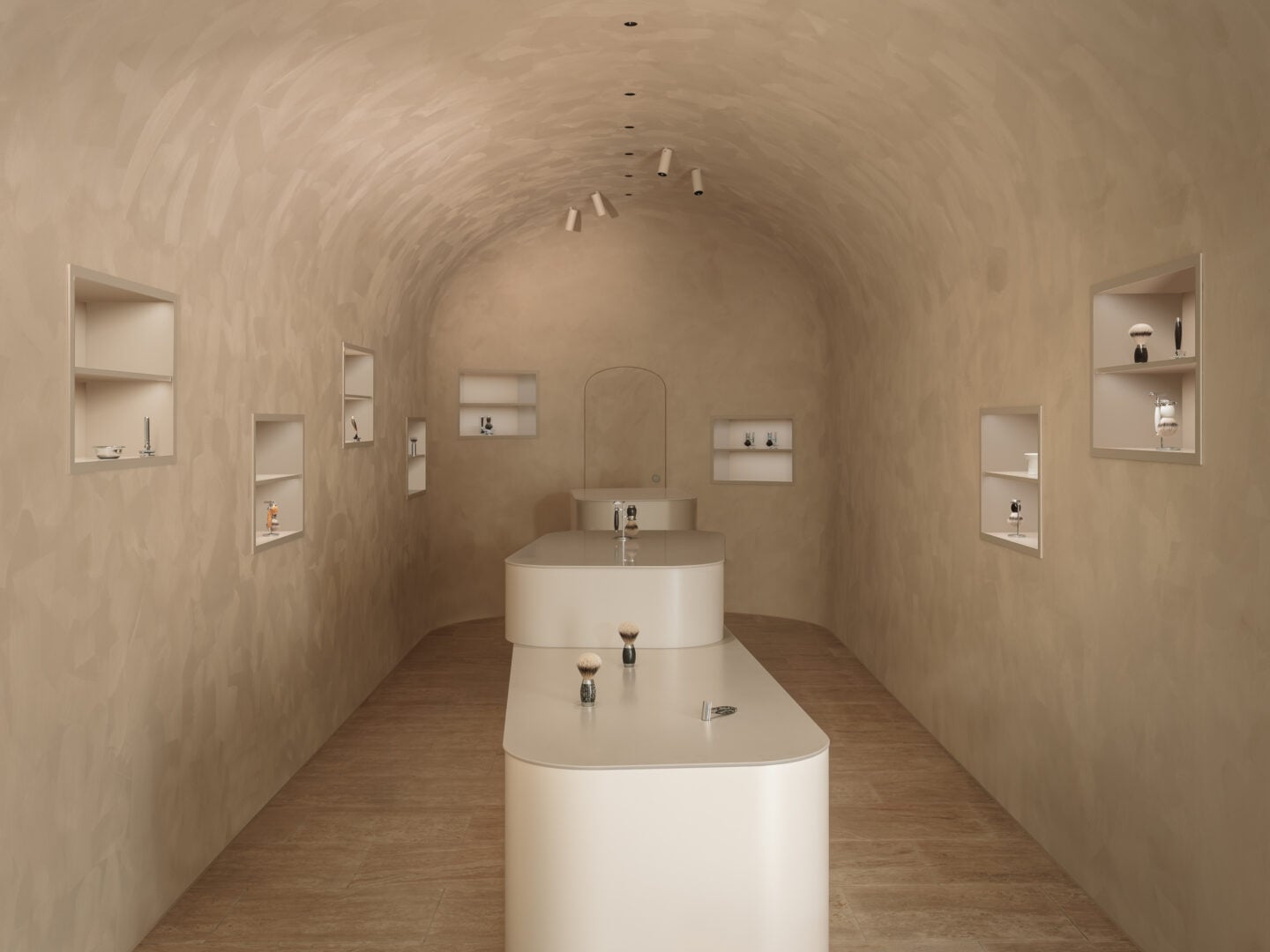
For the flagship Mühle store on Kurfürstendamm, their shared vision came quickly—which was lucky, as the timeframe from design to delivery was under six months. “When Andreas [Mühle’s Managing Director] approached us about the project, we assumed that the store would be a large space with a high ceiling and so on, when in fact, it was a very small and, at that time, a very simple and boring space,” Sebastian tells me. Measuring 13 metres long and 3.3 metres wide, the footprint of the shop was narrow and angular. With looks not dissimilar to an office hallway, it lacked the architectural presence you would expect from a high-end store on the hallowed Berlin boulevard. The task then was to create a space that could distill the luxury brand’s identity while connecting its past to its future.
“Our idea was to create a room that had both the soft form of a face and the precision of Mühle products."
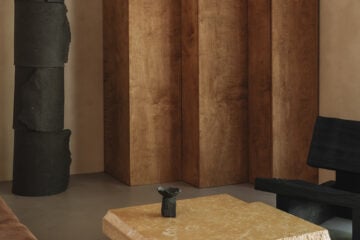
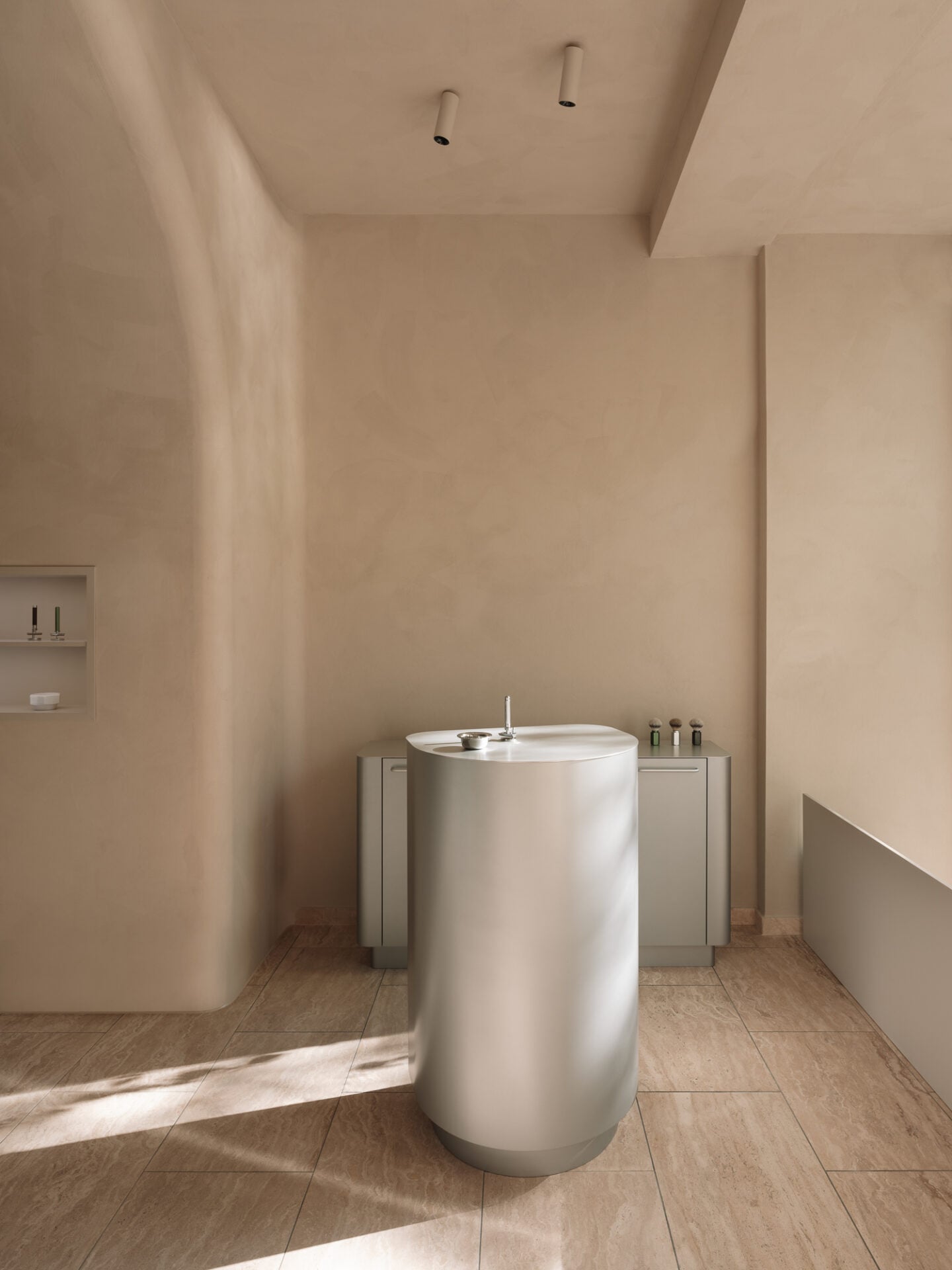
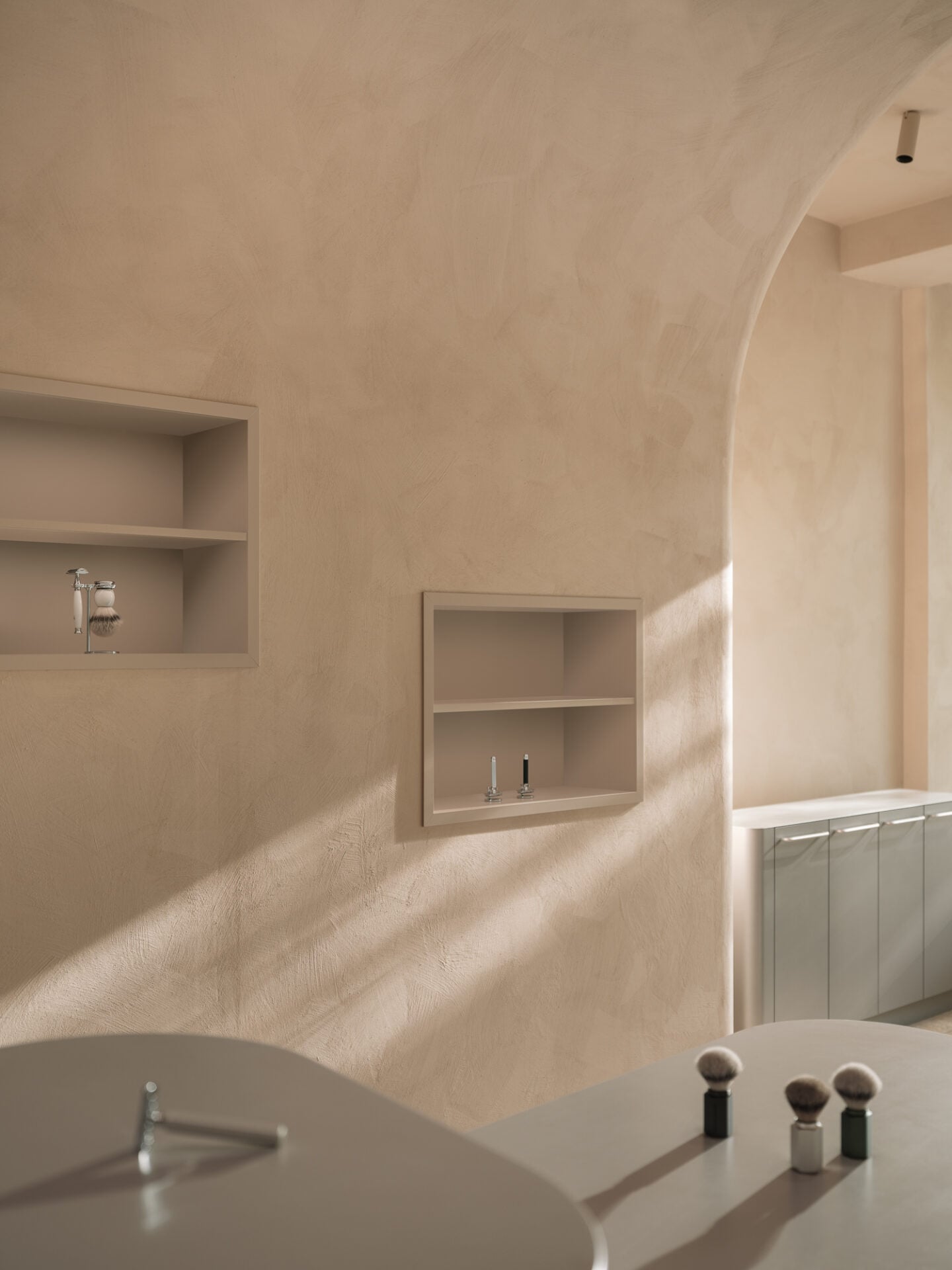
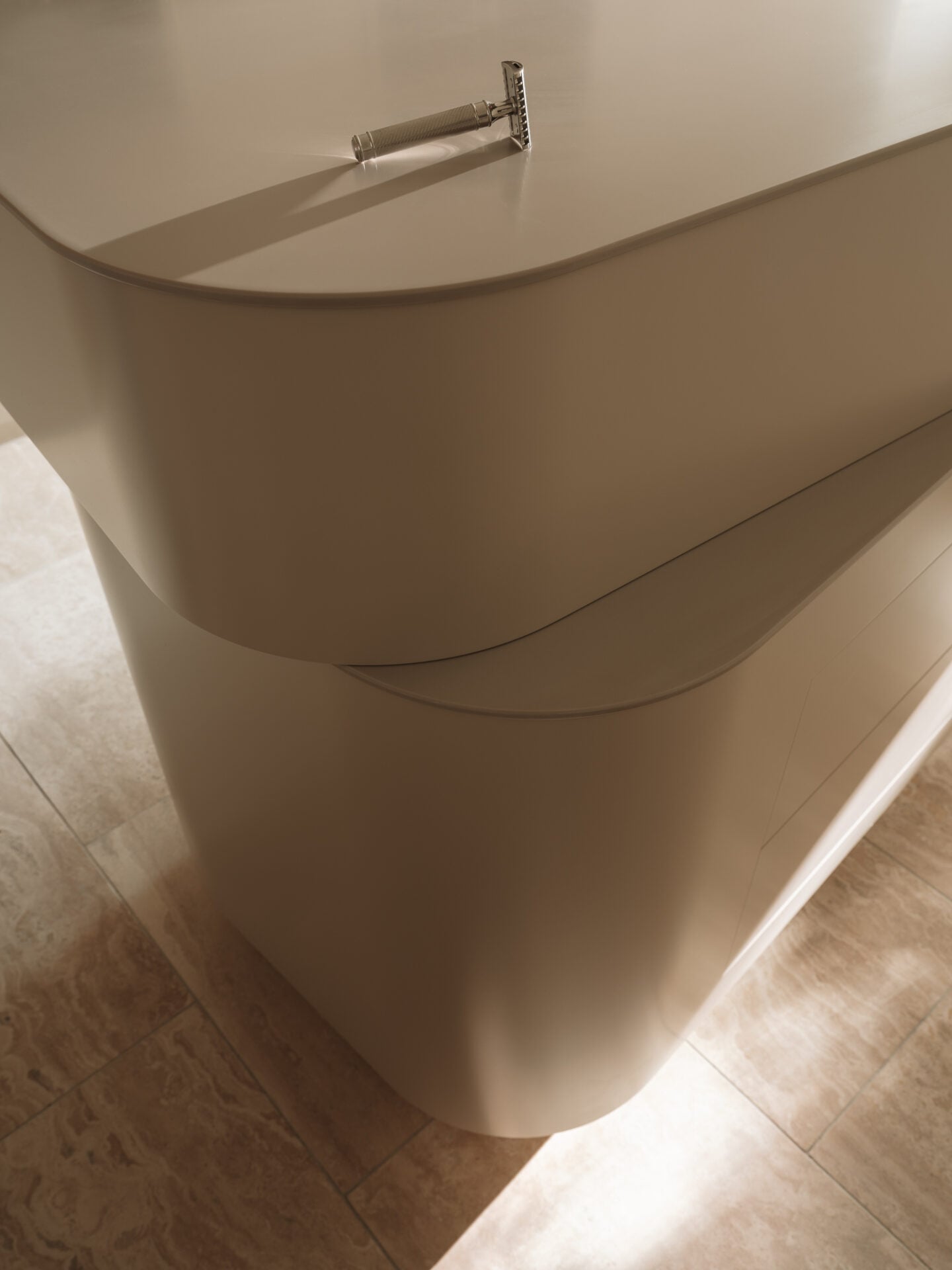
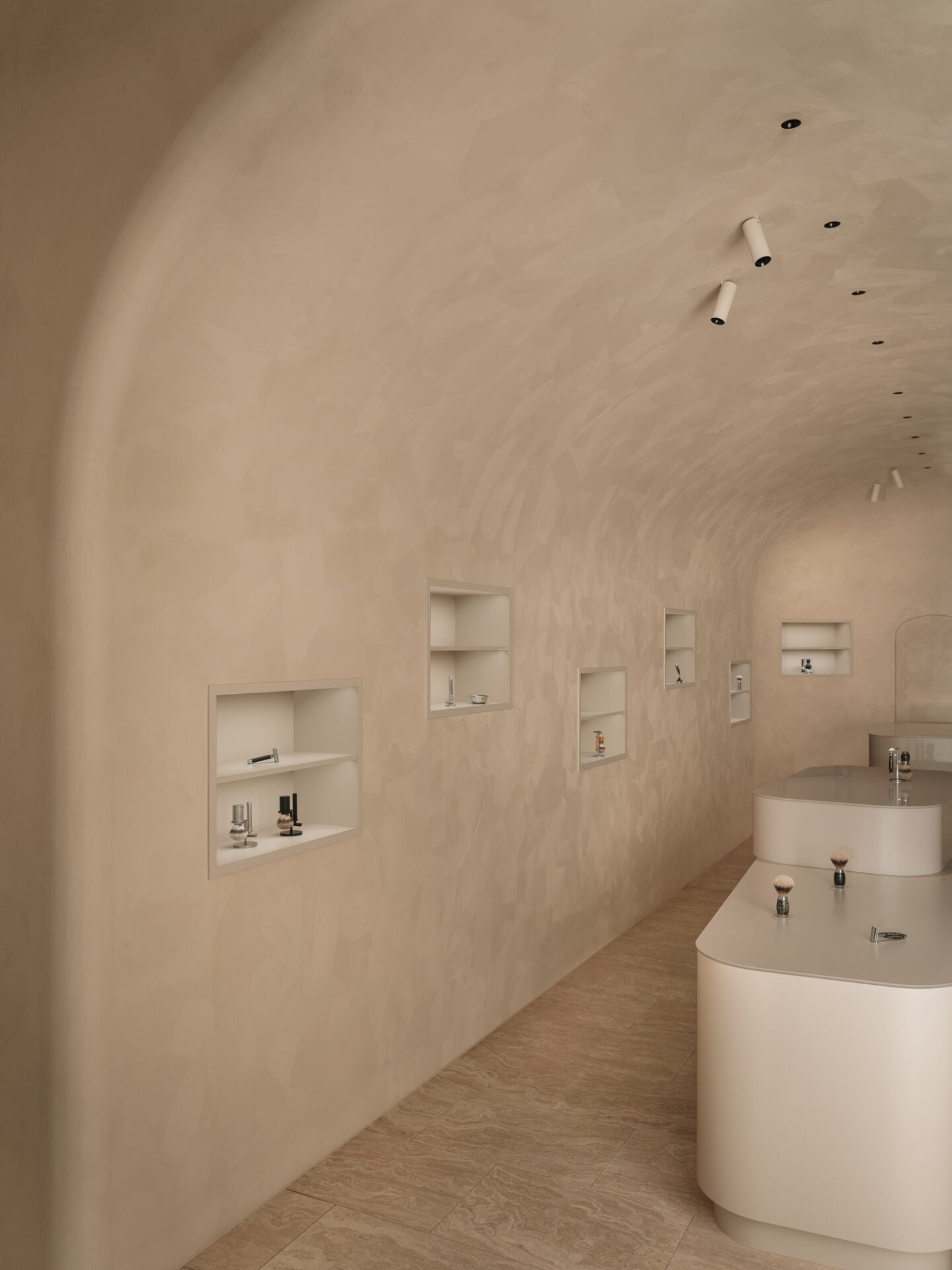
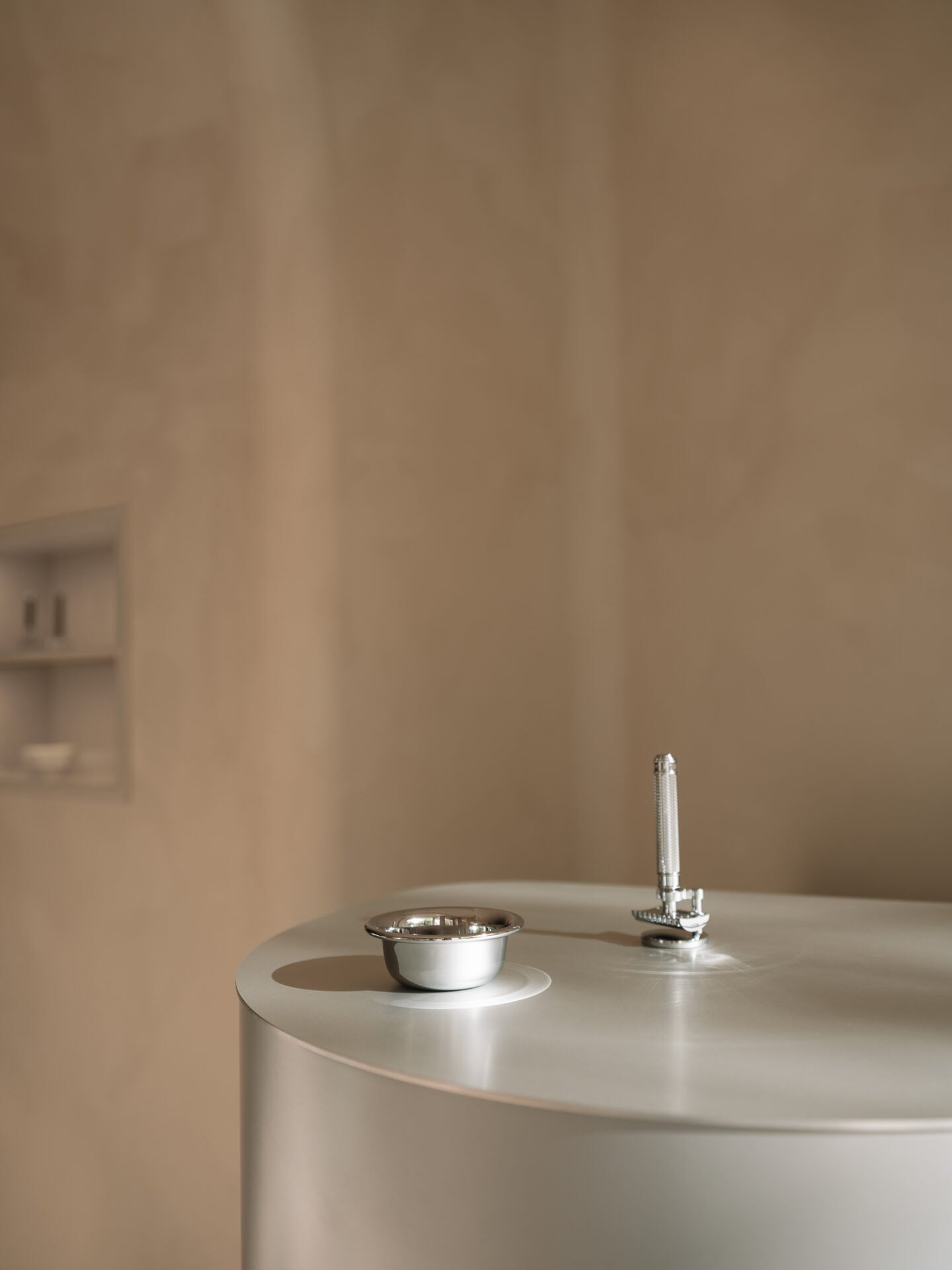
“When we saw the store, we instantly knew what was right for the space,” Sebastian says. “Our idea was to create a room that had both the soft form of a face and the precision of Mühle products. It’s a simple idea, but one that we both felt very strongly about.” The hard edges of the original store have been replaced by curves: a vaulted ceiling runs the length of the room and rounds off at the far end, creating a space with no corners for the eye to land on. The material warmth of the existing travertine floors has been extended with mineral clay plaster, which glitters beneath custom lighting designed by innovative Beirut-born studio PSLab. Against these natural forms and finishes, aluminum details provide contrast and a material link to the grooming products sold here.
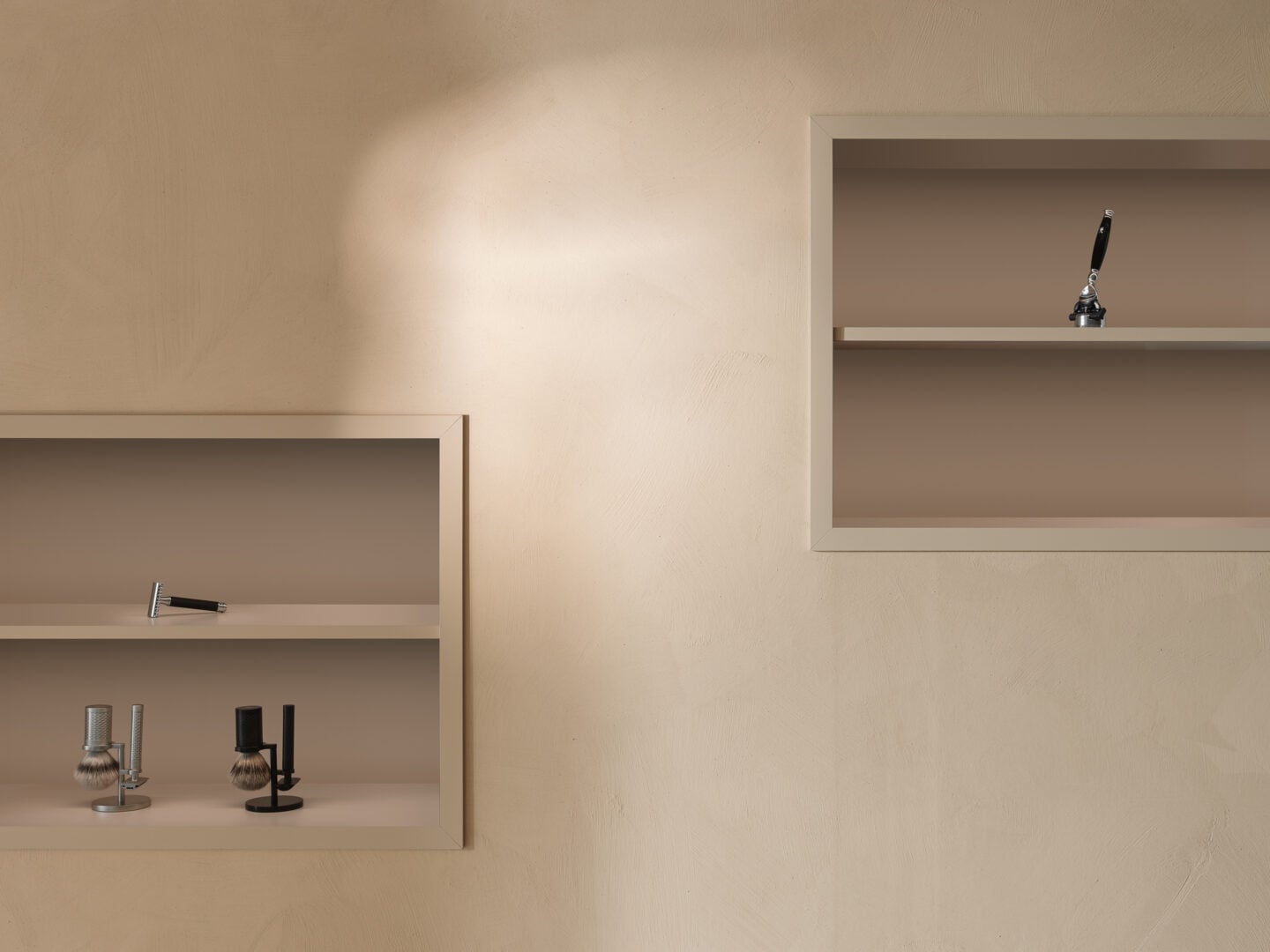
Mühle pieces—ranging from resin-handled brushes and razors to collector’s editions finished in Meissen porcelain and silver—are displayed in recessed niches and on a cluster of islands that look like river rocks, smoothed and left behind by a long-vanished stream. “It’s like a gallery, in a way,” says Sebastian. “We designed it as a dialogue between the products and the store. A lot of retail design has nothing to do with products or brand, but everything here works hand in hand: the products and the store and the materials and the atmosphere. We wanted to create a soft space, somewhere you enter and feel good in without knowing exactly why.”
"Outside is very loud...but inside is a little like a chapel. It’s a room for stillness.”
From the street on a cold and steely November day, the store’s warmth beckons you inside. “Part of the challenge was creating somewhere that looks attractive to people walking past,” says Sebastian. “The hardest part is, of course, getting people across the threshold; but if they make that first step in, we hope the feeling they get will encourage them to stay. The space is calm; it allows you to concentrate on the products, but it’s also somewhere you can have five minutes to yourself. Outside is very loud—you have buses and people and traffic—but inside is a little like a chapel. It’s a room for stillness.”
“Our hope here is that people feel present in this room because they feel the presence of the room.”
This meditative quality is present across Atelier ST’s projects and seems foundational to their way of working. “Our hope here is that people feel present in this room because they feel the presence of the room,” says Sebastian. “I know it’s a big aim for a small space, but really, I had this feeling when I had to go back to pick up Silvia’s handbag the day after the opening party. It was nine in the morning, and when I opened the door, I was alone in the shop. The morning light was flooding in. I sat for five minutes in the space and just enjoyed it—it was so good. I think this is the kind of success that we look for—it’s okay if big magazines write about you and say that you’re a good architect, but the real reward is having an experience like this.”
Images © Clemens Poloczek | Text: Rosie Flanagan