Aeyde Haus by Gonzalez Haase AAS Marks a New Era for an East Berlin Landmark
- Name
- Gonzalez Haase AAS
- Project
- Aeyde Haus
- Images
- Clemens Poloczek
- Words
- Anna Dorothea Ker
On Berlin’s monumental Karl-Marx-Allee, one of the former GDR’s emblematic sites of Socialist Classicism has taken on a renewed role as the working home of one of the city’s leading design exports.
Aeyde Haus marks the tenth year of footwear and accessories label Aeyde’s rapid ascent by establishing a permanent presence in the former Haus des Kindes, a building long associated with civic ambition, and material rigor. Developed with Gonzalez Haase AAS, the project aligns the vision of leading Berlin creative practitioners whose work centers on clear structure and material intelligence, allowing architecture itself to organize and give form to Aeyde’s working life.
Maintaining the Monumental
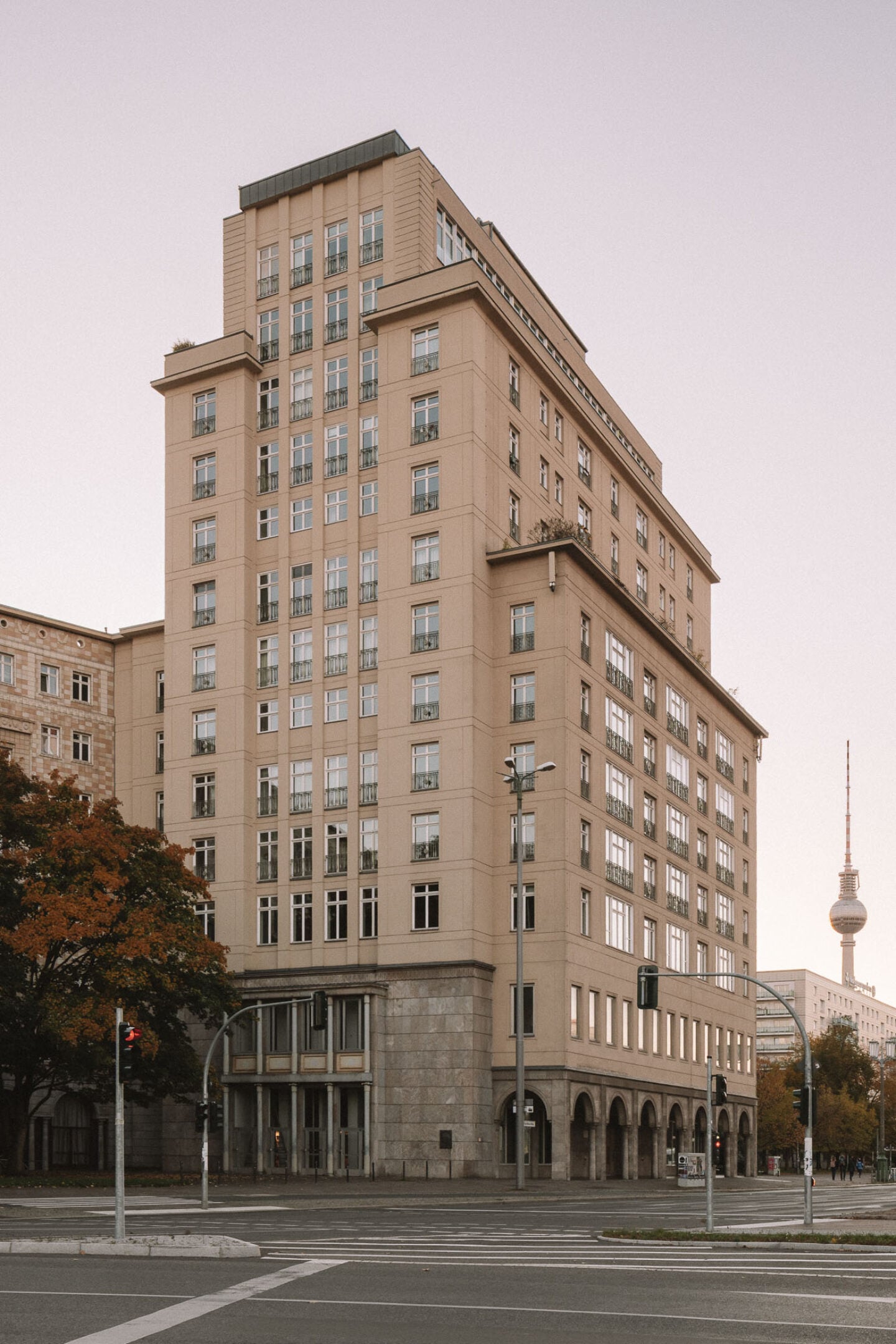
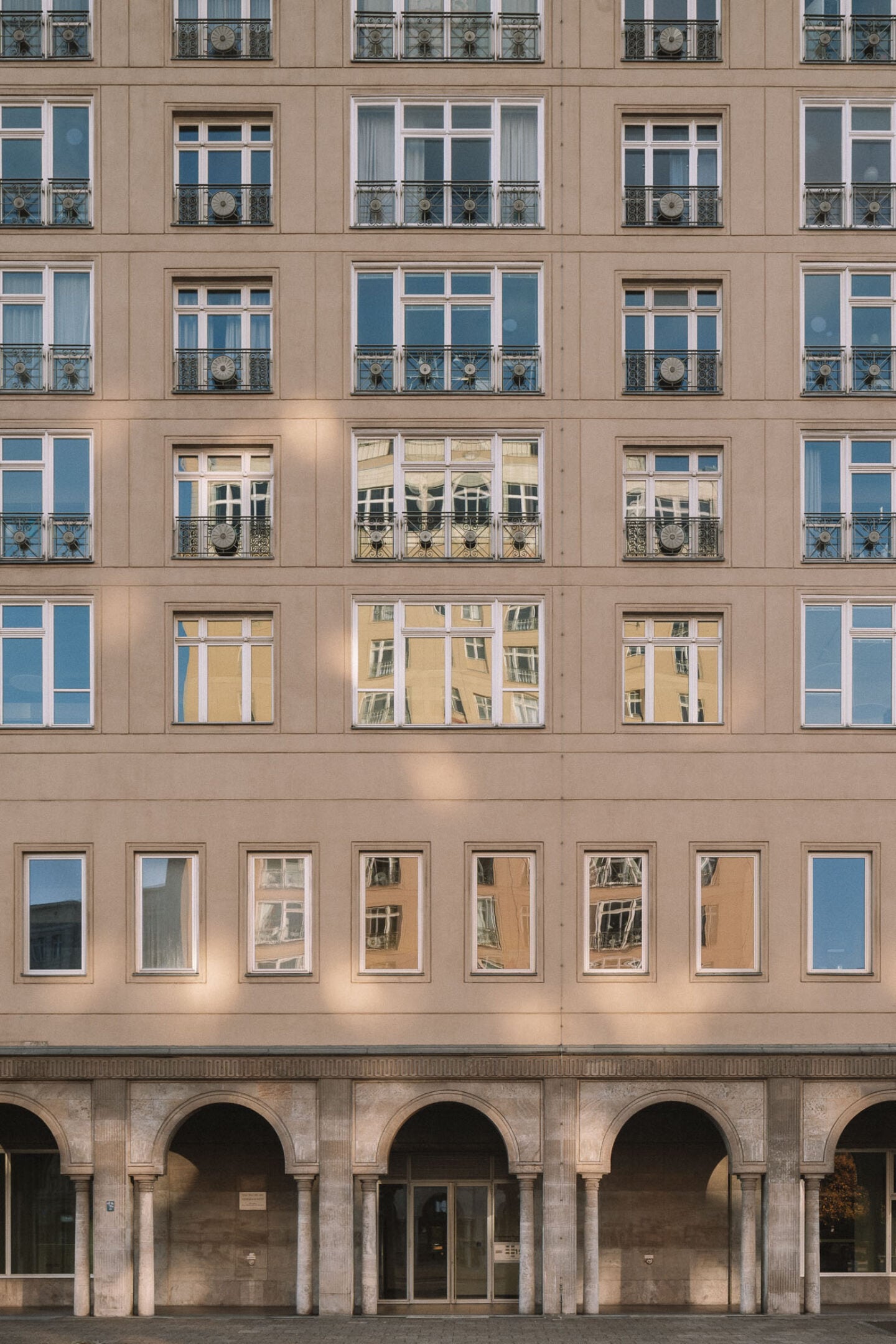
Rising over Strausberger Platz in Berlin-Mitte’s Karl-Marx-Allee, the former Haus des Kindes (“House of the Child”) is a 70-meter-high, 13-story landmark of 1950s Socialist Classicism. Completed in 1954, the building was conceived to house both a children’s department store and residential apartments, realized through prefabricated reinforced concrete and monumental proportions emblematic of early GDR ambition. Its primary author, Hermann Henselmann, was central to East Berlin’s post-war reconstruction, responsible for many of the avenue’s defining buildings and the urban vision of Alexanderplatz. The interiors were developed by his wife, Irene Henselmann, an infrequently credited creative partner whose work introduced material refinement, proportion and a distinctly human register within the building’s grand scale.
This context frames Aeyde Haus, the new headquarters of Berlin-based footwear and accessories house Aeyde, realized by Gonzalez Haase AAS. Founded in 1999 by Judith Haase and Pierre Jorge Gonzalez, the internationally regarded practice operates at the intersection of architecture and scenography. Known for shaping the physical brand identities of Balenciaga and 032c, the studio draws on the founders’ shared formative experience with American theatre director and artist Robert Wilson, shaping an exacting approach to light, structure and movement in spatial sequences.
Across three interconnected levels, their intervention for Aeyde gathers atelier, showroom, design library, and offices, aligning the brand’s modernist outlook with the building’s inherent spatial order. As Aeyde Founder and Creative Director Luisa Dames observes, “Karl-Marx-Allee carries a powerful architectural identity. Monumental, modernist, anchored in the history of East Berlin. The location felt right very quickly because of its story. Aeyde grew in Berlin and became international; for me, this place brings both together. The fact that the building once served as a house for community, education, and everyday life felt like a meaningful parallel. We wanted a place that brings work, exchange, and creation together, not simply an office but a true house.”
Intervention by Subtraction
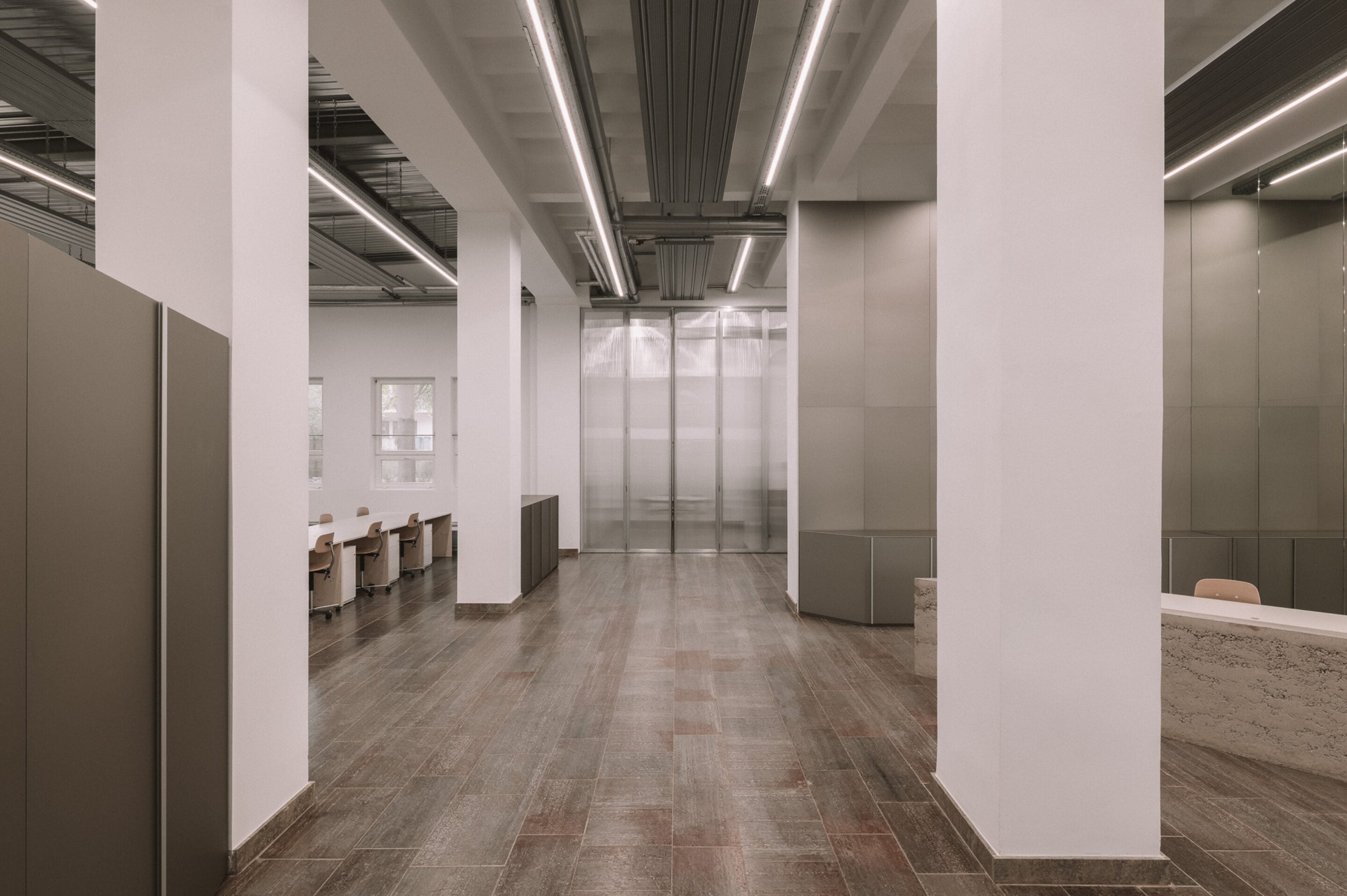
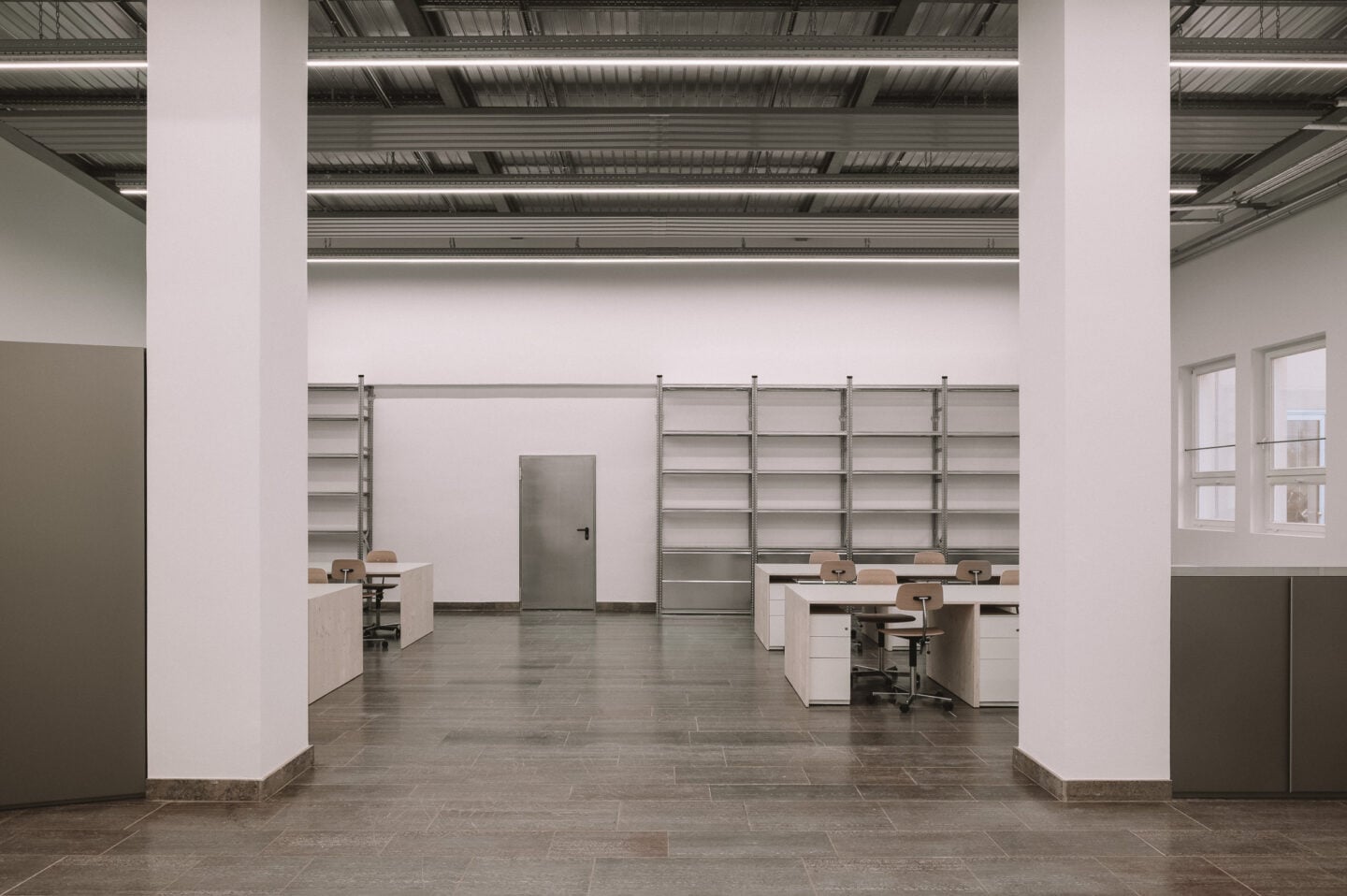
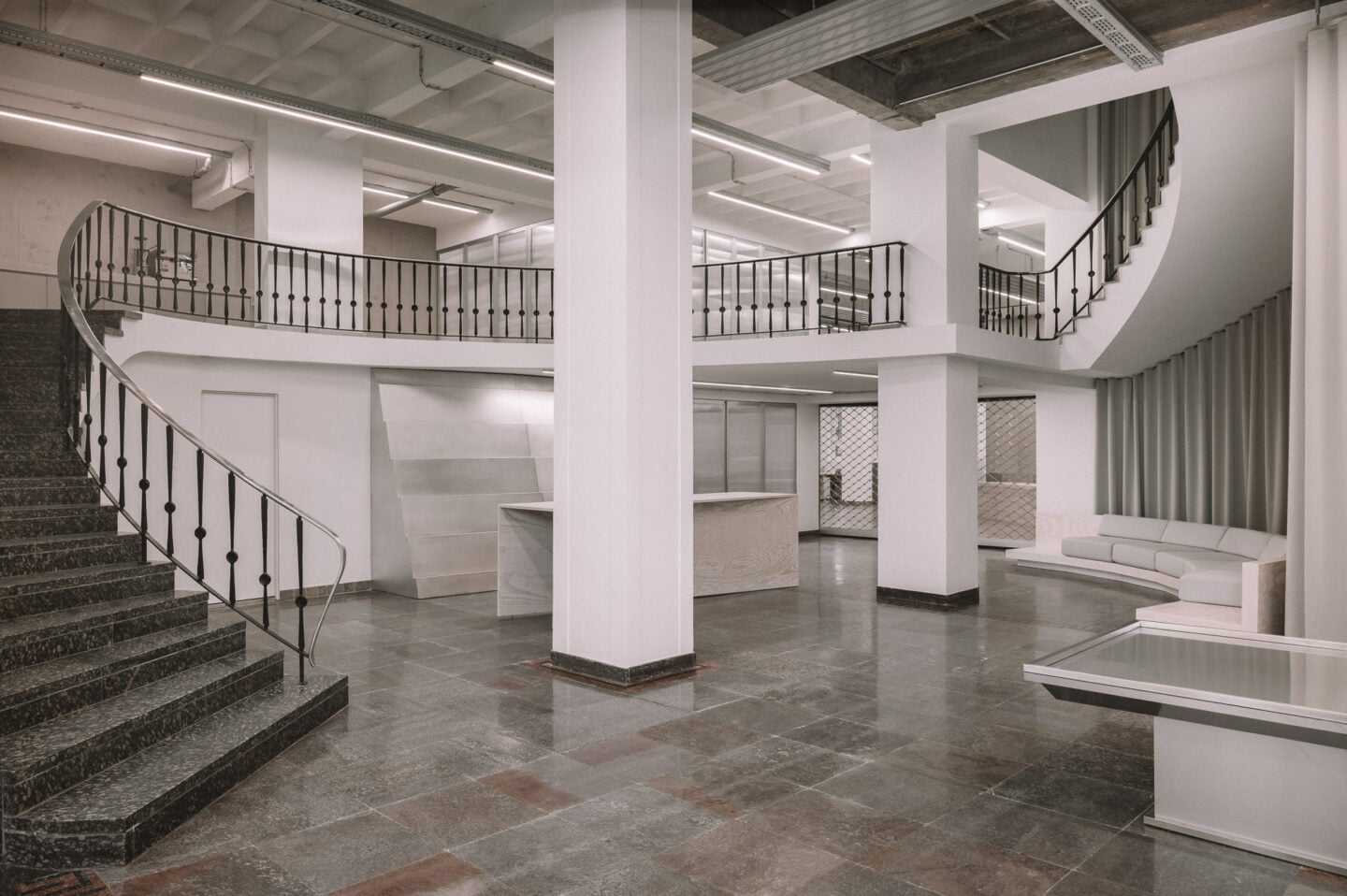
The architectural response developed through Gonzalez Haase AAS’s method of working with what already exists. Layers added over decades were removed to expose the prefabricated concrete frame, returning the ground floor to its original volume and construction clarity. Internal walls and later façades were taken out to create a single continuous floor plate spanning the full width and depth of the former department store. Ceilings rising to almost five meters establish a pronounced spatial sequence on entry, while a floating stair leads to the mezzanine and directs movement through the plan, enabling daylight to pass across the interior from all four cardinal directions. Of the decision to engage Gonzalez Haase AAS, Dames shares her admiration for the practice’s “radical clarity, a certain rigor and very precise spatial logic,” adding, “We share a focus on the essential—proportion, materiality, light.”
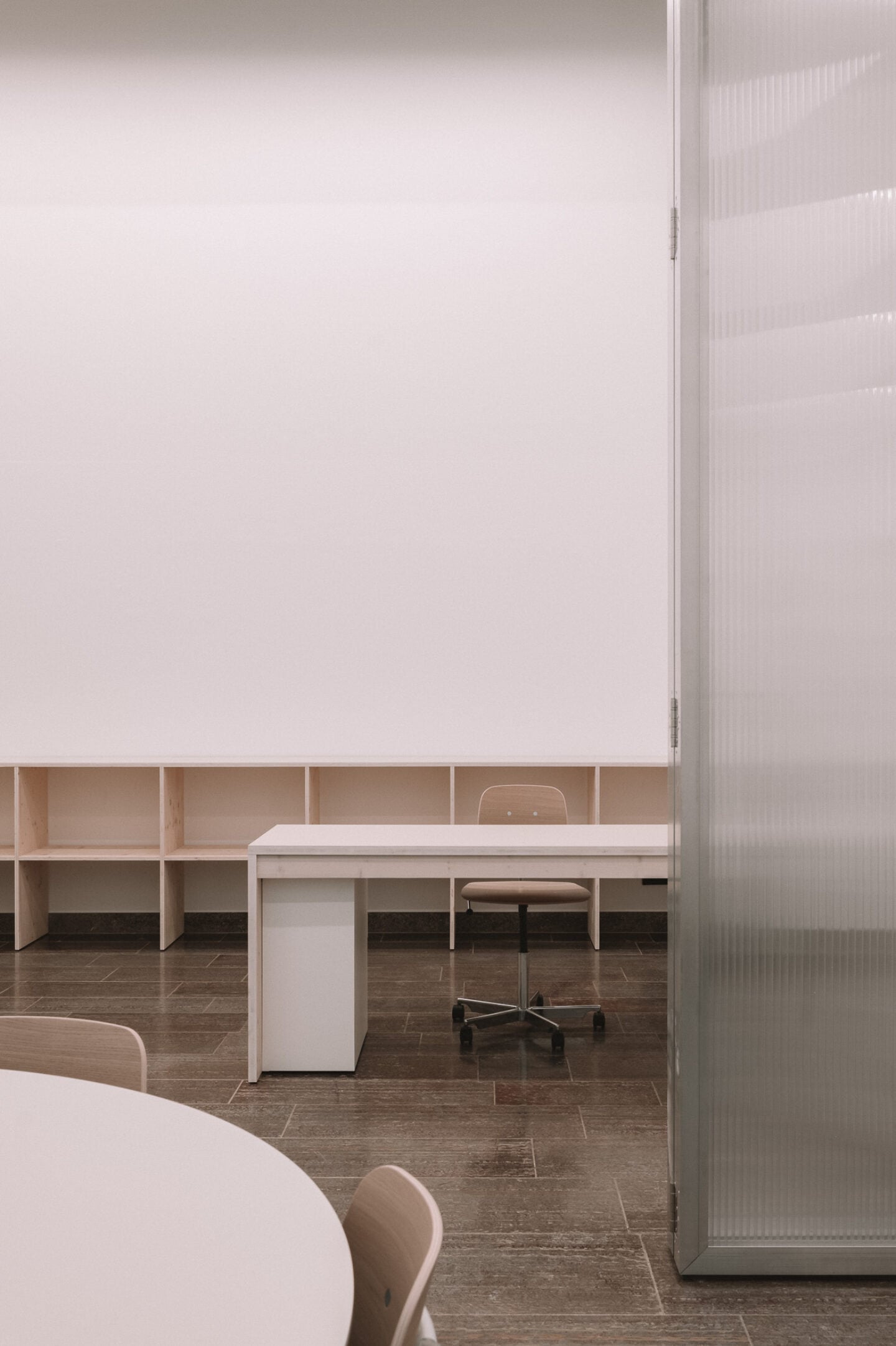
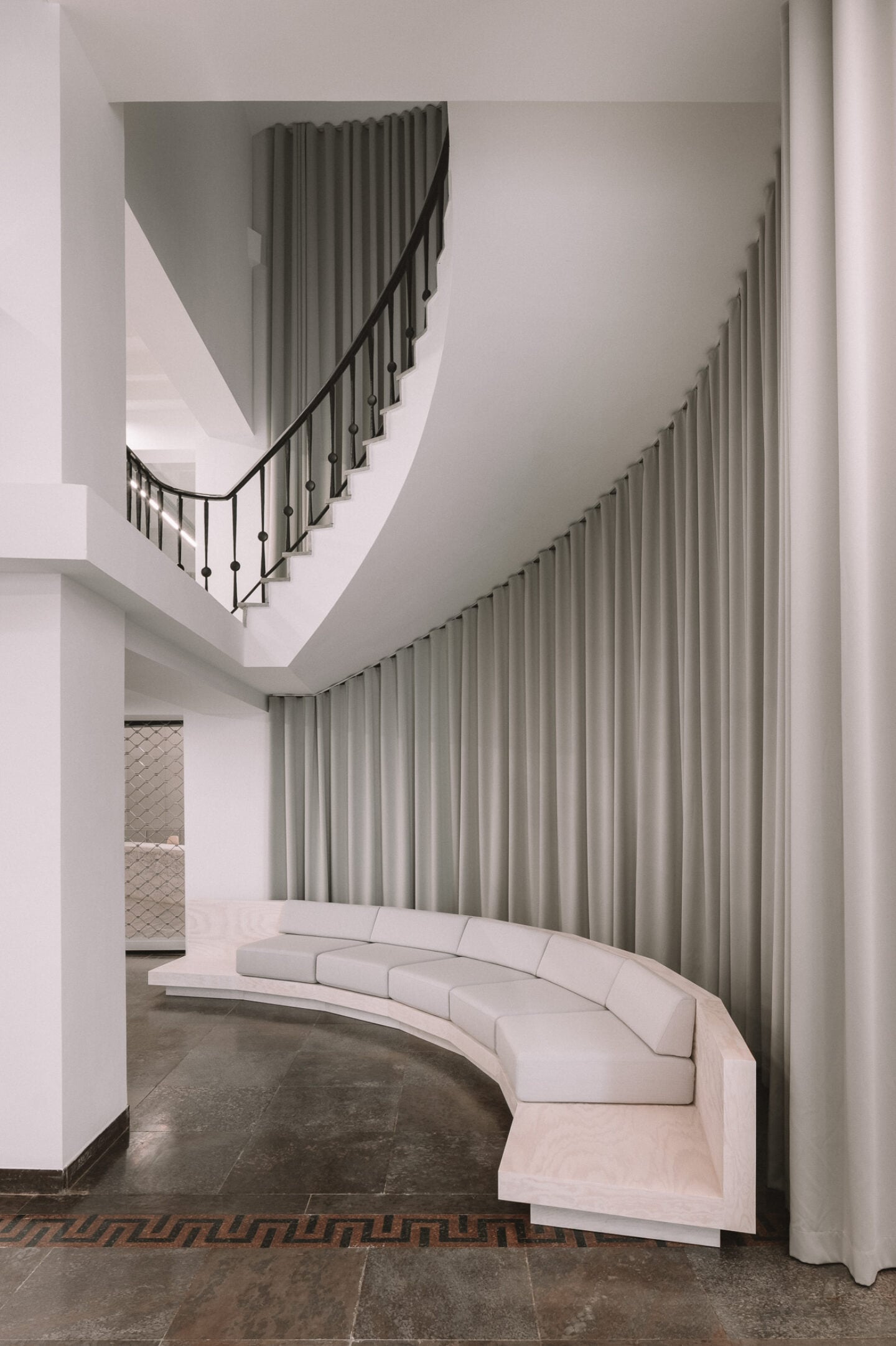
This alignment was reinforced by the architects’ own history with the site. Gonzalez Haase AAS had previously maintained their office within the Haus des Kindes, a familiarity that sharpened their command of its latent qualities and material logic. Rather than imposing a new architectural language, the intervention amplified what was already present: generous ceiling heights, extended sightlines, and a material richness unusual within Berlin’s post-war architecture. The marble floor, a carefully detailed staircase, and a softly rounded chrome handrail that bear Irene Henselman’s imprint remained integral to the spatial experience and informed the organization of use. Public and collective functions were concentrated on the ground floor, while the upper level shifted into an atelier environment dedicated to the development of new shoe forms, supporting hands-on work.
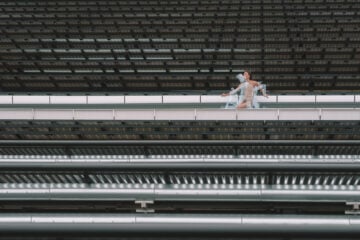
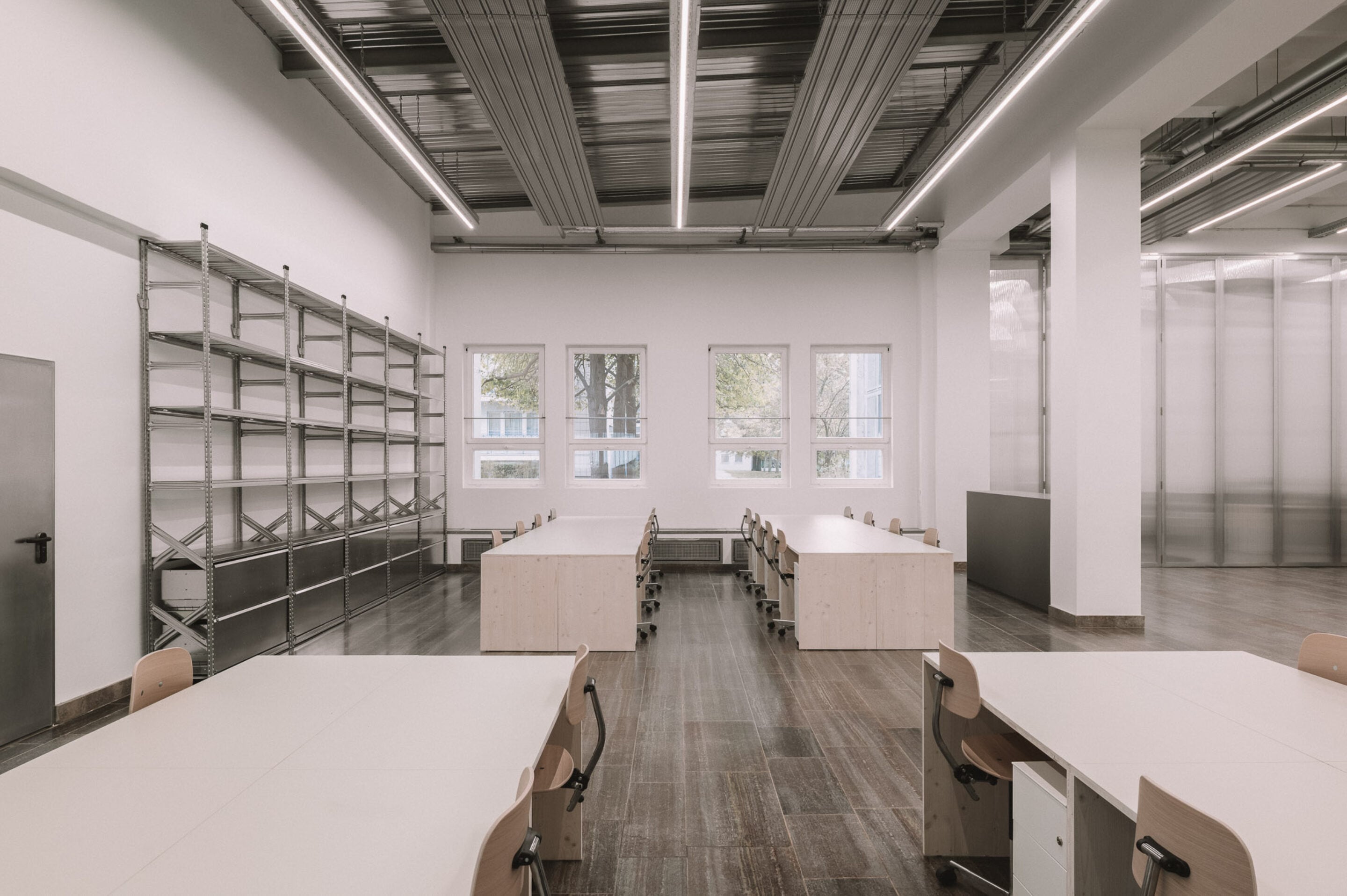
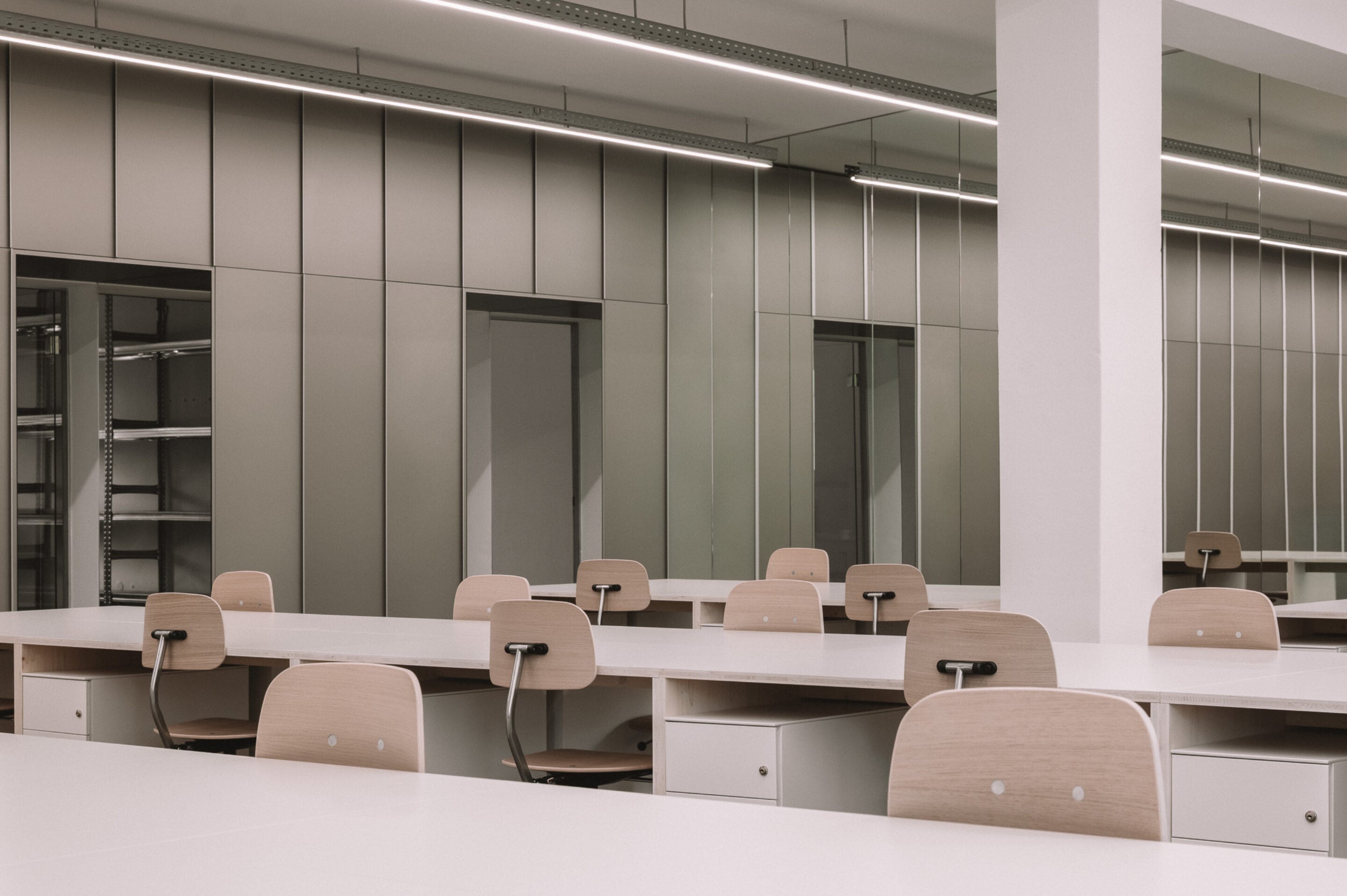
Throughout the project, the architects engaged directly with structure and construction. Artificial lighting extends the building’s geometry through two parallel LED strips, one warm and one cool, set within exposed aluminum profiles that run the length of the space. Concrete joints, beams, and poured surfaces remain visible, allowing the construction process to stay legible. “Normally you would have a suspended ceiling and you would not see how the building is made or how the structure works,” Haase explains. “We kept everything open, with nothing suspended, no additional layers, just the rough visible structure.”
Movement Through Space
Building on this decision to keep construction and history visible, light and material became the primary means of articulating space. Each decision began with close attention to existing conditions and the movement of daylight through the building. Light was treated as an architectural mediator rather than an atmospheric addition. “We look at what exists, where the natural light comes in, whether it is east, west, or south, and how it touches the interior and the materials,” she explains. “Reflective or absorbent materials react differently to light. That is how we develop form and what you might call silhouette.”
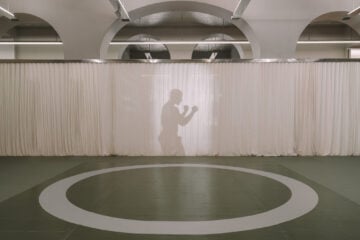
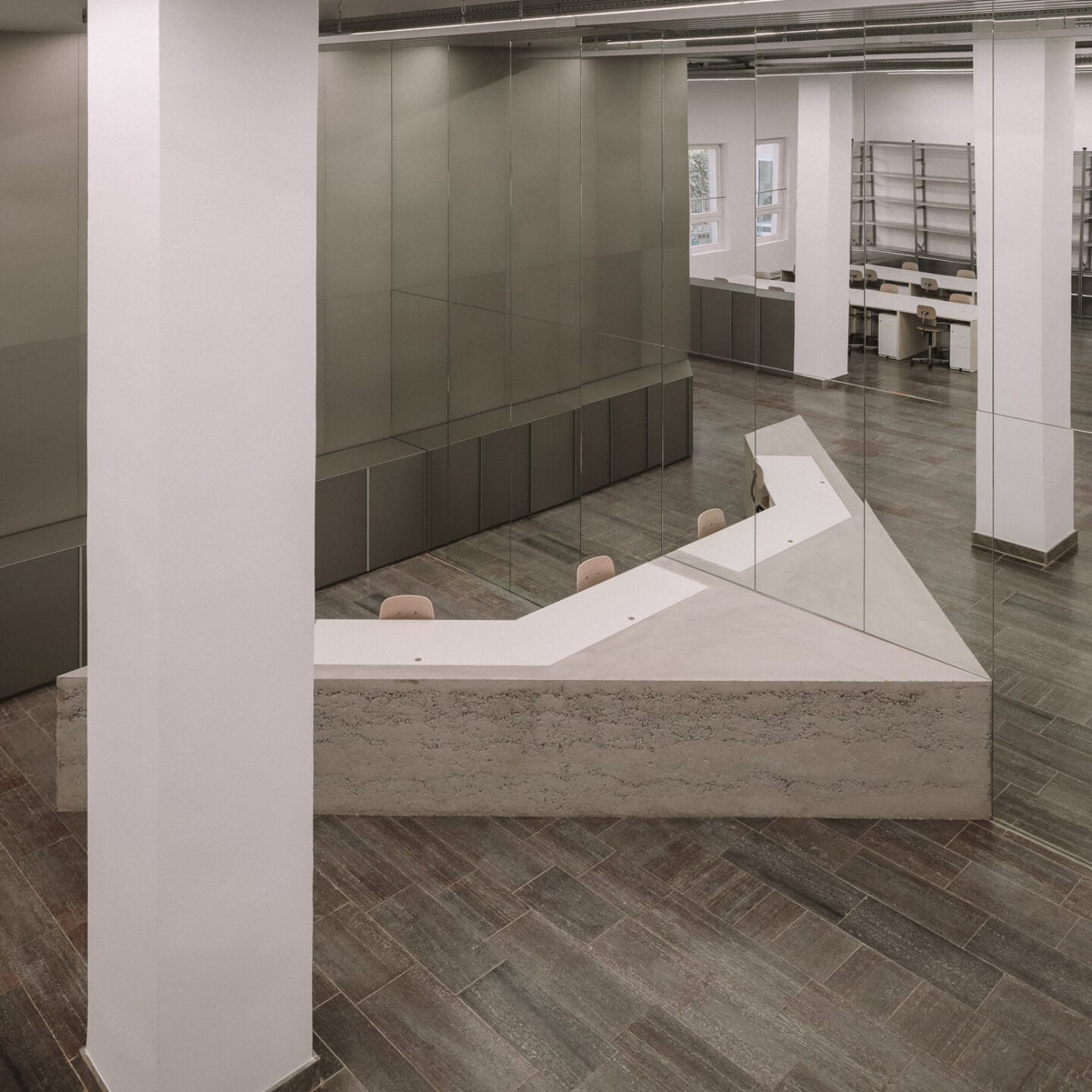
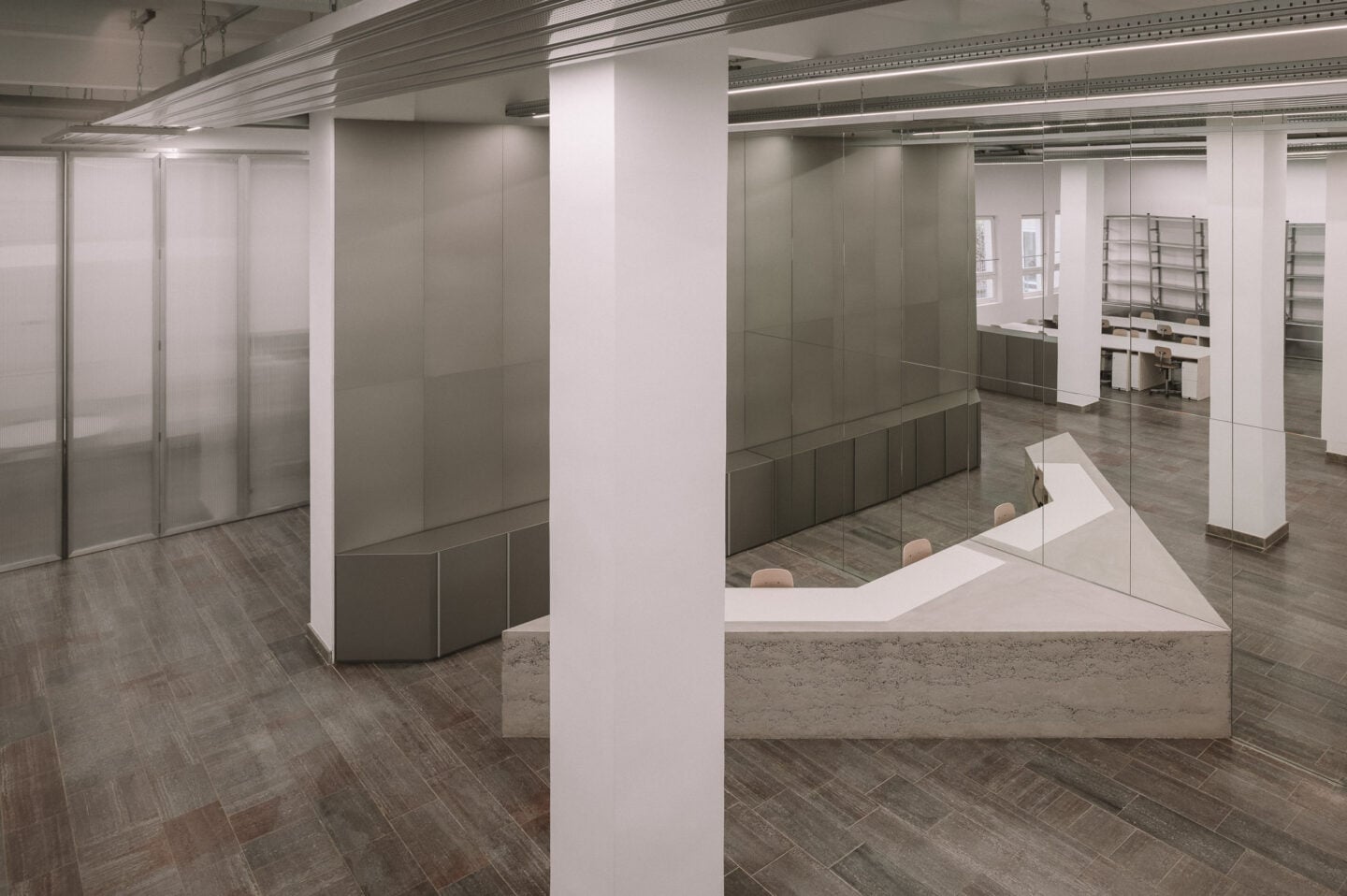
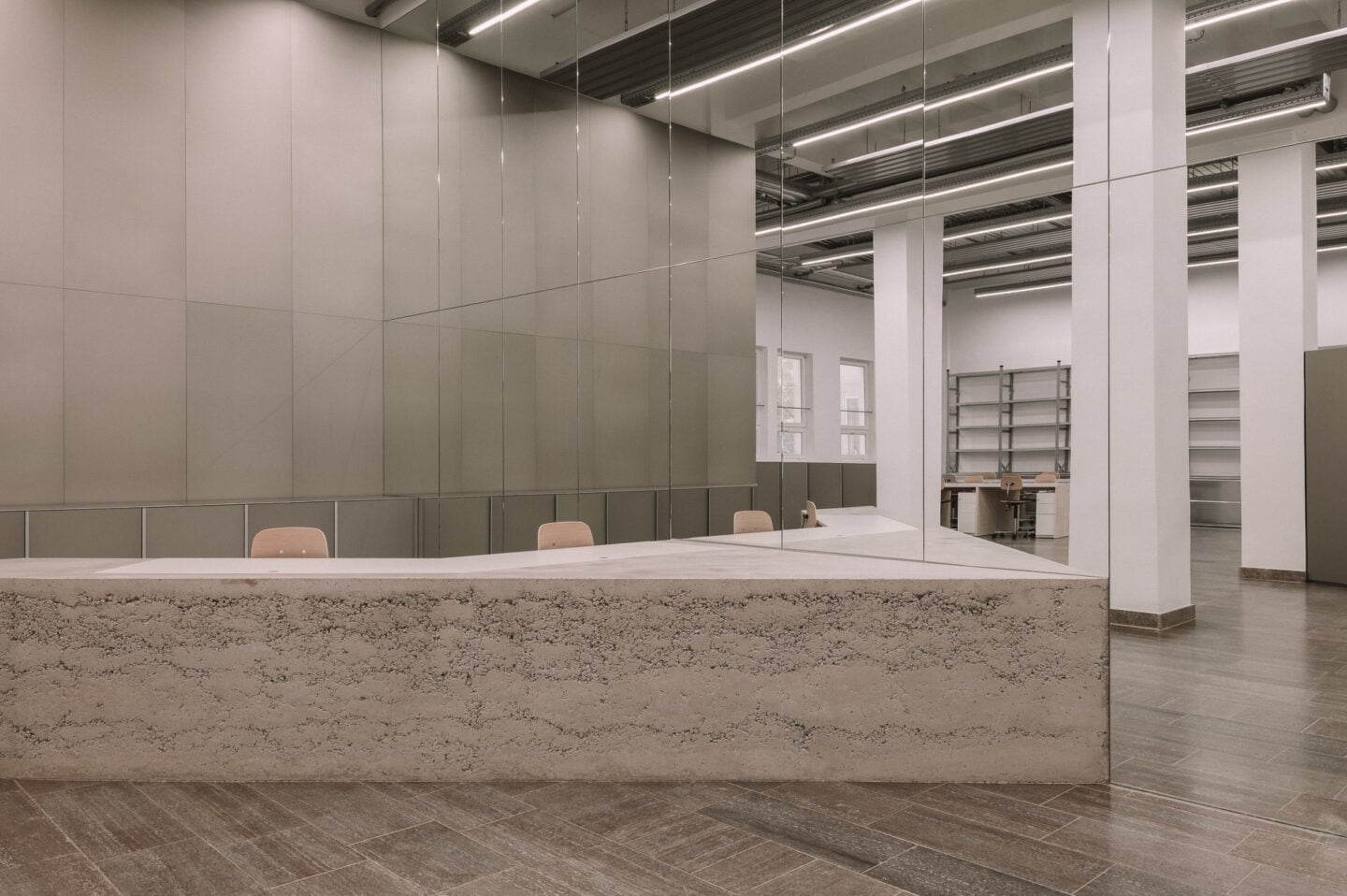
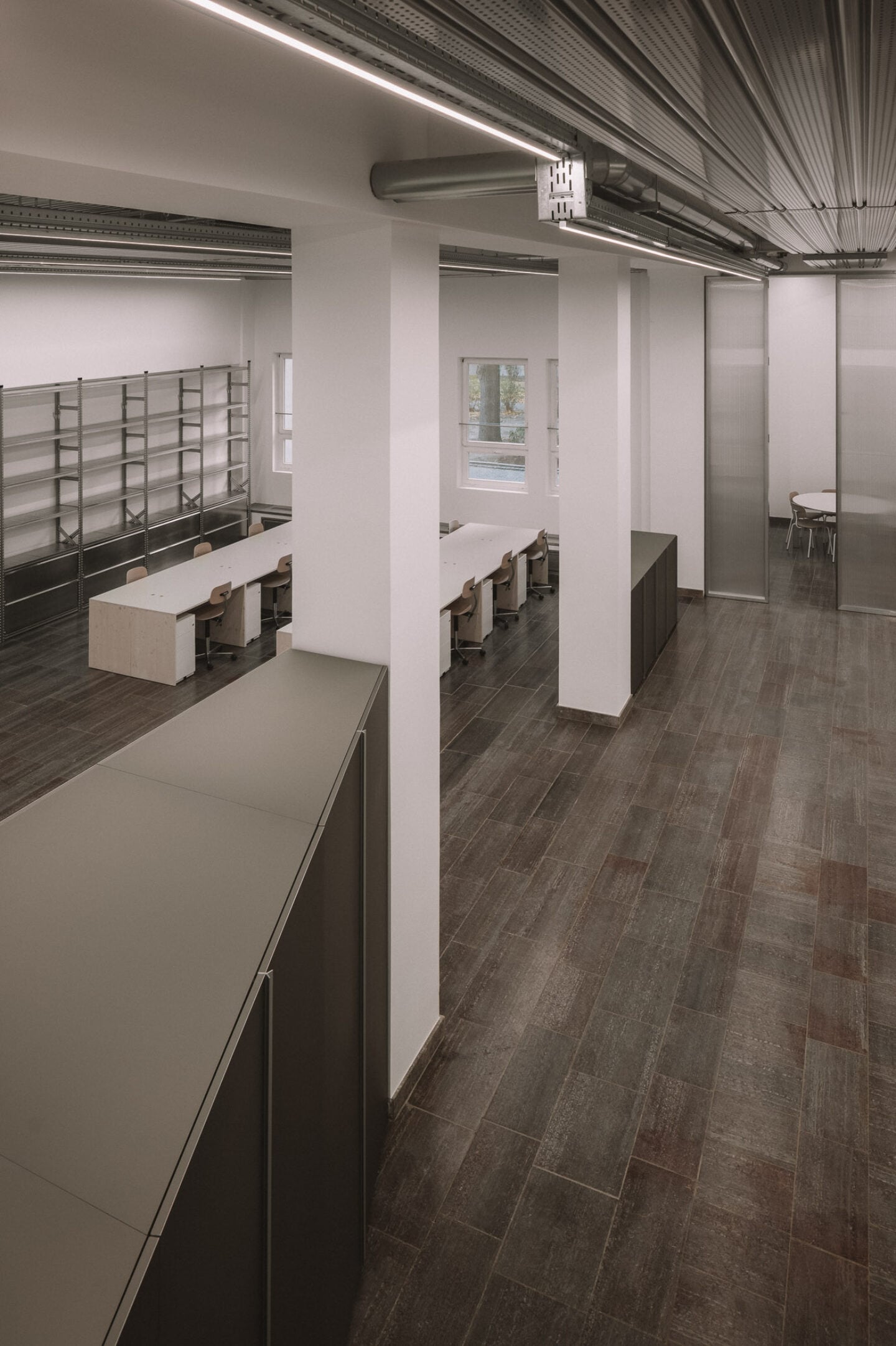
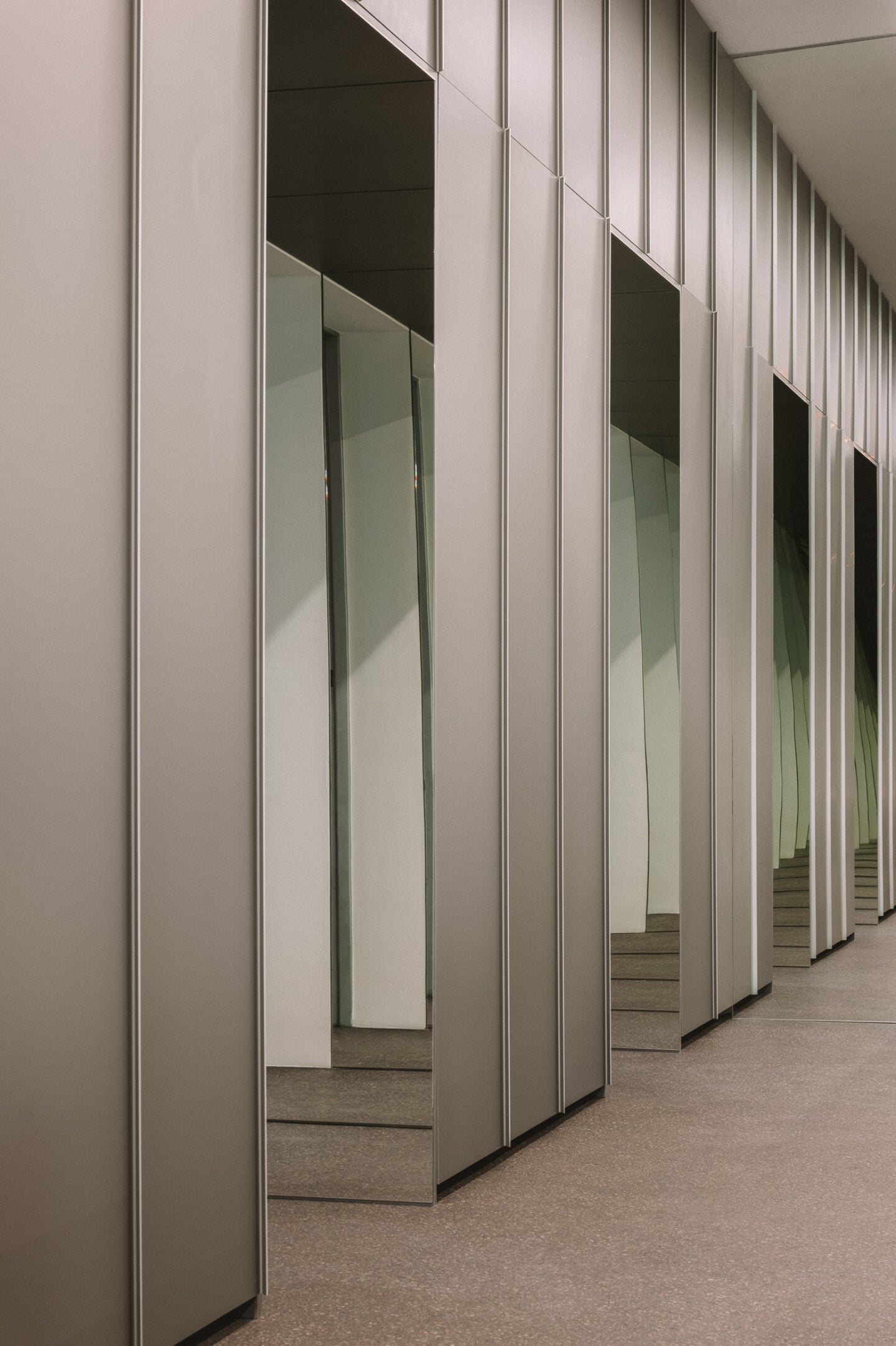
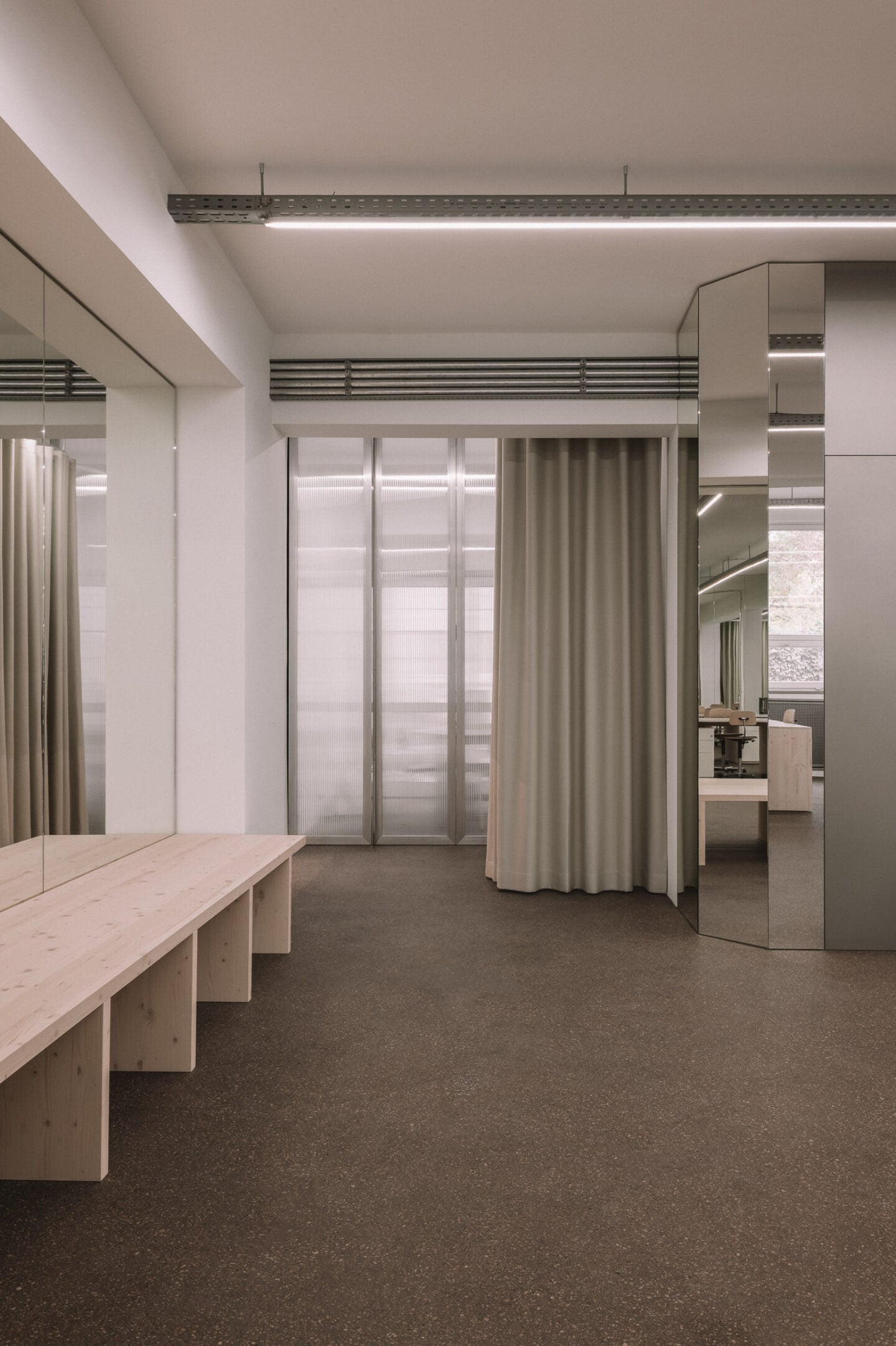
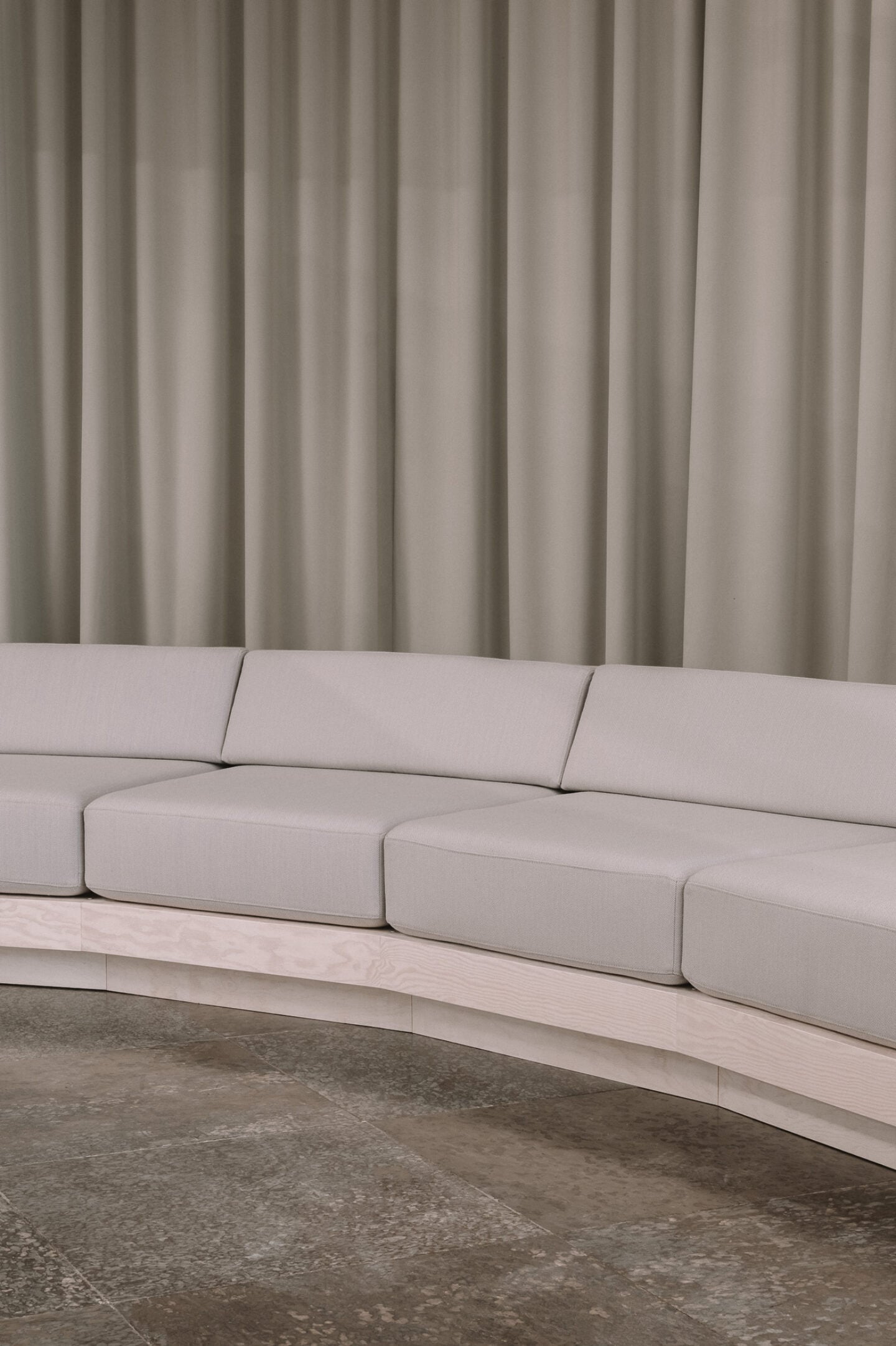
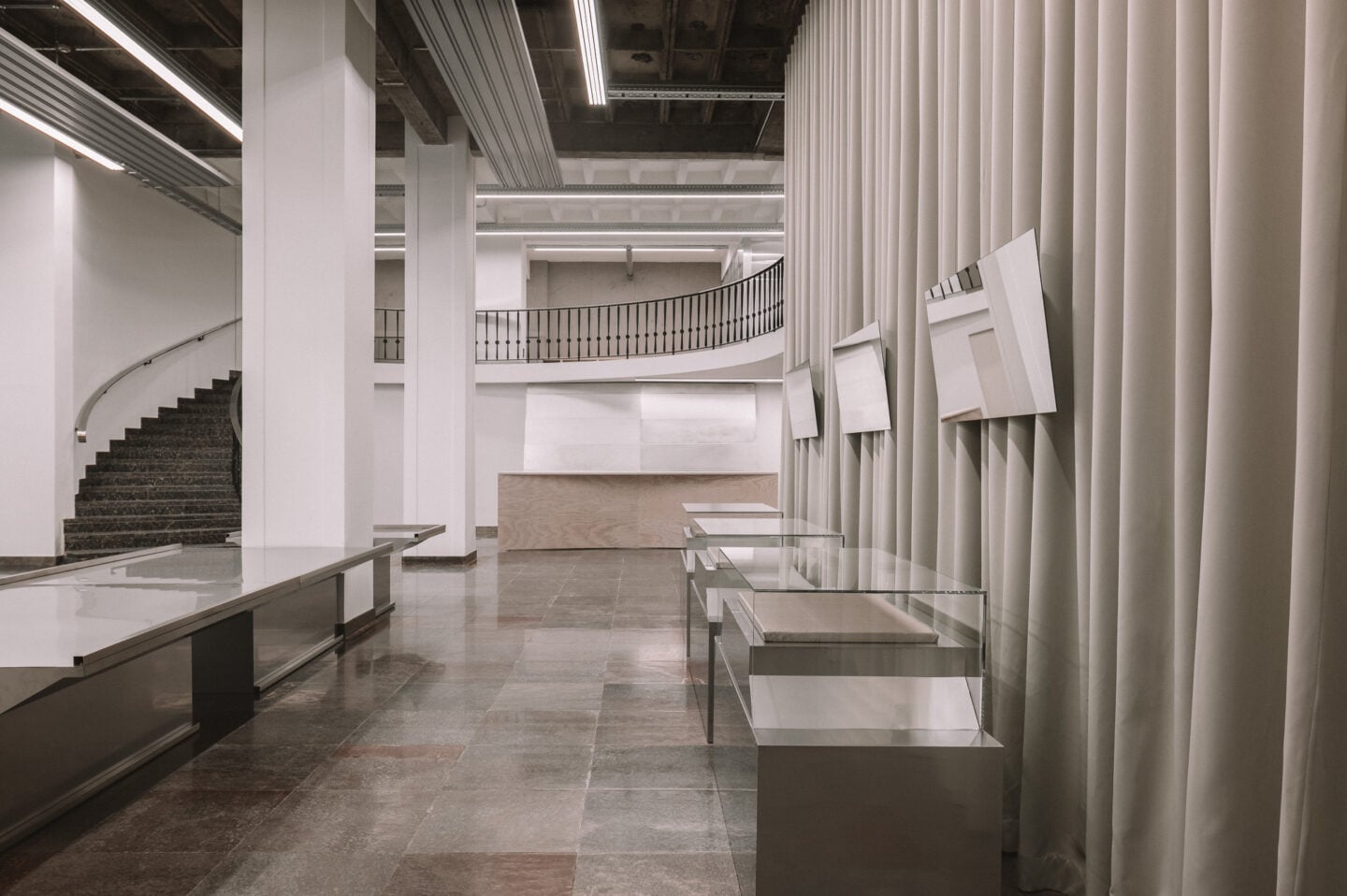
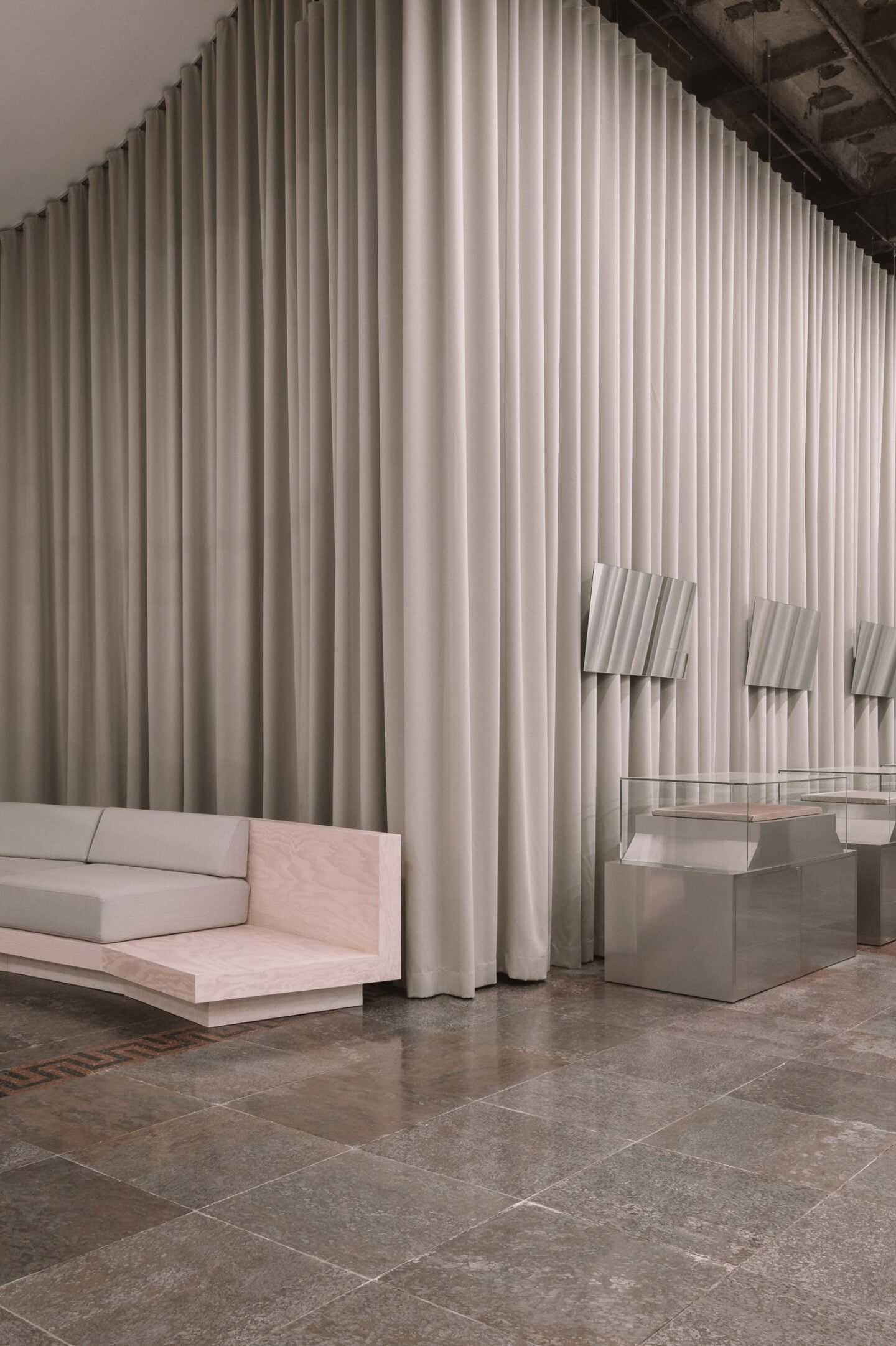
Circulation was approached as a sculptural task guided by structure and bodily movement. Diagonals, openings, and transitions directed movement through the floor plan. “Form creates circulation in the space,” Haase notes. “When you enter, you can see the entire axis of the space,” she says. “We extended this effect by placing mirrors at the ends so the space feels even more continuous and the light is reflected further.” A five-meter-high curtain along the showroom wall added another register, shifting between opacity and translucence as daylight changed, softening acoustics and recalibrating the concrete volume.
Substance and Surface
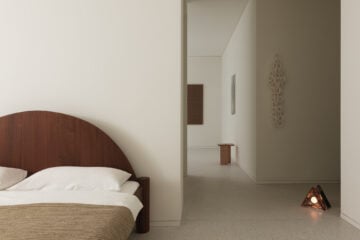
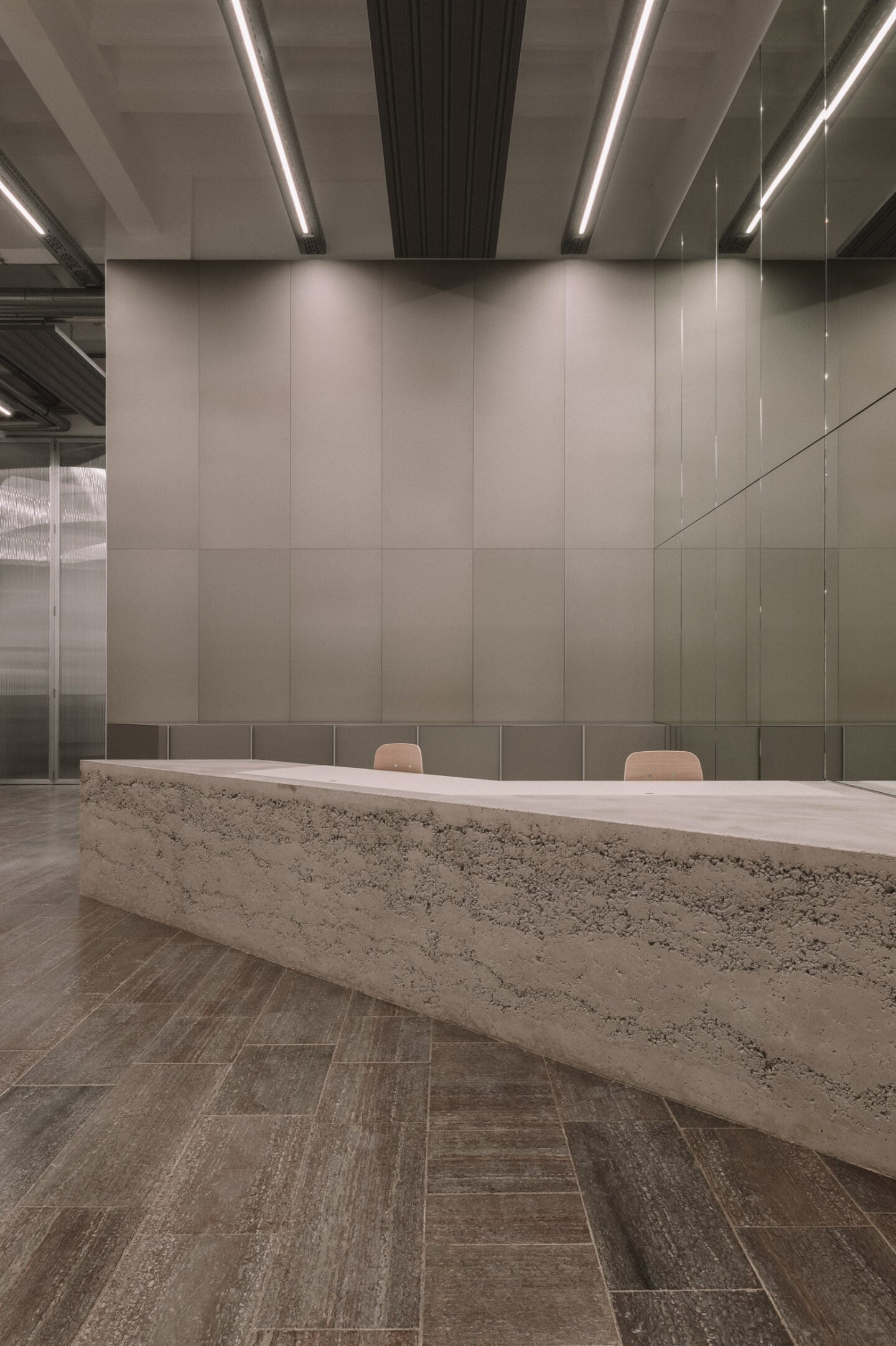
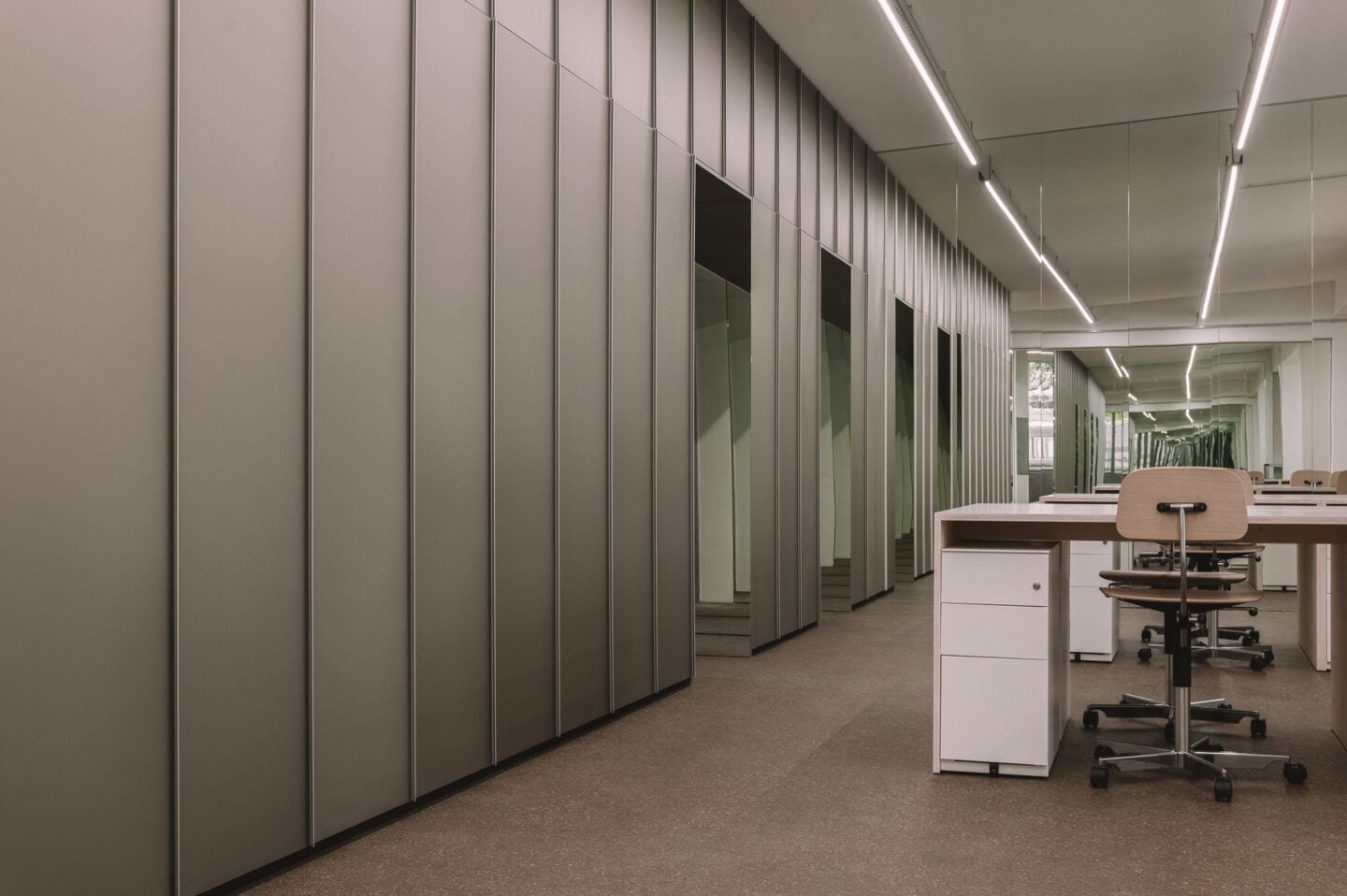
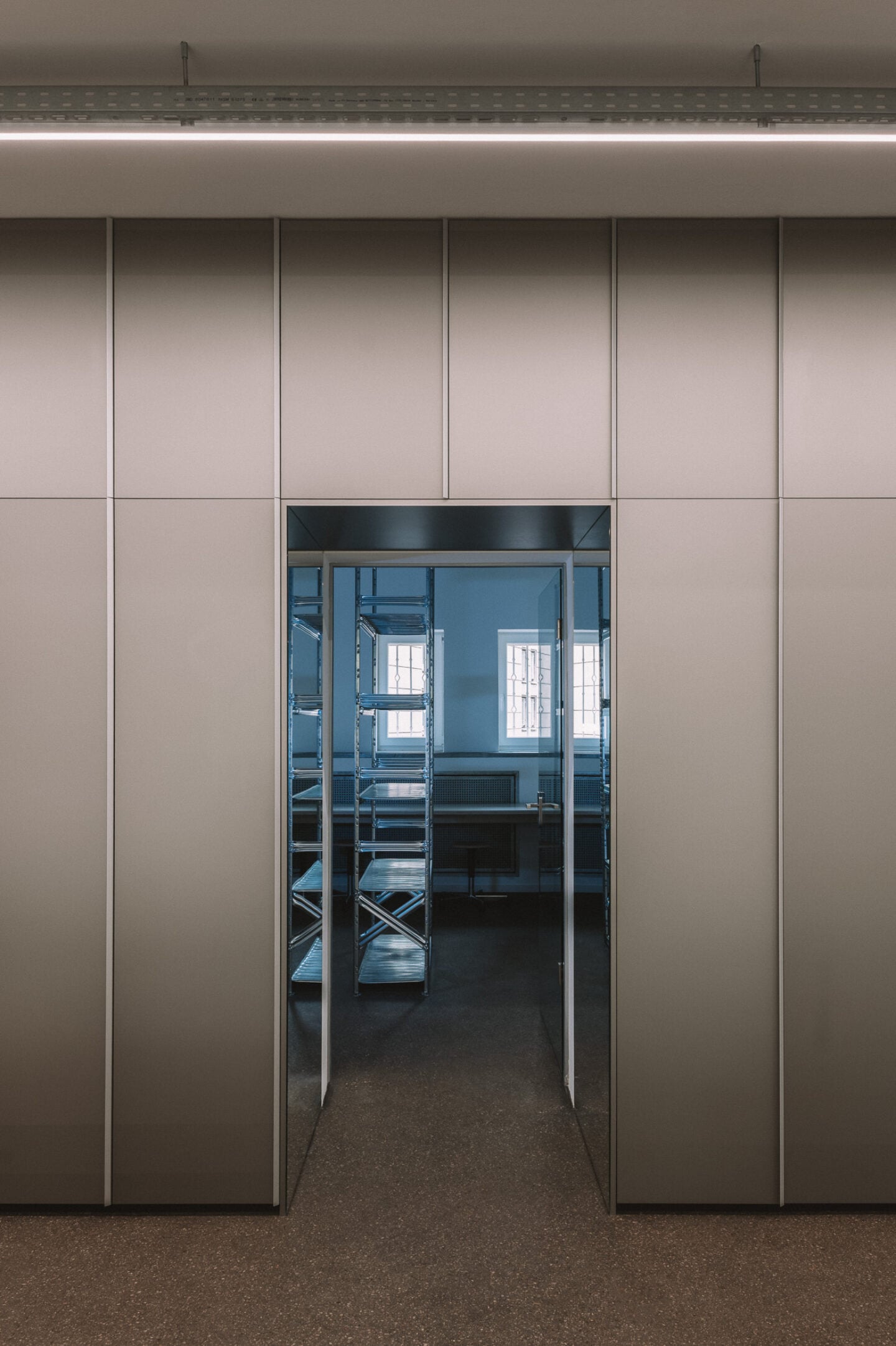
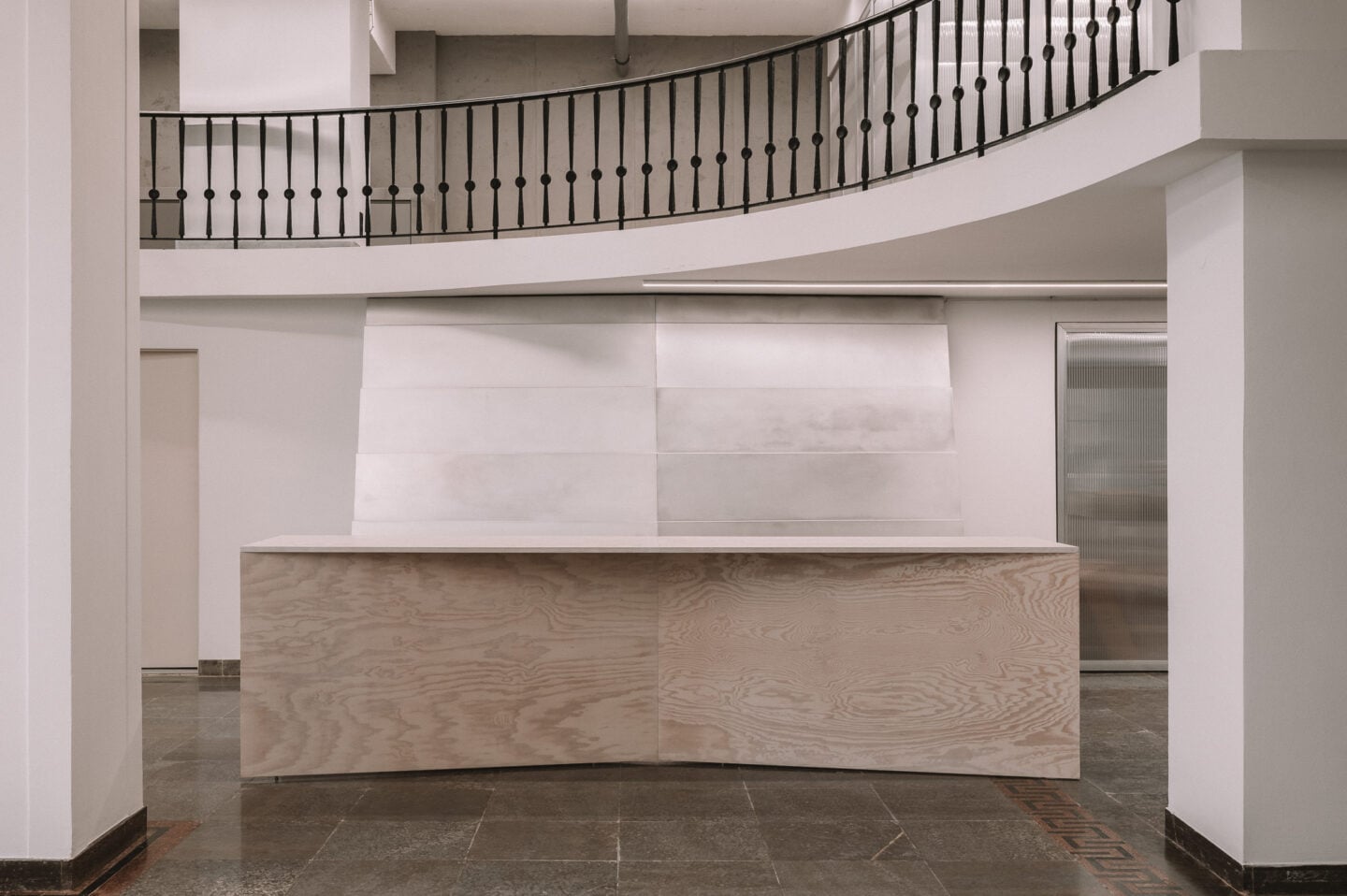
Material selection followed construction logic and tactile engagement. Aluminum, mirror glass, Plexiglas, and pigmented concrete established a warm gray spectrum generated by substance rather than finish. “We don’t paint walls for decorative reasons,” Haase says. “Color comes from the material itself.” Variation emerged through complementary qualities, reflective and matte, smooth and resistant, without applied treatments.
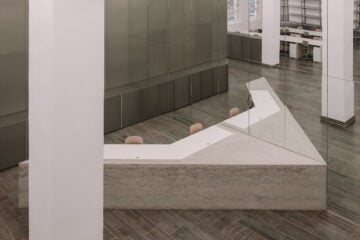
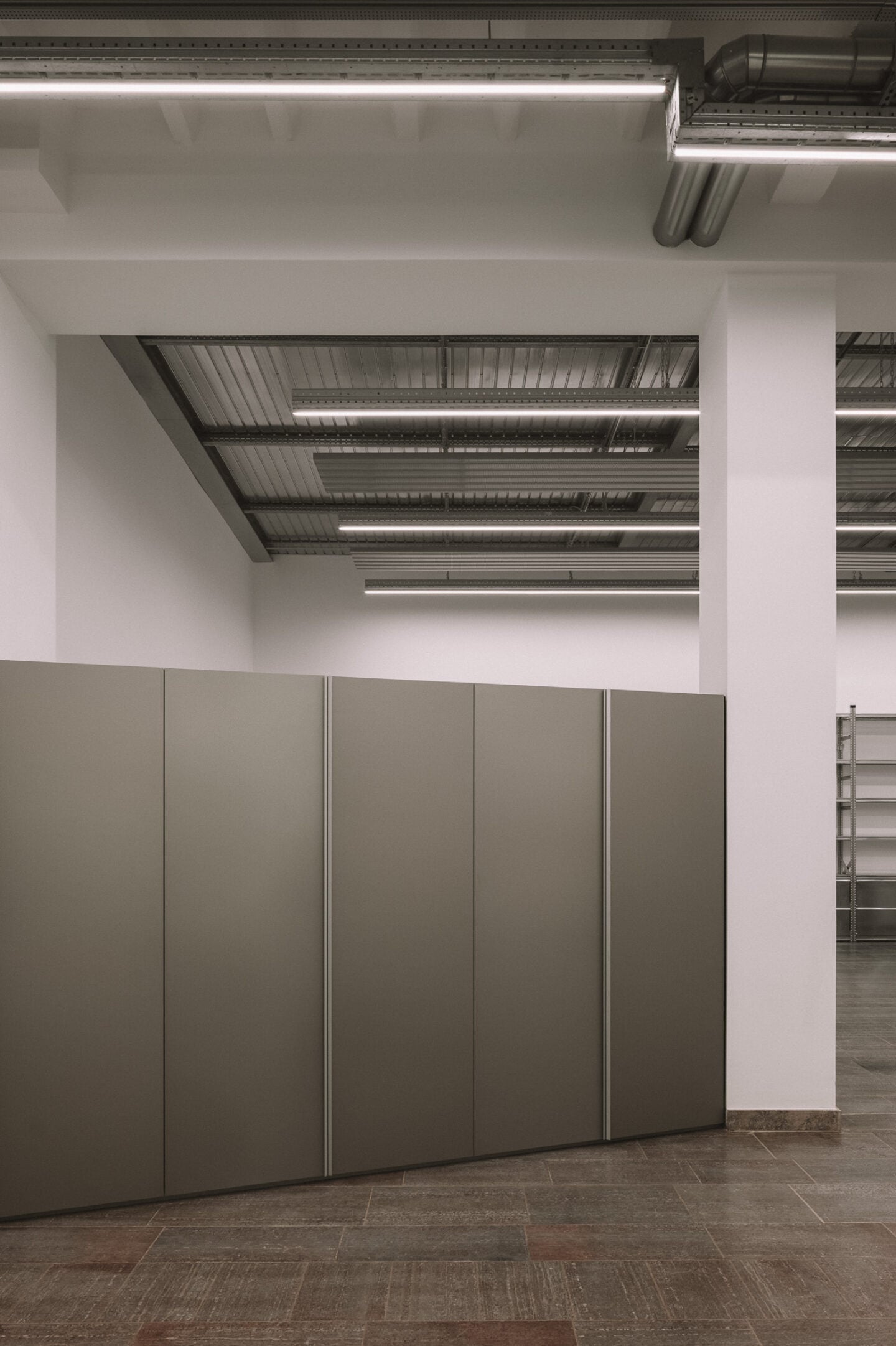
The most substantial elements assert themselves through mass and tactility. Cast on site, the stamp béton reception and showroom kitchen introduced layered concrete with visible air pockets, offering physical presence suited to the building’s lofty scale. “You can feel the material,” Haase explains. “It has a physical strength that is needed in a space with such a large volume.” Concrete pigmented in a warmer grey complements storage clad in aluminum panels, following the logic of the building’s structure.
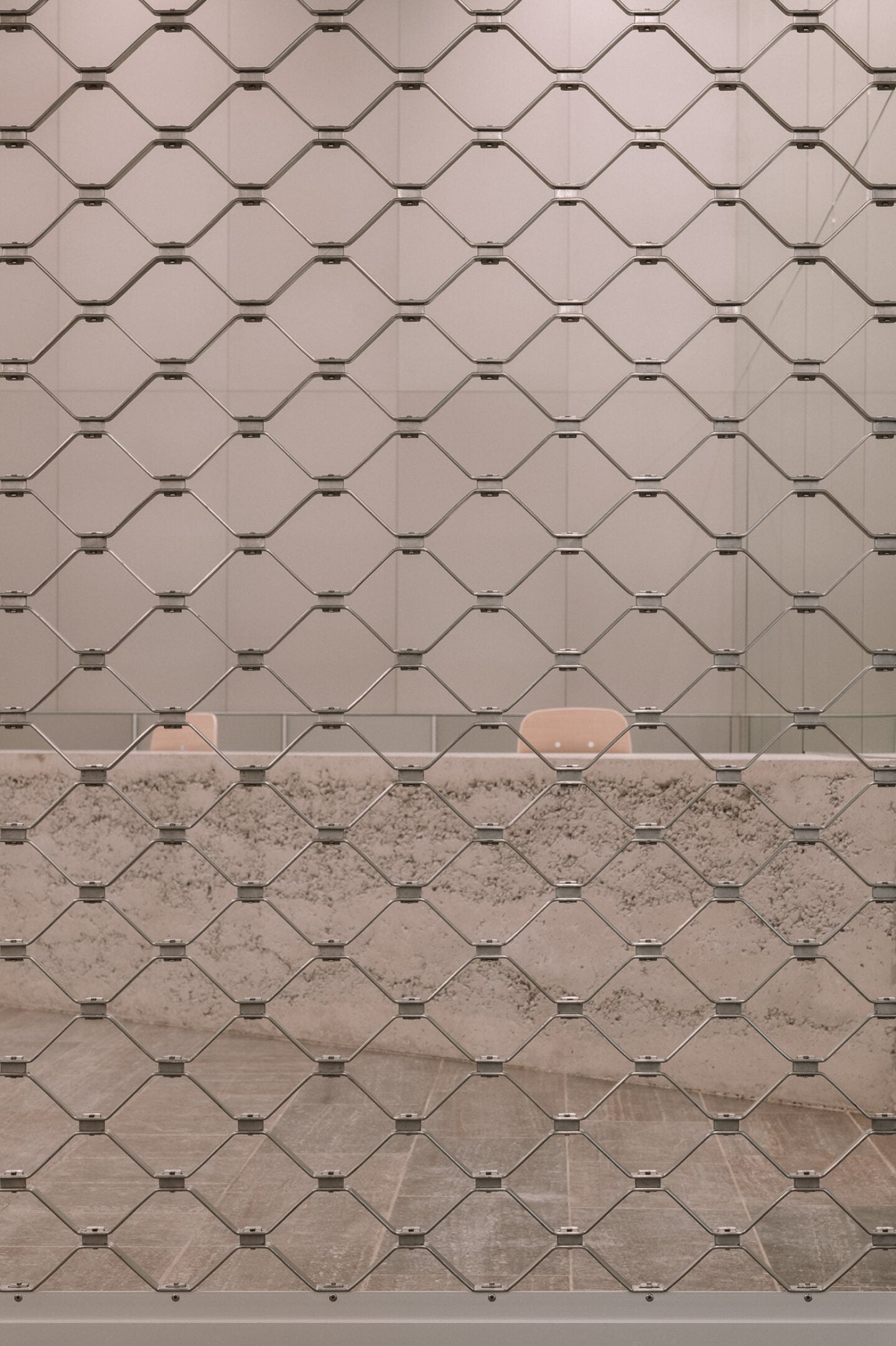
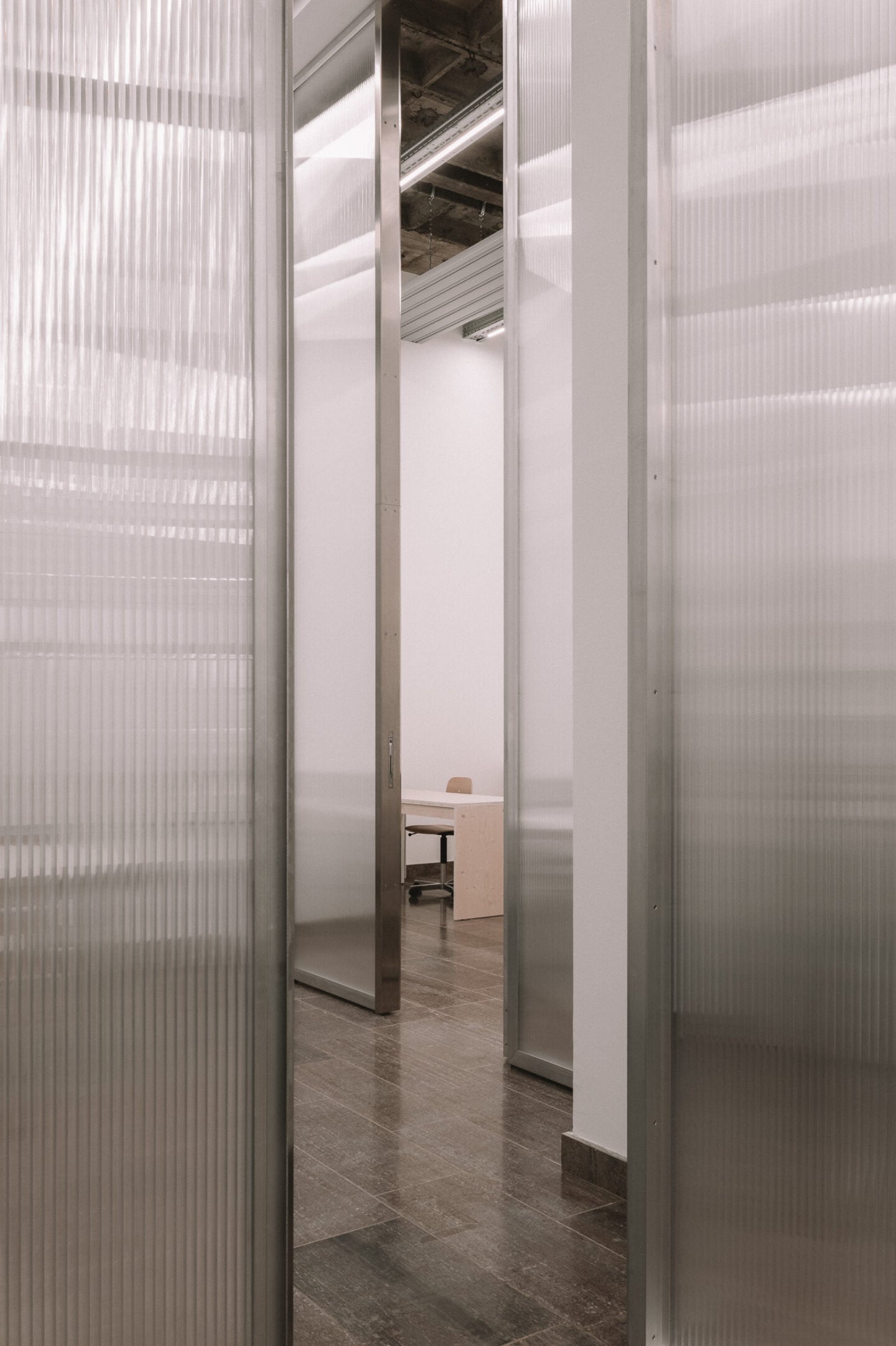
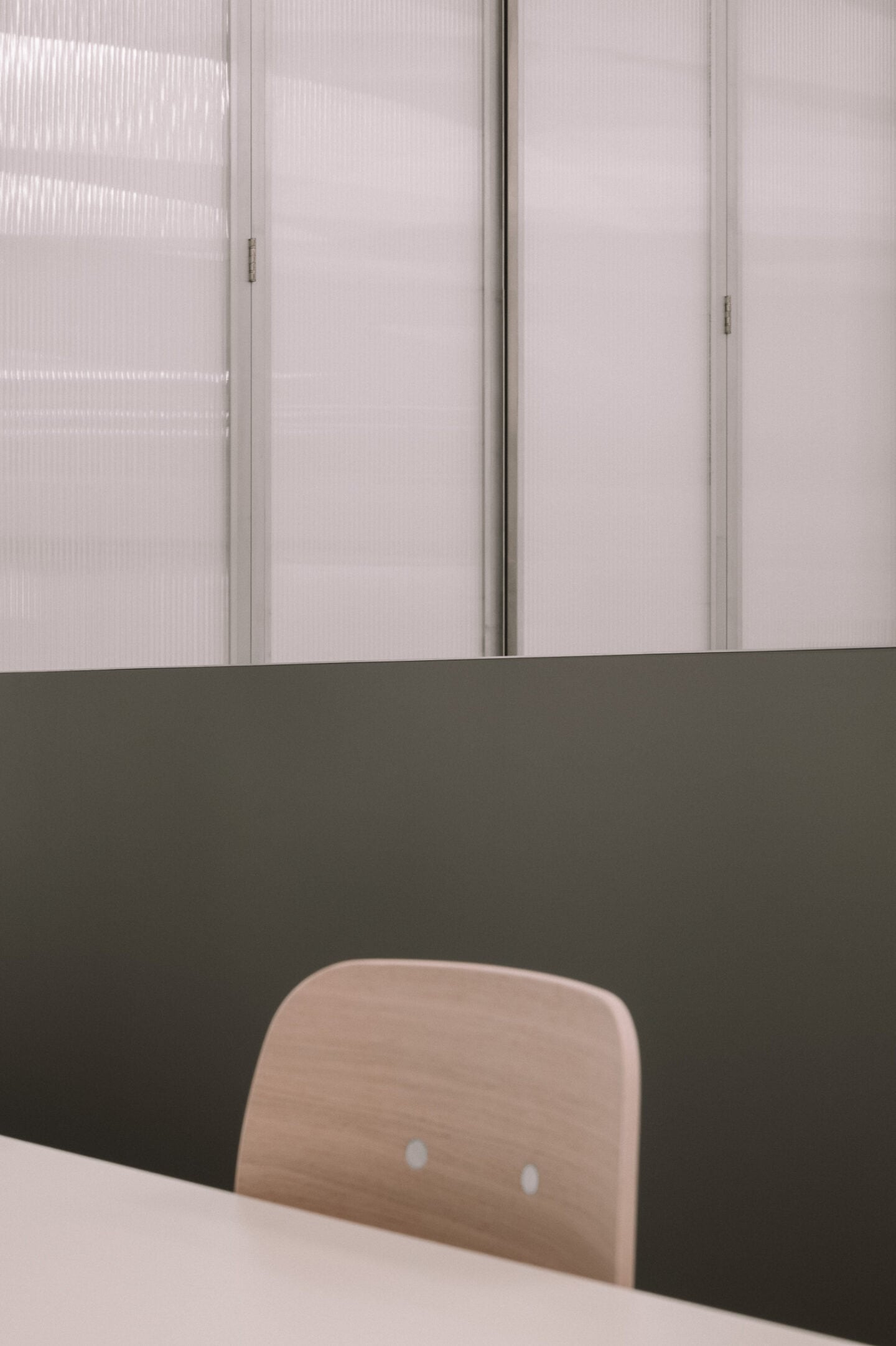
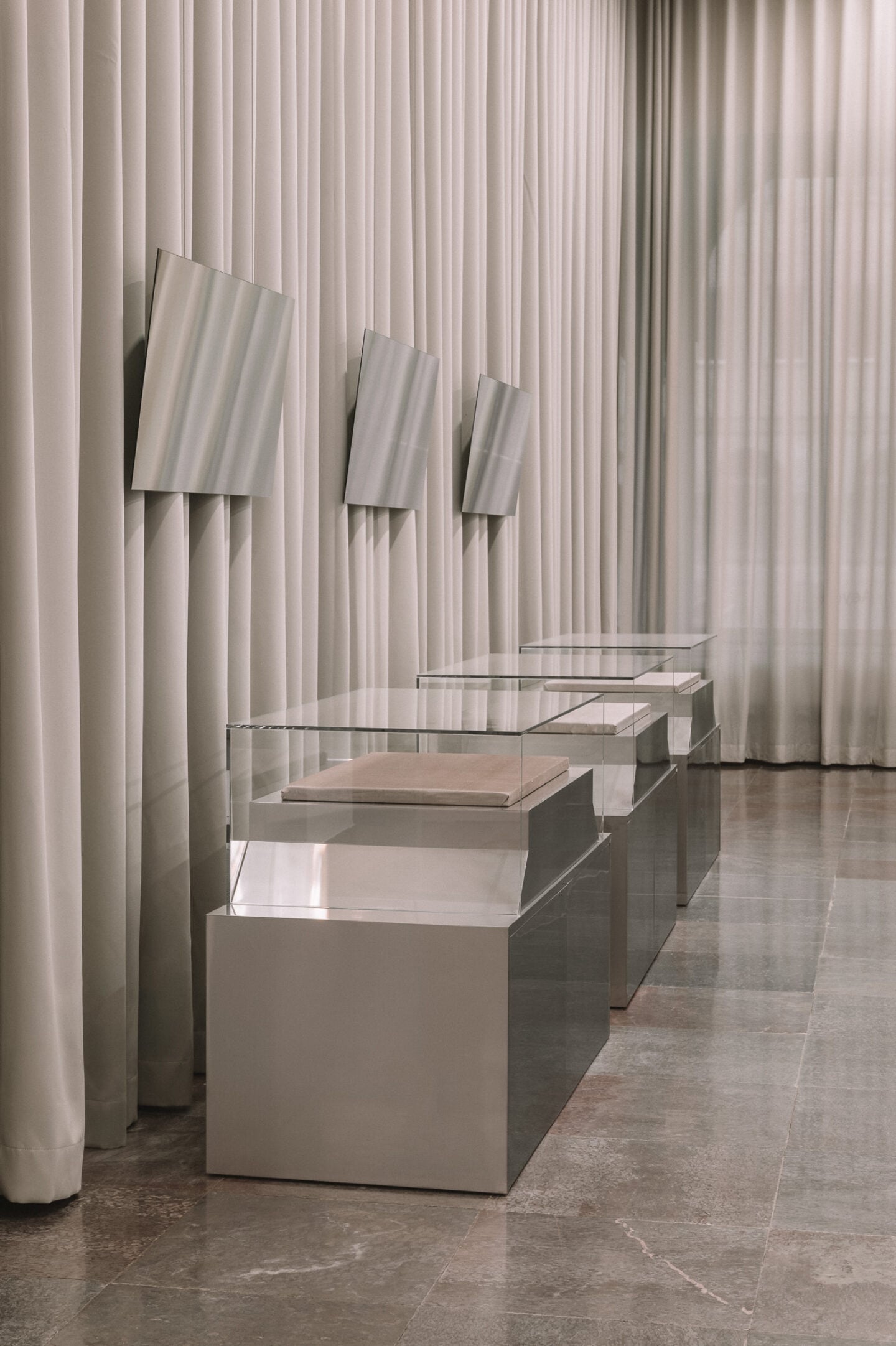
Velvet-like pinboards contribute acoustic depth, standard silver mirror glass amplified light and reach, and anodized aluminum appears in storage and the hand-polished magazine shelf. Ribbed Plexiglas doors framed in aluminum allow separation while maintaining light flow. A recurring 60-centimeter module structures doors, cupboards, storage, and bespoke elements in relation to the reach and movement of the body. This proportion introduces a more intimate scale into a building conceived for monumental urban life along Karl-Marx-Allee, mediating between its external massing and the daily activity it hosts within.
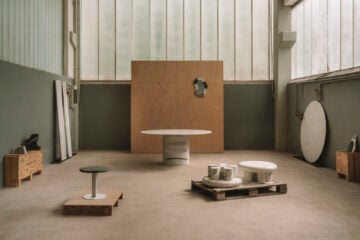
Close collaboration with creatives across disciplines brings an intimacy to the otherwise monumental proportions. For its first showroom installation, Aeyde worked with Berlin based set designer Stefanie Grau on a modular display system that defines the space. A research library curated by Paris-based editor and creative director Dan Thawley extends this thinking, presenting selection of titles across design, architecture, literature and the arts.
A House Within a History
For Aeyde, the project marked a decisive step in establishing a permanent architectural voice. The building’s layered authorship offered a lineage that resonated with the house’s values and internal culture. Through research and close engagement with the site, Gonzalez Haase AAS foregrounded the overlooked contribution of Irene Henselmann, whose interior work brought material sensitivity and functional intelligence to the imposing framework conceived by her husband. “Haus des Kindes reveals the strength of a woman whose contribution was rarely acknowledged,” Haase reflects.
That historical sensitivity aligned closely with Aeyde’s own emphasis on craft, authorship and collaboration. As Dames reflects, “Aeyde Haus is meant to become a long-term point of reference—for us, for our community, for our work.” Architecturally and conceptually, the project carries forward the building’s history as a place of work, making, and collective creativity, translating its inherited structure and material intelligence into a contemporary setting for creative practice and exchange.
Images © Clemens Poloczek | Text: Anna Dorothea Ker